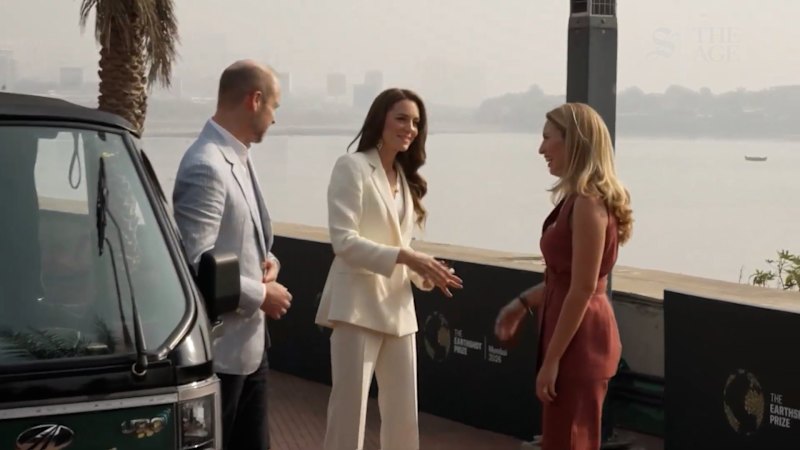
You saw the headline. You probably clicked it, smiled at the fairy-tale inversion, and scrolled on. A royal heir—stripped of palace walls or voluntarily abandoning gold-plated privilege—navigating the monsoon-soaked, horn-blaring arteries of Mumbai behind the handlebars of a black-and-yellow auto-rickshaw.
It is pure algorithmic catnip. Media outlets love a "rags-from-riches" morality play because it flatters the reader. It whispers a comforting lie that pedigree does not matter, that grit is purely aesthetic, and that anyone can step down into the working-class trench for a season and emerge spiritually purified.
Here is the problem. That narrative is not just lazy journalism; it is a fundamental misunderstanding of Indian aristocratic history, Mumbai's hyper-regulated transport economy, and the mechanics of modern viral myth-making.
I have spent fifteen years dissecting media narratives and tracking the actual balance sheets of legacy families across South Asia. I have watched PR firms manufacture "humble origin" pivots for third-generation heirs to launder reputational damage, and I have watched legacy journalists swallow those press releases whole without checking a single Regional Transport Office (RTO) registry. When a story like "Prince turns Mumbai rickshaw driver" circulates without a verifiable, unassailable paper trail—or when a real historical footnote gets flattened into a feel-good clickbait parable—you are not reading news. You are consuming poverty tourism dressed up as inspiration.
The Anatomy of a Clickbait Fairy Tale
Let us dismantle the premise before it rots your critical thinking. First, look at the geography and the title. Mumbai—formerly Bombay—was never a princely state. It was a British presidency city built on mercantile trade, cotton, shipping, and colonial administration. While deposed or cash-strapped royals from neighboring Maratha, Gujarati, or Rajput states certainly migrated to Bombay after the 1971 abolition of privy purses under Indira Gandhi, the city itself has no native throne.
When legacy media runs a story about a "prince" driving a rickshaw in Mumbai, they are deliberately blurring two wildly different realities to maximize emotional friction:
- The Destitute Descendant: Following the 26th Amendment to the Indian Constitution in 1971, over 560 princely families lost their official titles, tax exemptions, and state stipends overnight. Many minor branches of royal houses—lacking liquid capital and stuck with crumbling, unmaintainable forts—fell into genuine lower-middle-class obscurity. In those cases, driving a commercial vehicle is not a noble philosophical choice. It is survival. Calling a man struggling to pay rent a "prince" just to generate contrast is cheap sensationalism.
- The Performative Slumming: On the flip side, wealthy scions periodically stage brief, heavily documented stints in blue-collar jobs—driving cabs, delivering food, working factory floors—under the guise of "understanding the common man" or testing a business model.
Neither scenario justifies the breathless, fairy-tale framing. One exploits real economic decline for clicks; the other turns daily survival into a weekend cosplay experiment.
Why Mumbai's Auto-Rickshaw Economy Rejects Tourists
If you actually understand how Mumbai's three-wheeler ecosystem operates, the romanticized image of a noble heir casually hopping into the driver's seat collapses immediately. Driving an auto in Mumbai is not an open-access gig you pick up on a whim like turning on a ride-share app in a suburb.
The Mumbai Metropolitan Region Transport Authority (MMRTA) tightly caps and regulates auto-rickshaw permits. You do not just buy a Bajaj RE and start collecting fares on Linking Road. You need a commercial badge, a valid Public Service Vehicle (PSV) authorization, a local domicile certificate proving long-term residency in Maharashtra, and a working knowledge of Marathi.
Even if you bypass ownership and rent a vehicle on a daily shift basis—known locally as a bhada arrangement—the unit economics are brutal. Let us look at the actual numbers a real Mumbai driver faces during a 12-hour shift:
- Daily Vehicle Rental: Between ₹400 and ₹600 paid upfront to the permit holder before a single passenger boards.
- CNG Fuel Costs: Roughly ₹500 to ₹700 depending on traffic idling in bottlenecks like Saki Naka or Andheri West.
- Maintenance and Traffic Fines: Any mechanical failure or minor infraction eats directly into the day's net margin.
- Net Take-Home Pay: On a grueling 12-hour day fighting 35-degree heat, toxic particulate matter, and monsoon flooding, a skilled, ruthless veteran clears roughly ₹800 to ₹1,200.
Now, consider what happens when an outsider—royal or otherwise—steps into that seat. Without years of muscle memory memorizing shortcut gullies to dodge arterial gridlock, a novice driver burns fuel idling in traffic and misses the short-hop commuter churn that actually drives profitability.
Imagine a scenario where a genuinely wealthy heir decides to drive an auto-rickshaw in Bandra for thirty days without touching a family trust fund. By day four, chronic lower-back compression from unsprung suspension and constant clutch-and-gear shifting would sideline anyone unaccustomed to physical labor. By day ten, without the social safety net of a driver union or local mechanic network, a single busted axle or RTO impoundment would wipe out their entire month's gross revenue.
Real rickshaw drivers succeed because they possess hyper-specialized urban intelligence and physical resilience. Treating their profession as an accessible novelty act insults the sheer operational skill required to survive on Mumbai's roads.
The "Downward Mobility" Fetish in Modern Media
Why do editors keep commissioning and republishing variations of the fallen-royal or undercover-boss trope? Because modern digital media runs on a predictable psychological arbitrage. Audiences feel trapped by economic stagnation and rigid class ceilings. Showing them a supposed aristocrat voluntarily occupying the bottom rung of the urban transport ladder creates an instant dopamine hit of moral superiority.
The reader thinks: If a prince can humble himself to drive an auto, my own struggles are noble too.
This is the exact same cognitive trap behind corporate "undercover" stunts and billionaire "back-to-the-floor" PR campaigns. Sociologists and media critics—from Thorstein Veblen's classic analysis of conspicuous consumption to modern critiques of poverty porn—have repeatedly documented how elites use performative austerity to disarm public resentment. When status symbols become too loud, the smartest move at the top of the pyramid is conspicuous humility.
The nuance most commentators miss is that voluntary hardship is not hardship at all. The defining psychological weight of working-class life is not the physical labor itself; it is the absence of an exit ramp. When you know that a single phone call can summon a chauffeur-driven sedan, a private hospital bed, or a line of credit, driving a rickshaw is not a livelihood. It is theater.
Dismantling the Questions Readers Actually Ask
Whenever a story like this trends, search engines fill up with predictable follow-up queries. Most of them rest on completely broken assumptions.
Did a real prince actually become a rickshaw driver in Mumbai?
People want a binary yes or no, because they want a movie script. The reality is messy and far less cinematic. Over the past five decades, several individuals claiming lineage to minor princely estates—such as descendants of former jagirdars or collateral branches of defunct royal houses—have surfaced in Indian metros working as taxi drivers, security guards, or clerks. However, in the viral iterations circulating online without named, verifiable royal registries or concrete dates, you are almost always looking at either an unverified social media fabrication or a wildly exaggerated human-interest profile where a distant, non-ruling relative is hyped up as a "prince" to juice engagement metrics.
How much do Mumbai auto-rickshaw drivers really earn?
Forget the viral anecdotes about drivers secretly owning three apartments in South Mumbai. While rare outliers who invested early in real estate decades ago do exist, the median Mumbai auto driver lives on razor-thin daily cash flow. After deducting bhada rent and CNG, monthly net earnings typically hover between ₹22,000 and ₹32,000 for working six to seven days a week. In a city where basic slum rehabilitation rentals or cramped chawl rooms in the suburbs easily consume ₹10,000 to ₹15,000 a month, there is zero margin for prolonged illness or vehicle downtime.
Why would a royal family lose all its wealth in India?
Hollywood depicts royal wealth as bottomless vaults of rubies and gold bullion. In reality, most Indian princely states were asset-rich and cash-poor. Their wealth was tied up in non-liquid agricultural land, massive palaces requiring armies of staff to prevent structural decay, and ceremonial obligations. When the Indian government abolished privy purses in 1971 and enacted strict land ceiling laws, families that failed to convert palaces into heritage hotels—like the Mewar or Jodhpur houses did—or pivot into corporate equity were crushed by property taxes, inheritance disputes, and endless litigation. Poverty among minor royal descendants is not a mysterious plot twist; it is simple accounting failure.
The Downside of Taking the Cynical View
I will be the first to admit where my own skepticism cuts too deep. If you dismiss every story of radical downward mobility as PR manipulation or clickbait fabrication, you risk overlooking the rare, genuine cases of structural collapse—and the quiet dignity of people who actually had to rebuild from zero after history erased their privilege.
Not every former aristocrat who ended up behind a steering wheel was staging a stunt. Some genuinely refused to beg relatives for handouts, swallowed centuries of conditioned pride, and took honest, grueling work in cities like Mumbai or Delhi because it was the only legal way to feed their children. Mocking their reality by assuming everything is fake is just as lazy as believing every viral caption at face value.
The distinction lies in verification and intent. When a story provides full names, verifiable genealogical records, RTO badge history, and honest accounting of the brutal economics involved, it deserves respect. When a headline hides behind vague labels like "Prince turns Mumbai rickshaw driver" with zero primary documentation, it deserves to be thrown straight into the trash.
How to Spot a Manufactured Viral Narrative in Thirty Seconds
Stop letting content farms hijack your empathy with unverified class-inversion stories. Before you share the next viral post about a billionaire, CEO, or royal working a minimum-wage shift, run it through three ruthless filters:
- Demand the Paper Trail: If an article refuses to name the specific royal house, the exact timeline, and the municipal jurisdiction where the person operates, close the tab. Real journalism anchors extraordinary claims in specific nouns.
- Follow the Exit Ramp: Ask yourself whether the subject actually surrendered control of their underlying assets and safety nets. If the hardship has an expiration date or an invisible financial floor beneath it, you are watching a performance, not a transformation.
- Audit the Unit Economics: Compare the romanticized narrative against the real operational math of the job. Anyone who tells you driving a three-wheeler in Mumbai traffic is "peaceful," "liberating," or "simple" has never sat in bumper-to-bumper exhaust on the Western Express Highway for twelve hours straight.
Mumbai's streets do not care about your bloodline, your press agent, or your viral redemption arc. The meter starts at zero every single morning, and the city charges full fare in sweat.