Every few months, the mainstream media wheels out the apocalypse porn. Headlines shriek about Himalayan glacier bankruptcy, impending doom for two billion people, and a dry subcontinent reduced to dust and bone. It is clean, terrifying, and completely wrong.
I have spent years looking at watershed economics across South Asia, and the panic is built on a fundamental misunderstanding of hydrology, agriculture, and where water actually goes. The lazy consensus states that shrinking ice equals a vanishing water supply. That is a child's understanding of a complex hydrological engine. The mountains are not running dry. Our management of them is just catastrophically lazy.
The Frozen Myth of Meltwater Dependency
Let us start with the core deception. Popular narratives treat the Himalayas like a giant frozen water bottle that is slowly draining into the Indus, Ganges, and Brahmaputra basins. Empty the bottle, and the populations downstream thirst.
Except that is not how these river basins function. During the peak summer growing season, the vast majority of river discharge in major South Asian agricultural belts comes from monsoon rainfall, not direct glacial melt. Glaciers act as natural regulators, yes, but their contribution to annual river flow downstream is often vastly overstated by researchers who model worst-case climatic scenarios to secure their next grant cycle.
When a glacier retreats, it does not instantly vanish into thin air. It exposes more rock, increases seasonal melt in the short term, and shifts the timing of runoff. The real problem is not the absence of water. The problem is that we treat water as an infinite free good until it runs out, and then we blame the ice.
The Real Thief Is Not Climate Change It Is Groundwater Extraction
If you want to find where two billion people are actually facing a supply crunch, stop looking at the peaks and start looking at the pumps.
Across the Indo-Gangetic plain, millions of farmers drop tube wells deep into the alluvial aquifers, subsidized by cheap or free electricity policies implemented by populist politicians who want to win rural votes. They are mining fossil groundwater—water deposited over millennia that is barely replenished by seasonal rains—at an unsustainable rate.
We are not facing a surface water crisis caused by melting glaciers. We are engineering an underground drought with bad policy. Blaming the glaciers is a convenient deflection for bureaucrats and policymakers who refuse to touch the political third rail of electricity subsidies, power pricing, and agricultural zoning.
Imagine a scenario where every state government in the region cut off free electricity for deep-tube irrigation overnight. The riots would start by noon, but the aquifers would finally get a chance to breathe. Instead, we write panicked op-eds about snowpacks while ignoring the massive, unauthorized siphoning happening right beneath our boots.
Efficiency Is a Dirty Word in South Asian Agriculture
Let us talk about how water is actually used. Flood irrigation remains the default method across vast tracts of the breadbasket. Farmers flood entire fields to grow water-guzzling crops like paddy rice and sugarcane in semi-arid zones where they have no business being cultivated at scale.
Why do they do it? Because the market structure incentivizes maximum volume, and government procurement policies guarantee a price floor for precisely these crops.
When you price water at zero, you waste infinity. Yet every international report on glacier bankruptcy glosses over the agricultural incentives and focuses purely on atmospheric temperature anomalies. Fixing the water security of Asia has almost nothing to do with saving the ice on K2 or Everest. It has to do with shifting to drip irrigation, altering crop rotation cycles, and pricing agricultural inputs to reflect ecological reality.
If a factory dumped millions of gallons of raw effluent into a river, regulators would shut it down. But when inefficient farming practices waste trillions of gallons of water through sheer archaic evaporation and runoff, we call it tradition and hand out subsidies.
The Adaptation Deficit
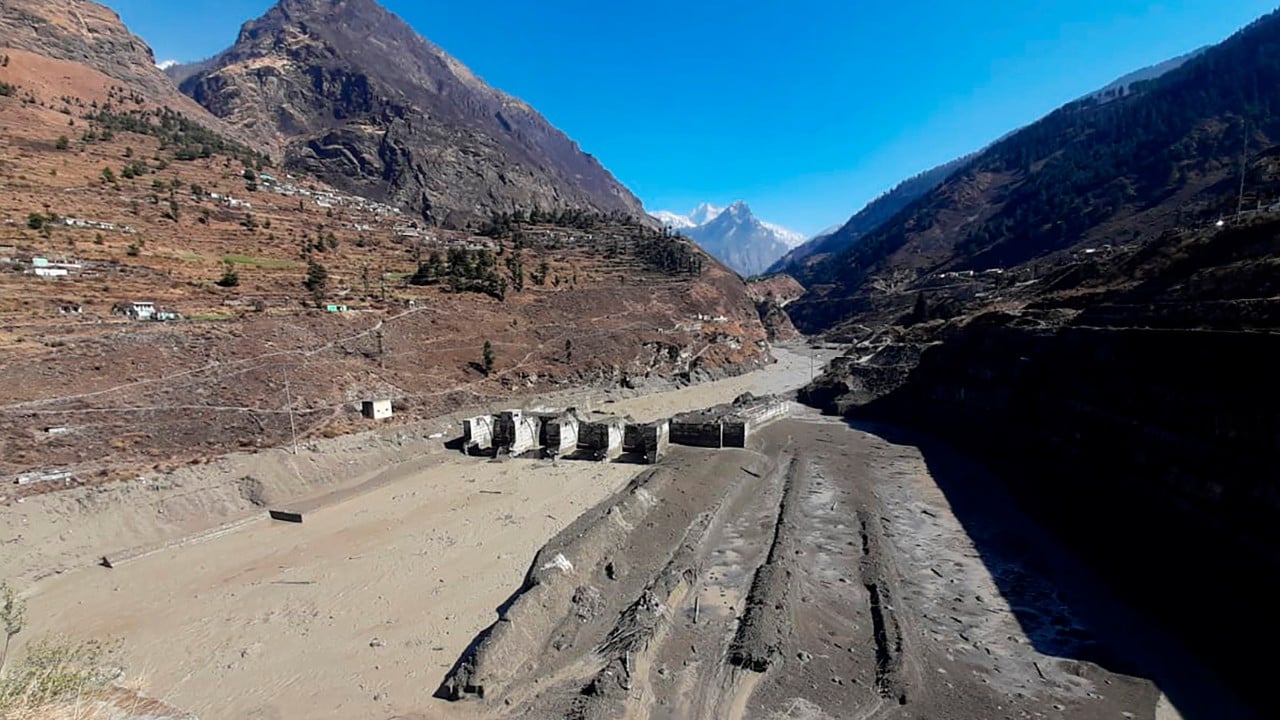
To be fair, dismissing the risks entirely would be negligent. Glacial lake outburst floods pose a very real, localized threat to mountain communities and infrastructure. Infrastructure built in narrow gorges is vulnerable to sudden surges.
However, localized flash floods are the exact opposite of a systemic regional drought. We are conflating disaster management with resource depletion. Mountain infrastructure needs heavy engineering, early warning systems, and zoning laws that keep human settlement out of ancient floodpaths. That is a civil engineering challenge, not an existential planetary crisis.
When institutions frame every environmental shift as an irreversible catastrophe, they paralyze constructive action. Panic leads to bad policy. It leads to frantic, top-down decrees that ignore local hydrological realities and punish smallholders while failing to curb industrial waste.
The water is still falling from the sky during the monsoon. The rivers are still flowing from the mountains. The crisis is entirely of our own making, maintained by politicians too cowardly to reform agriculture and analysts too lazy to look past the glaciers.
Stop waiting for the ice to save you. Fix the pipes, charge for the groundwater, and stop growing rice in the desert.