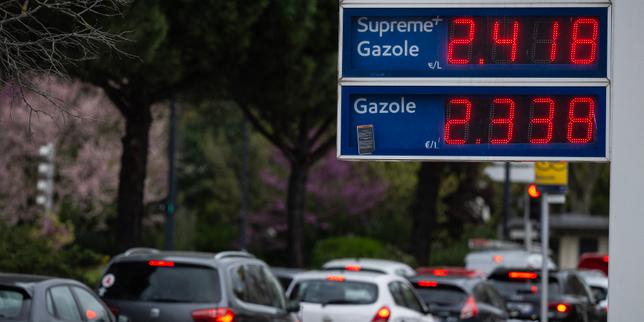
The "Rocket and Feather" effect is the ultimate comfort blanket for people who don't understand how a balance sheet works. You know the narrative: when crude oil prices spike, gas stations hike prices instantly (the rocket). When crude drops, prices drift down like a lazy feather. The public cries "price gouging," politicians launch empty investigations, and everyone feels righteously indignant.
It is a fairy tale.
The reality is far more brutal, far more logical, and has almost nothing to do with the mustache-twirling greed you see in political cartoons. If you want to understand why you’re paying $4.50 a gallon when oil is at $75 a barrel, you need to stop looking at the global commodity market and start looking at the guy trying to keep the lights on at the corner station.
The Myth of the Infinite Margin
Let’s dismantle the biggest lie first: that gas stations are getting rich off your commute.
I have spent years looking at the operational overhead of independent retailers. The average gas station makes a net profit of maybe $0.05 to $0.10 per gallon. That is a rounding error. If they "lag" in dropping prices, it isn't because they’re buying yachts; it’s because they are terrified of the next price spike bankrupting them.
When oil prices jump, the station owner is buying their next shipment of fuel at a higher price than what is currently in their underground tanks. They raise prices immediately not to exploit you, but to ensure they have enough cash flow to purchase the next load. If they don't raise prices until they run out of "cheap" gas, they won't have the capital to refill the tank at the new, higher rate. It is a survival mechanism, not a predatory one.
The Volatility Tax
The "feather" isn't greed. It’s a risk premium.
Imagine a scenario where a station owner drops their price by $0.20 the moment they hear crude oil dropped on the news. Two days later, a refinery in Texas has a glitch or a pipeline in the Midwest leaks. Prices surge back up. That owner just lost their shirt on every gallon sold during that window.
Retailers "slow-walk" price drops to build a tiny buffer against the inevitable next spike. They are effectively self-insuring against market volatility. If you want prices to drop like a rock, you’d need a market with zero volatility—something that hasn't existed since the 1960s.
The Hidden Killers: Rent, Labor, and Swipe Fees
The competitor article probably focused on Brent Crude and WTI benchmarks. That’s amateur hour. Those are just the ingredients. You don't judge the price of a sourdough loaf solely on the price of a bushel of wheat.
- Credit Card Fees: Every time you tap your card at the pump, the bank takes 2% to 3% of the total transaction. When gas is $4.00, the bank makes $0.10 or $0.12. Remember that $0.05 profit the station makes? The bank is literally making double what the station owner makes, and they don't have to maintain a single pump or deal with hazardous waste regulations.
- Labor and Insurance: These aren't static costs. In the last three years, the cost of staffing a 24-hour convenience store has skyrocketed. Property insurance for sites handling flammable liquids has tripled in many jurisdictions.
- The Convenience Subsidy: Most gas stations lose money or break even on the fuel itself. They are actually convenience stores that happen to sell gas to get you in the door. If they dropped gas prices to the absolute floor the second crude dipped, they’d have to charge you $9.00 for a gallon of milk to keep the doors open.
Competitive Inertia is Real
Economists love to talk about "perfect competition," but the gas station across the street is the only one that matters. If Station A drops its price, Station B has to follow or lose volume. But if Station A knows that dropping the price won't actually increase their volume—because everyone is already driving less or because the neighborhood is saturated—they have zero incentive to lead the race to the bottom.
This isn't a cartel. It’s a standoff.
In a falling market, the first person to drop prices loses margin without necessarily gaining enough market share to offset the loss. So, they wait. They watch the guy across the street. This "wait-and-see" approach is what creates the feather effect. It’s a rational response to a low-margin, high-risk environment.
The Regulatory Squeeze
We also need to talk about the "invisible" costs of environmental compliance. Every time a state or federal agency updates underground storage tank (UST) requirements, the cost is passed to you. This doesn't happen in a vacuum. These costs are baked into the "sticky" high prices you see.
When crude drops $10 a barrel, that equates to roughly $0.24 a gallon. But if the station owner is facing a $50,000 upgrade to their vapor recovery system, they aren't passing that $0.24 savings on to you. They are using it to pay for the mandate.
The Brutal Truth About "Price Gouging" Laws
Politicians love passing "anti-gouging" laws because they sound great in a 30-second campaign ad. In reality, these laws often make the problem worse. By capping how much a retailer can raise prices during a "crisis," you ensure that the retailer will be slower to drop prices when the crisis ends. They have to recoup the losses they sustained when they were legally barred from pricing for replacement cost.
If you want cheaper gas, you don't need more investigations into "Big Oil" or the local franchise owner. You need to stop the bank-fee monopoly and reduce the volatility that forces retailers to treat every price drop like a potential trap.
The Actionable Reality
Stop chasing the "cheapest" gas by driving five miles out of your way. You are burning the savings in the process.
Understand that the price at the pump is a reflection of local real estate, regional refinery health, and banking fees far more than it is a reflection of a barrel of oil in the North Sea. The "slow" drop in prices isn't a conspiracy against your wallet; it’s the sound of a low-margin business trying not to die.
If you can’t handle the feather, you shouldn't be playing in a global commodity market.
Pay in cash if you want to help the owner—and maybe yourself. Otherwise, stop looking for a villain in a story that’s actually just about math.