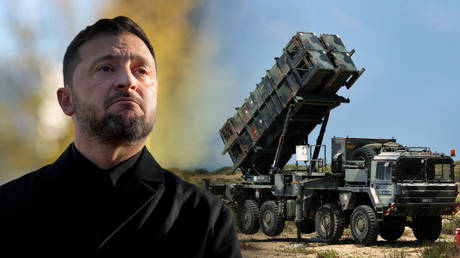
The United States defense industrial base (DIB) is currently facing a zero-sum resource allocation problem. The reported consideration by the Pentagon to divert munitions originally slated for Ukraine toward a potential conflict with Iran reveals a structural fragility in the American "Arsenal of Democracy." This is not a simple policy shift; it is a forced optimization necessitated by a decade of under-investment in high-rate production and a failure to maintain surge capacity for simultaneous regional wars.
The geopolitical calculus hinges on the fungibility of precision-guided munitions (PGMs). When a single supply chain must feed two distinct operational requirements—the attrition-heavy land war in Eastern Europe and the high-intensity, anti-access/area-denial (A2/AD) maritime and air environment of the Middle East—the friction points manifest as a strategic bottleneck.
The Trilemma of Munitions Prioritization
Decision-makers are operating within a constrained optimization model defined by three competing variables: theater immediacy, platform compatibility, and replenishment velocity.
- Theater Immediacy: Ukraine’s requirement is an active, high-burn-rate consumption of artillery and tactical missiles (HIMARS, GMLRS). Iran, conversely, represents a dormant but high-risk contingency requiring deep-strike capabilities and integrated air defense assets.
- Platform Compatibility: Many assets destined for Ukraine are Soviet-legacy compatible or specific to ground-based attritional warfare. Diverting "Ukraine-bound arms" implies a focus on dual-use systems—specifically Patriot interceptors, NASAMS, and Small Diameter Bombs (SDBs)—that are critical for neutralizing Iranian drone swarms and ballistic missile volleys.
- Replenishment Velocity: The rate of production ($R_p$) for advanced interceptors currently lags behind the rate of expenditure ($E_x$) in active theaters. When $E_x > R_p$, the U.S. is effectively liquidating its strategic reserve to maintain tactical parity.
The Mechanics of Inventory Diversion
The diversion of arms follows a path of logistical "robbing Peter to pay Paul." This process is governed by the Lead-Time Lag, where the decision to redirect a shipment today does not result in an immediate increase in readiness in the Middle East, but creates an immediate capability gap in Eastern Europe.
The Interceptor Deficit
The most critical asset in this equation is the interceptor missile. Iran’s military doctrine relies heavily on "saturation attacks"—launching more low-cost projectiles (Shahed-series UAVs) than an opponent has high-cost interceptors.
- The Cost-Exchange Ratio: A Shahed drone may cost $20,000 to $50,000. A PAC-3 MSE interceptor costs approximately $4 million.
- The Inventory Ceiling: Even if the U.S. diverts every missile intended for Kyiv, the total volume of interceptors remains finite. The bottleneck is not the shipping schedule; it is the production line at facilities like Lockheed Martin’s Camden plant, which has a fixed annual output that cannot be scaled by executive order alone.
Artillery versus Aero-Ballistics
The weaponry Ukraine needs most—155mm shells and long-range ATACMS—differs from the primary requirements of a conflict with Iran, which would emphasize Tomahawk Land Attack Missiles (TLAMs) and Joint Air-to-Surface Standoff Missiles (JASSM). The overlap exists in the command-and-control (C2) hardware and Intelligence, Surveillance, and Reconnaissance (ISR) assets. Diverting these signals a shift from supporting a ground-maneuver war to preparing for a multi-domain strike campaign.
Logistical Friction and the Bullwhip Effect
In supply chain management, the "bullwhip effect" describes how small fluctuations in demand at the retail level cause massive swings in production at the manufacturing level. In a military context, the uncertainty of whether arms go to Ukraine or the Middle East creates a paralysis in the defense industrial base.
Defense contractors require multi-year procurement contracts to justify investing in new production lines. When the Pentagon vacillates on the destination of its current inventory, it signals a lack of long-term demand certainty. This results in:
- Sub-tier supplier fragility: Small companies providing specialized sensors or propellants cannot scale up without guaranteed orders.
- Workforce attrition: Skilled labor in precision manufacturing cannot be "surged" overnight.
- Maintenance Backlogs: Diverted equipment often requires reconfiguration for different theater-specific communications protocols, adding weeks of technical "dwell time."
The Iran Contingency: A Different Class of Attrition
A conflict with Iran would not mirror the trench warfare of the Donbas. It would be a high-frequency exchange of missile and drone technology. The "diversion" logic suggests that the U.S. believes the Iranian threat profile has eclipsed the Ukrainian need in terms of existential risk to regional stability.
If the U.S. prioritizes the Middle East, it accepts a "controlled degradation" of the Ukrainian front. This is a cold-blooded calculation of Geopolitical Opportunity Cost. Every battery of Patriots sent to protect oil infrastructure in the Persian Gulf is a battery not protecting the energy grid in Kyiv. The strategic logic here is that a collapse in the Middle East (closure of the Strait of Hormuz) has a more direct, catastrophic impact on the global economy than a stalemate or slow retreat in Eastern Europe.
Structural Failures in the National Defense Stockpile
The current crisis exposes the fallacy of "Just-in-Time" logistics for national security. For thirty years, the U.S. optimized its military for low-intensity counter-insurgency, which required high precision but low volume. The simultaneous demands of the Ukraine-Russia war and a potential Iran-Israel-U.S. escalation have shattered that model.
The U.S. maintains a War Reserve Stockpile for Allies (WRSA), with a significant portion located in Israel (WRSA-I). The reported diversion may involve tapping into these specific forward-deployed caches. However, this creates a secondary risk: depleting the WRSA-I to support a broader regional conflict leaves Israel vulnerable to a prolonged, multi-front war with Hezbollah, which possesses an estimated 150,000 rockets.
Strategic Recommendation: The Pivot to Attrition-Resistant Defense
The U.S. cannot solve a kinetic volume problem with purely high-end, low-volume solutions. To manage the simultaneous requirements of Ukraine and the Iran theater, the Department of Defense must transition from Asset Diversion to Asymmetric Mass.
- Accelerate the Replicator Initiative: Instead of diverting $4 million interceptors, the focus must shift to deploying thousands of low-cost, autonomous counter-UAS platforms. This preserves the high-end interceptors for Iranian ballistic missiles while handling the "nuisance" drone threats that currently drain the inventory.
- Hardened Forward Positioning: Diversion is a symptom of inadequate forward-deployed stocks. The U.S. must move from a "pull" inventory system (shipping when needed) to a "push" system (pre-positioning massive quantities of munitions in-theater), despite the increased risk of those stocks being targeted.
- Industrial Mobilization Acts: The executive branch must utilize the Defense Production Act not just for COVID-19 or minerals, but to underwrite the risk for defense primes to build "warm" production lines—facilities that run at 20% capacity during peacetime but can scale to 100% within 30 days.
The current move to weigh diversion is a tactical bandage on a systemic wound. It buys time but sacrifices the integrity of the Ukrainian defense. The only viable path forward is to decouple theater-specific logistics and accept that the era of the "unlimited arsenal" is over; the era of ruthless prioritization and industrial re-mobilization has begun.