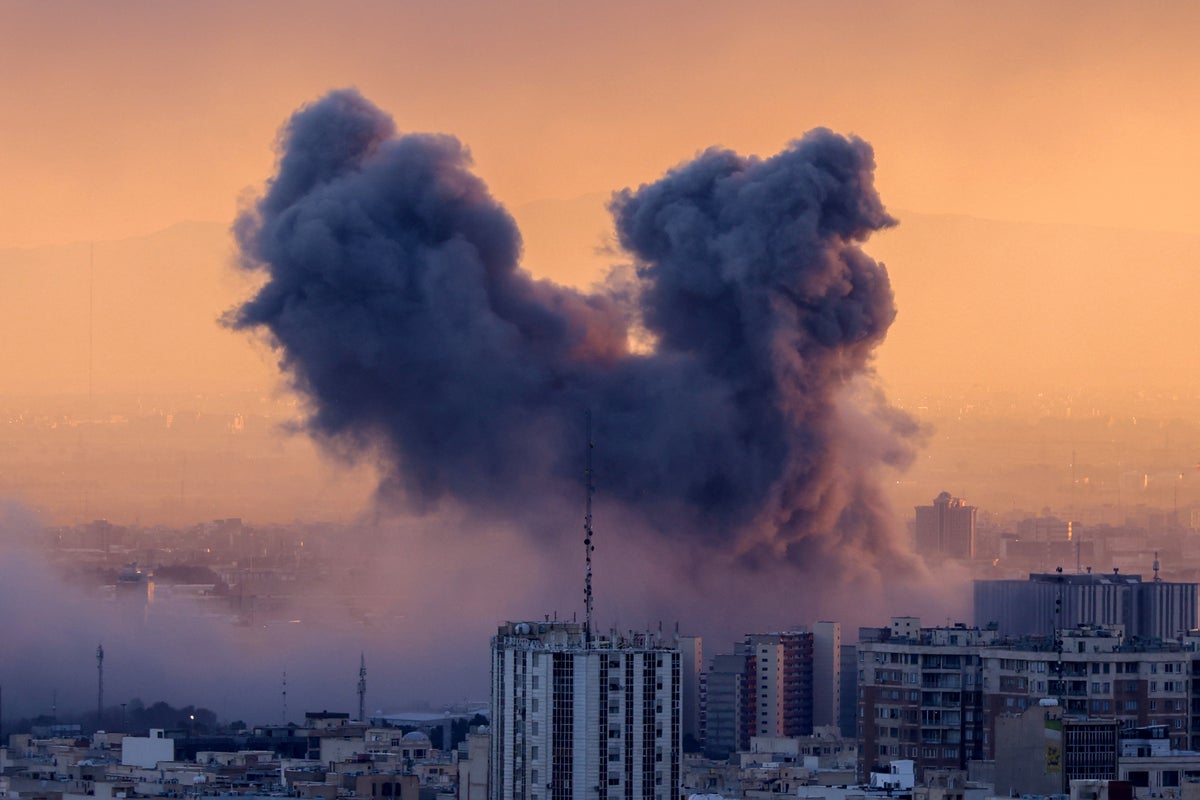
The stability of any diplomatic arrangement between the United States and the Islamic Republic of Iran rests on a binary friction point: the immediate liquidity requirements of the Iranian regime versus the domestic political survival of the U.S. executive branch. While media narratives focus on "thaws" or "diplomatic breakthroughs," a rigorous analysis reveals a complex exchange of asymmetric assets. This framework is not a peace treaty but a highly volatile management of escalation thresholds, where both parties seek to minimize the cost of containment while maximizing the pressure on the opponent’s internal constraints.
The Tripartite Model of Iranian Strategic Leverage
To understand the trajectory of any ceasefire or informal understanding, one must first deconstruct the three variables Iran uses to price its cooperation. Each variable serves as a dial that can be turned to extract specific concessions from the West.
- Nuclear Enrichment Velocity: This is the primary kinetic lever. By fluctuating between 20% and 60% U-235 purity, Tehran manipulates the "breakout time" metric used by Western intelligence. This isn't merely a technical milestone; it is a psychological pricing mechanism.
- Regional Proxy Integration: The "Axis of Resistance" functions as a distributed defense system. This network creates a "theatre of pain" where Iran can inflict costs on U.S. interests without initiating a direct state-to-state conflict.
- Maritime and Energy Chokepoints: The threat to the Strait of Hormuz remains the ultimate global economic veto.
When a ceasefire occurs, it is rarely a result of shifted ideology. It is a recalibration of these three levers in exchange for the release of frozen assets or the non-enforcement of primary and secondary oil sanctions.
The Economic Cost Function of Sanctions Relief
The efficacy of sanctions relief is often misrepresented as a simple inflow of cash. In reality, the utility of these funds is governed by the Velocity of Sanctions Re-imposition (VSR). If the Iranian leadership perceives that funds will be frozen again within an 18-month cycle, they do not invest in long-term infrastructure. Instead, they prioritize immediate hard-currency reserves and the funding of proxy networks to ensure survivability during the next "Maximum Pressure" phase.
The "Shadow Banking" network developed by Tehran facilitates a significant portion of their trade outside the SWIFT system, primarily through front companies in third-party jurisdictions. This creates a baseline economic floor that makes the U.S. "Sanctions Bazooka" less effective over time. Any ceasefire that merely releases $6 billion to $10 billion is a tactical breather, not a structural shift in the Iranian macro-economy. The regime’s objective is to achieve a state of "sanctions immunity," where their trade with China and other non-aligned partners renders U.S. financial restrictions irrelevant.
The Asymmetric Deterrence Gap
A fundamental flaw in Western diplomatic strategy is the assumption of symmetry. The U.S. views a ceasefire as a step toward a "longer and stronger" deal; Iran views it as a tactical retreat to regroup. This creates an Asymmetric Deterrence Gap.
For the United States, the cost of an escalation is high—political fallout from rising oil prices, the risk of another "forever war," and the distraction from the Indo-Pacific theater. For the Iranian leadership, the cost of escalation is part of their revolutionary identity. They are willing to absorb significant domestic economic pain to maintain regional hegemony. This imbalance means that in any "ceasefire," the U.S. often pays a premium for a temporary cessation of hostilities that Iran can restart at a lower cost.
Mechanics of the Shadow War
Even during a formal or informal ceasefire, the "Gray Zone" conflict persists. This involves:
- Cyber Operations: Low-attribution attacks on critical infrastructure.
- Targeted Assassinations and Sabotage: Mossad-led operations within Iran and IRGC-led operations against dissidents or Western partners.
- Information Warfare: Manipulating domestic audiences in the U.S. and Europe to influence election outcomes or policy shifts.
These actions do not technically violate the terms of most "nuclear" ceasefires, which allows the friction to continue despite the diplomatic optics.
Internal Constraints and the Succession Variable
The most significant and least predictable variable in this strategic equation is the internal political landscape of Iran. The transition of power from the current Supreme Leader to a successor will dictate the long-term viability of any international agreement.
The Iranian political apparatus is divided into two main factions, though they are more alike than different:
- The Pragmatists: Those who believe the survival of the Islamic Republic requires a level of integration into the global economy to prevent a total domestic uprising.
- The Hardliners/IRGC: Those who believe that any concession to the "Great Satan" is a sign of weakness that invites further aggression. They benefit economically from the "smuggler's economy" created by sanctions.
A ceasefire empowers the pragmatists temporarily, but if the promised economic benefits do not reach the middle class—due to corruption or continued secondary sanctions—the hardliners regain the narrative, leading to a rapid reversal of the diplomatic progress.
The China-Russia Realignment
The geopolitical context of 2026 is vastly different from the JCPOA era of 2015. Iran is no longer isolated in its opposition to the Western-led order. The deepening of the "No Limits" partnership between Russia and China has provided Tehran with a diplomatic and economic shield.
- Energy Exports to China: China remains the largest buyer of Iranian crude, often using "teapot" refineries that are insulated from U.S. financial pressure.
- Military-Technical Exchange with Russia: The export of Iranian drone technology to Russia in the Ukraine conflict has created a new transactional relationship. In exchange, Iran seeks advanced air defense systems (S-400) and fighter jets (Su-35), which would fundamentally alter the regional balance of power by increasing the cost of an Israeli or U.S. air strike.
This "Triad of Revisionist Powers" ensures that Iran has alternatives to Western rapprochement. A ceasefire is no longer their only path to survival; it is simply one of several options on the menu.
Structural Failures in the Ceasefire Model
Most diplomatic frameworks fail because they treat the symptoms (enrichment levels, proxy attacks) rather than the disease (the structural requirement for the Iranian regime to maintain an adversarial stance to justify its internal security apparatus).
The U.S. executive branch operates on a four-to-eight-year cycle, while the Iranian leadership thinks in decades. This Temporal Mismatch means that Iran can simply outwait any specific U.S. administration. They know that a deal signed with a Democrat may be torn up by a Republican, and vice versa. Consequently, they never fully commit to the "de-nuclearization" side of the bargain, maintaining enough latent capability to restart their program within weeks.
Strategic Forecast: The Permanent Friction State
The most likely outcome of the current trajectory is not a comprehensive "Grand Bargain" or a devastating war, but a Permanent Friction State.
The U.S. will continue to use "surgical" sanctions and occasional kinetic strikes to maintain a ceiling on Iranian aggression. Iran will continue to use its proxies and nuclear "creeping" to extract concessions. Both sides will periodically engage in "ceasefires" to manage their respective internal crises—be it an election in Washington or a period of civil unrest in Tehran.
The real danger in this cycle is the Escalation Ladder Miscalculation. As both sides become accustomed to "controlled" conflict, the risk of an unintended event—a drone strike that kills too many American soldiers, or a cyberattack that causes a catastrophic failure in Iranian infrastructure—triggers a full-scale kinetic response that neither side actually wants.
The Recommendation for Strategic Positioning
For global actors and private interests, the strategy must be one of "Hedging against Volatility."
- Supply Chain Diversification: Assumptions that the Persian Gulf will remain open for energy transit must be stress-tested against a 30-day closure scenario.
- Geopolitical Risk Insurance: Contracts must account for "Snapback" sanctions that can be triggered without warning.
- Dual-Track Intelligence: Monitoring the Supreme Leader's health and the IRGC's internal business interests provides more accurate forecasting than official diplomatic communiqués.
The "ceasefire" is a pause, not a pivot. The underlying structural antagonisms remain untouched. True stability in the Middle East would require a fundamental shift in the Iranian regime’s perception of its own security, a shift that no amount of Western sanctions relief or diplomatic "engagement" has yet been able to produce. The focus must remain on the hard metrics of enrichment and proxy funding, rather than the ephemeral rhetoric of diplomatic breakthroughs.
The optimal move for Western policy is to establish a "Red Line" architecture that is decoupled from political cycles—a task that remains the greatest weakness in the U.S. strategic posture. Without a credible, long-term commitment to a specific deterrence threshold, the U.S. will continue to pay for "pauses" while Iran continues to build its strategic depth.