Disaster reporting frequently relies on emotional proximity, documenting the immediate aftermath of floods through individual grief while obscuring the systemic mechanics that convert meteorological hazards into predictable human catastrophes. When monsoon rains inundate regions like Nepal, the resulting loss of life and subsequent displacement are rarely random anomalies. Instead, they represent the terminal output of compounding institutional failures, geographic vulnerabilities, and economic deficits. Analyzing these crises requires stripping away the narrative veneer of tragedy to examine the exact vectors of failure across infrastructure, public health systems, and emergency response protocols.
The Geographic and Institutional Vulnerabilities
Topographical factors in mountainous and basin regions create acute exposure to extreme weather events. Steep terrain combined with intense precipitation patterns generates high-velocity runoff, transforming rivers into destructive channels within hours. However, exposure alone does not dictate mortality. The primary variable is structural resilience.
Informal settlements and poorly regulated infrastructure systematically occupy high-risk zones, such as floodplains and unstable hillsides, because marginalized populations lack access to economically viable, secure land. When municipal zoning laws fail to enforce spatial restrictions, or when state resources are insufficient to build adequate flood-mitigation barriers, the risk profile of the population increases exponentially.
Building codes and land-use policies frequently exist on paper while remaining entirely absent in practice. This enforcement deficit means that residential structures in vulnerable corridors are built using substandard materials incapable of withstanding hydrostatic pressure or soil liquefaction. Consequently, standard monsoon events produce disproportionate structural collapses, trapping residents before evacuation warnings can be processed or acted upon.
The Cost Function of Delayed Emergency Response
The efficacy of disaster management is directly proportional to the speed and precision of early-warning systems and logistical deployment. In many developing South Asian contexts, the timeline from meteorological detection to ground-level evacuation is compromised by institutional fragmentation and communication bottlenecks.
Meteorological data often fails to translate into localized, actionable directives for rural communities. Even when forecasts accurately predict precipitation thresholds, last-mile communication infrastructure—such as siren systems, redundant cellular networks, or community-based broadcast protocols—frequently breaks down. This leaves remote populations isolated during the critical window preceding impact.
Once disaster strikes, the logistical cost function shifts to rescue and triage operations. The absence of prepositioned emergency assets, such as amphibious vehicles, rotorcraft, and portable medical units in high-risk districts, guarantees a reactive rather than proactive posture. Response times expand from minutes to days due to damaged roadways and compromised bridges. This operational delay directly drives up mortality rates, shifting the cause of death from the primary hazard to secondary factors such as trauma, hypothermia, and untreated infections.
Public Health Fractures and Mass Mortality Management
Beyond immediate rescue operations, severe flooding triggers secondary public health crises that strain institutional capacities to their breaking point. Contaminated water supplies introduce waterborne pathogens, while stagnant pools create breeding vectors for vector-borne diseases. Without immediate chlorination and distribution of potable water, localized outbreaks of diarrheal diseases and cholera can rapidly escalate into epidemic proportions among displaced populations housed in temporary camps.
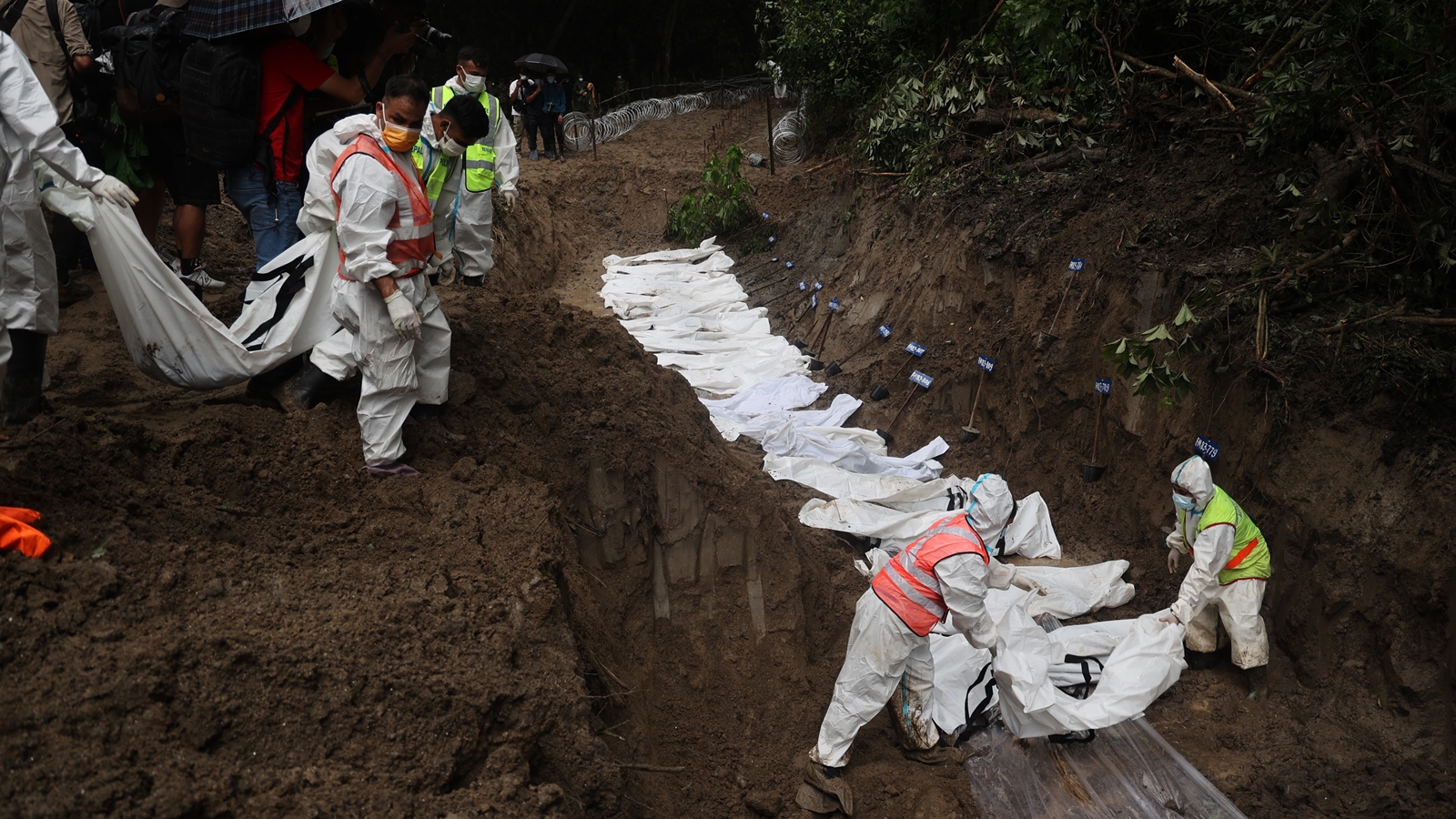
Mortality management during mass casualty events exposes severe administrative and infrastructural strains. When formal mortuary capacities are overwhelmed, systemic protocols for identification, forensic logging, and dignified burial collapse. The utilization of unmarked graves is not merely a logistical expediency; it represents a systemic failure of civil registration and forensic tracking.
Proper identification of the deceased is critical for legal, psychological, and epidemiological reasons. Without systematic tracking, missing persons remain in administrative limbo, complicating inheritance, insurance, and family support structures. Furthermore, rapid or unrecorded burials obscure true mortality figures, preventing accurate post-disaster epidemiological assessments and blinding policymakers to the precise scale of the public health emergency.
Systemic Economic Dislocation
The long-term fallout of monsoon catastrophes is measured in chronic economic contraction rather than acute physical destruction. Agricultural land is frequently rendered sterile by thick layers of silt, debris, and chemical runoff, destroying the primary livelihood of rural households for multiple growing seasons. Because smallholder farmers operate on thin margins with minimal cash reserves, a single crop failure pushes them into structural indebtedness from which recovery is statistically unlikely without targeted state intervention.
Financial resilience mechanisms are virtually absent for the demographic segments most vulnerable to flooding. Index-based agricultural insurance and micro-reinsurance programs remain inaccessible or prohibitively expensive for subsistence farmers. When physical assets—including livestock, seed stores, and implements—are washed away, households are forced to liquidate remaining productive assets or rely on informal, predatory credit networks to survive.
This dynamic accelerates rural-to-urban migration, funneling displaced populations into peri-urban slums where municipal services are already overextended. The urban centers absorb a population shock without the industrial capacity to provide formal employment, deepening regional economic instability and laying the groundwork for subsequent humanitarian vulnerabilities during the next seasonal shock.
Strategic Resource Reallocation
Mitigating the recurrence of these systemic failures requires abandoning reactive humanitarian models in favor of capital-intensive, preventative architectural shifts. Governments and international aid organizations must transition funding streams away from post-disaster relief efforts and toward structural hardening and decentralized risk management.
Capital investment must target the engineering of resilient rural infrastructure, including elevated community shelters, retrofitted river embankments, and redundant communication grids that remain operational during grid failures. Simultaneously, land-use policies must be rigorously enforced to prohibit permanent habitation in high-risk alluvial zones, paired with state-backed land swaps that relocate vulnerable communities to topographically secure terrain before the next meteorological cycle begins.