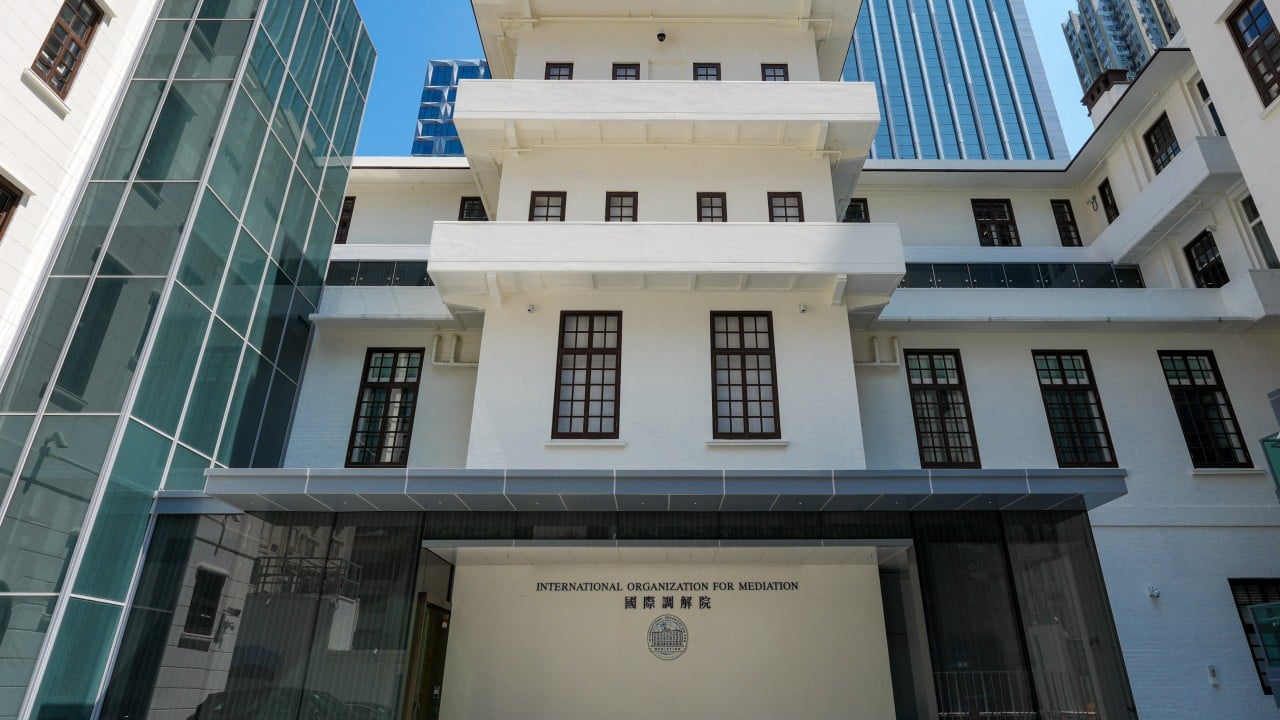
Cross-border commercial disputes involving state-owned entities or sovereign actors present unique jurisdictional friction that traditional litigation routinely fails to resolve efficiently. When a Hong Kong-based mediation body positions itself as a primary hub for state-related disputes, the claim requires rigorous deconstruction rather than passive acceptance. The ambition to anchor alternative dispute resolution in Asia for sovereign and quasi-sovereign conflicts depends on three structural variables: institutional neutrality, enforcement architecture under international public law, and the minimization of transaction costs relative to investor-state arbitration.
Evaluating this positioning demands an operational framework. State-level friction differs fundamentally from commercial contract breaches because sovereign immunity, political risk, and diplomatic fallout directly distort standard rational economic behavior. A mediation body operating out of a specific geographic jurisdiction must reconcile its administrative independence with local political realities while offering an enforcement mechanism robust enough to substitute for traditional court judgments or ICSID arbitral awards.
The Cost Function of Sovereign Conflict
Resolution mechanisms for state disputes are bound by a rigid economic equation where the primary variables are time, political capital, financial expenditure, and reputational damage. Traditional litigation in domestic courts introduces absolute bias risks, while investor-state dispute settlement suffers from protracted timelines often exceeding three years per case and multi-million-dollar legal outlays.
Mediation fundamentally alters this cost function by introducing a variable timeline and preserving confidentiality. For a sovereign state or a state-owned enterprise, public court battles threaten credit ratings, sovereign bond yields, and foreign direct investment inflows.
- Direct Capital Expenditure: Arbitrator fees, expert witness retainers, and legal counsel overhead in ICSID or UNCITRAL proceedings regularly surpass the original quantum of dispute.
- Indirect Opportunity Cost: Delayed infrastructure projects, frozen assets in foreign jurisdictions, and fractured bilateral trade channels compound the total financial drain.
- Reputational Discount: Public judicial exposure creates uncertainty that market participants price directly into subsequent commercial engagements.
A mediation framework mitigates these outflows by transforming a zero-sum legal contest into a controlled settlement negotiation. However, the viability of such a framework rests entirely on whether the resulting agreement carries actionable weight across disparate legal systems.
The Enforcement Paradox and the Singapore Convention Mechanism
The core vulnerability of international mediation has historically been enforcement. An arbitral award enjoys global recognition via the New York Convention of 1958, and court judgments benefit from various bilateral treaties. Mediation settlements, by contrast, traditionally relied on contract law, requiring a separate breach-of-contract lawsuit if a party defaulted on the mediated terms.
The entry into force of the United Nations Convention on International Settlement Agreements Resulting from Mediation alters this dynamic. By allowing parties to invoke settlement agreements directly in domestic courts of signatory states, the framework bridges the gap between voluntary negotiation and mandatory execution.
Traditional Litigation: Dispute -> Court Action -> Judgment -> Enforced via Treaty
ICSID Arbitration:      Dispute -> Tribunal Panel -> Award -> Enforced via ICSID Treaty
Structured Mediation:   Dispute -> Facilitated Terms -> Singapore Convention -> Direct Court Enforcement
For a regional legal hub to successfully capture state-related disputes, its administrative rules must seamlessly integrate with this enforcement architecture. When a state entity engages in mediation, the operational security of the resolution depends on whether the host jurisdiction of the mediation body is a contracting state to relevant international enforcement instruments, and whether local statutory provisions protect state immunity waivers executed during the mediation window.
Institutional Neutrality and Jurisdictional Friction
A Hong Kong-based institution attempting to scale its state-dispute practice faces a distinct strategic challenge: managing the perception of institutional neutrality in an era of complex geopolitical realignments. Sovereign entities evaluate dispute resolution venues through the lens of systemic risk.
Institutional credibility relies on three observable metrics:
- Panel Diversity: The inclusion of internationally recognized mediators who possess expertise in public international law, sovereign immunity doctrines, and cross-border trade economics, rather than domestic practitioners alone.
- Administrative Firewalling: Absolute operational independence from governmental interference, ensuring that case management decisions remain impervious to external diplomatic pressure.
- Procedural Flexibility: Rules designed to accommodate the unique governance structures of state-owned enterprises, which often require multi-tiered internal approval chains before a settlement can legally bind the sovereign principal.
Without these safeguards, institutional marketing regarding readiness to tackle state disputes remains theoretical. The mechanics of state-to-state or investor-state mediation require protocols that explicitly address public interest defenses, anti-suit injunctions, and confidentiality exceptions mandated by public disclosure laws applicable to state entities.
Strategic Operational Integration
To transform from a regional administrative center into an elite global clearinghouse for complex sovereign disputes, an institution must deploy specific operational adjustments. First, fee structures must decouple from the quantum in dispute when dealing with states, as percentage-based administrative fees on multi-billion-dollar infrastructure claims create perverse disincentives for participation. Second, specialized training regimens must be established to certify mediators specifically in public international law and state contract dynamics, shifting the competency baseline beyond standard commercial facilitation.
The operational utility of Asian mediation hubs will ultimately be measured not by the volume of low-value commercial filings they process, but by their capacity to absorb high-stakes disputes that would otherwise default to Western arbitral institutions.
Establish dedicated cross-border dispute protocols within institutional rulebooks, embedding explicit guidelines for sovereign immunity waivers, multi-jurisdictional enforcement pathways under the Singapore Convention, and specialized mediator credentialing for public international law contexts.