A 45% contraction in Indian student enrollment at US universities represents more than a temporary logistical bottleneck; it is a fundamental shift in the risk-adjusted return on investment (ROI) for international human capital. The historical dominance of the US as the primary destination for Indian STEM talent relied on a predictable "Golden Triangle" of high-quality instruction, a clear path to high-wage employment via OPT (Optional Practical Training), and a manageable debt-to-income ratio. This triangle is currently collapsing under the weight of systemic friction, rising capital costs, and the emergence of viable secondary markets.
Analyzing this decline requires deconstructing the migration process into three critical friction points: Regulatory Impedance, Capital Efficiency, and Alternative Opportunity Cost.
The Regulatory Impedance Factor: Visa Processing as a Supply Constraint
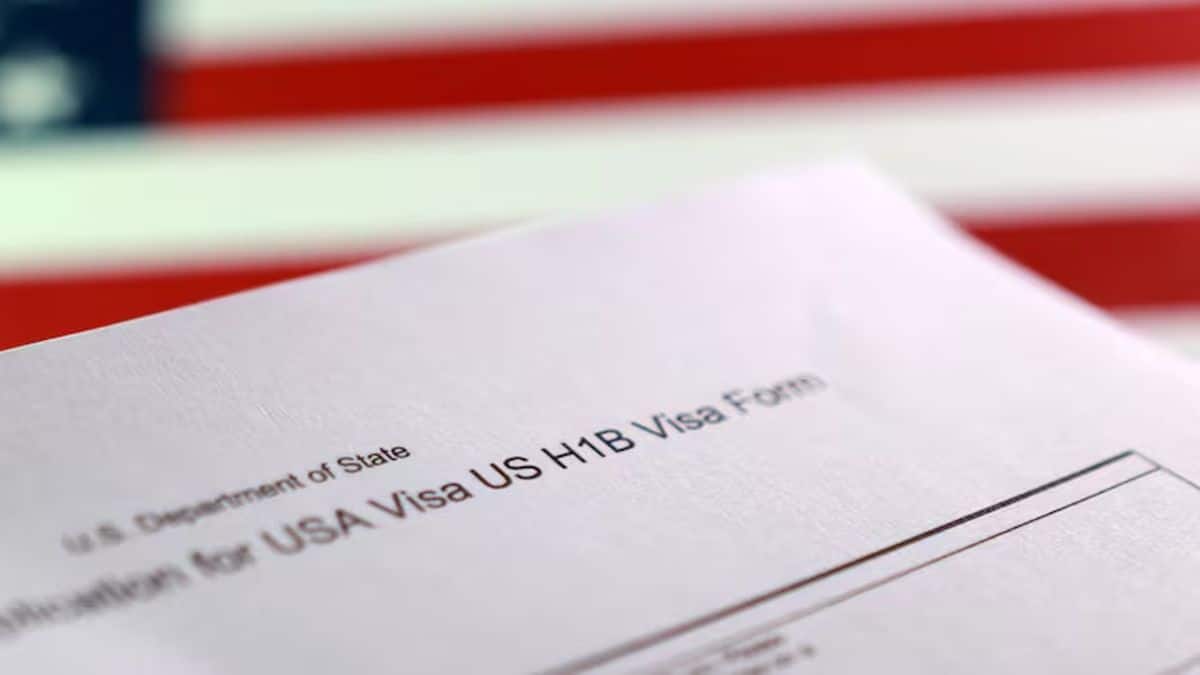
The headline figure of a 45% drop is primarily driven by the inability of the US Department of State to synchronize its processing capacity with the cyclical nature of academic intake. This is not merely an administrative delay; it is a structural failure of the "F-1 to H-1B" pipeline.
The Uncertainty Premium
When a student commits to a US master's program, they are purchasing a future income stream. The value of this stream is discounted by the probability of visa denial or delay. As processing times extend beyond the "start-of-term" window, the uncertainty premium rises. For an Indian student, a delayed visa isn't just a late start; it is a forfeited deposit (often ranging from $1,000 to $5,000) and a lost year of peak earning potential.
Structural Bottlenecks in Consular Operations
The US consular presence in India has struggled to scale alongside the 35% year-over-year surge in demand seen in 2022-2023. When demand outstrips supply in a non-market environment—where prices (visa fees) do not fluctuate to clear the market—the result is a queue. For the Indian middle class, this queue creates a "dead zone" where students cannot plan their financial or professional lives, leading them to abandon the US application entirely in favor of markets with more predictable timelines, such as Germany or the UAE.
The Capital Efficiency Crisis: The Cost Function of an American Degree
The economic model of the Indian student in America has shifted from a "wealth generation" play to a "capital preservation" struggle. Three variables dictate this shift: the depreciation of the Indian Rupee (INR), the spike in global interest rates, and the stagnation of entry-level tech salaries in the US.
The Exchange Rate Tax
The cost of a US education for an Indian family is effectively indexed to the USD/INR exchange rate. Over the last decade, the Rupee has faced consistent downward pressure. When tuition is denominated in USD but funded by INR-based assets or loans, the "effective tuition" increases even if the university keeps its rates flat.
The Cost of Debt
Most Indian students fund their US education through non-collateralized or property-backed loans. In a low-interest-rate environment, the debt-to-income (DTI) ratio remained manageable. However, as global central banks tightened monetary policy, interest rates on education loans in India climbed into the 11% to 14% range.
The Math of Deficit:
- Principal: $100,000 (Two-year MS)
- Interest Rate: 12%
- Monthly Interest: ~$1,000
- Living Expenses in US: $1,500 - $2,000/month
A student now requires a starting salary of at least $95,000 just to maintain a neutral cash-flow position while servicing debt. With the US tech sector undergoing "right-sizing" and entry-level roles becoming scarcer, the probability of securing that $95,000 floor has plummeted.
The Tuition-to-Salary Divergence
While US tuition has increased at 2x to 3x the rate of inflation, US entry-level tech wages have remained relatively stagnant or have been depressed by the influx of AI-driven productivity tools. The result is a compression of the Net Present Value (NPV) of a US degree.
Alternative Opportunity Cost: The Rise of "Good Enough" Competitors
The US no longer operates as a monopoly in the high-end education market. The 45% decline in US enrollment correlates with a strategic pivot toward jurisdictions that offer lower barriers to entry and clearer pathways to residency.
The European Value Proposition
Germany and France have aggressively marketed their public university systems, which often feature zero or nominal tuition. While the "prestige" of a German degree may rank slightly lower than a Top-50 US university, the ROI is infinitely higher when the initial capital outlay is near zero. Furthermore, post-study work permits in the EU are often more streamlined and less reliant on the "lottery" system that defines the US H-1B visa.
The "Global South" Retention
India's own domestic infrastructure is beginning to capture a segment of the talent that previously would have fled. The growth of high-quality Indian institutes, particularly in AI and FinTech, coupled with the rapid expansion of global capability centers (GCCs) in Bangalore and Hyderabad, has created a "stay home" option. These GCCs offer salaries that, while lower in absolute USD terms, provide a higher standard of living on a PPP (Purchasing Power Parity) basis.
Conclusion of the Era: The Shift to Diversified Credentials
The 45% decline in US university enrollment among Indian students is not an anomaly but an adjustment. The market is pricing in the risk of visa delays and the high cost of US capital. For a generation that grew up on the promise of the American dream, the US is increasingly seen as a "high-beta" investment—potentially rewarding, but excessively volatile.
The strategic play for universities and policymakers in the US is simple: they must decrease the friction coefficient. This means moving beyond "processing visas" to "automating pathways." If the US fails to decouple its immigration policy from its educational exports, it will continue to lose its primary source of intellectual and economic dynamism.
Students should shift their strategy from "School First" to "Visa/Income Second." This involves a multi-market approach: applying to two US-based institutions, two EU-based institutions, and one domestic fallback. The goal is no longer the degree itself; it is the most efficient conversion of human capital into liquid capital.