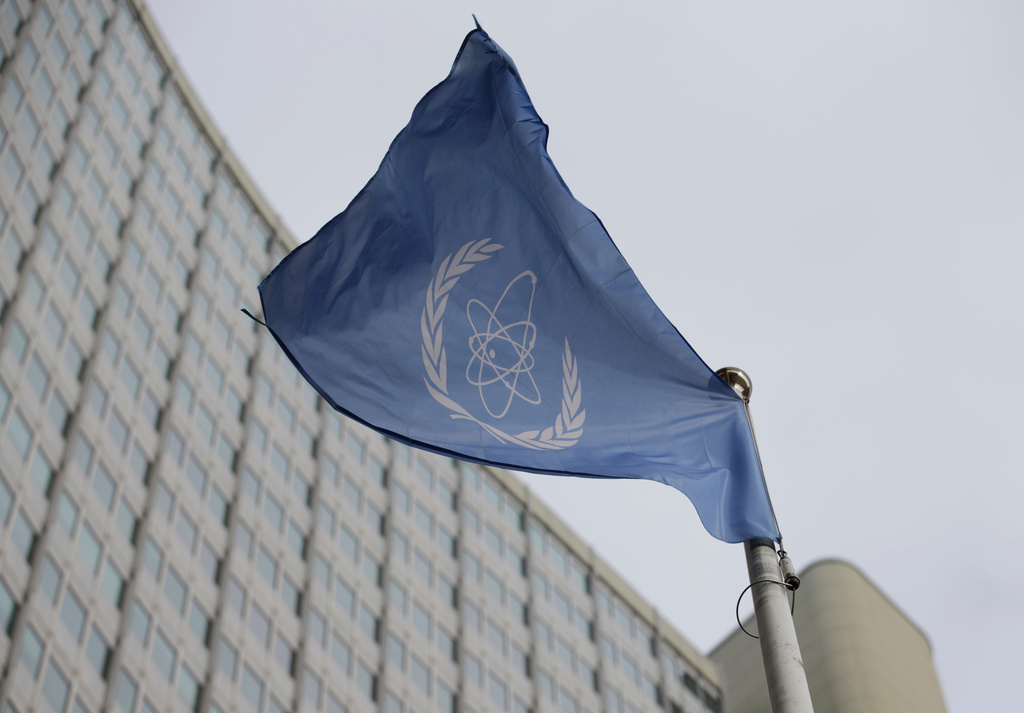
The integrity of the global non-proliferation regime rests on the transition from political promises to physical verification. When the International Atomic Energy Agency (IAEA) reports an inability to verify the suspension of uranium enrichment, it is not a mere logistical delay; it is a breakdown of the Verification-Access Correlation. For a verification regime to be functional, the legal right to inspect must be matched by the physical capability to monitor in real-time. Without this alignment, the "suspension" of nuclear activities remains a theoretical claim rather than a verifiable fact.
The Triad of Enrichment Verification
To understand why the IAEA is currently blinded regarding Iran’s enrichment status, one must break down the verification process into three distinct operational pillars. If any one of these pillars is compromised, the entire monitoring system transitions from "active verification" to "historical reconstruction"—the latter being notoriously unreliable in high-stakes arms control.
- Containment and Surveillance (C/S): This involves the use of tamper-indicating seals and remote camera systems. In a suspended state, these devices ensure that no material is moved and no centrifuges are activated without triggering an alert.
- Material Balance Accounting (MBA): This is the quantitative track-and-trace of Uranium hexafluoride ($UF_6$). Inspectors must measure the "Beginning Inventory," add "Increases," subtract "Decreases," and compare the result to the "Ending Inventory." Any "Material Unaccounted For" ($MUF$) suggests diversion.
- Complementary Access: Under the Additional Protocol, inspectors require the ability to visit undeclared sites or locations where nuclear-related activities (like centrifuge component manufacturing) occur.
The current friction stems from the decoupling of these pillars. While Iran may claim that enrichment is suspended at specific facilities like Natanz or Fordow, the removal or disabling of IAEA monitoring equipment creates a "black box" period. During this window, the Chain of Custody is broken. Even if cameras are reinstalled later, the IAEA cannot bridge the data gap to guarantee that no clandestine enrichment occurred during the blackout.
The Physics of Divergence: Why "Suspension" is a Variable State
In nuclear diplomacy, "suspension" is often treated as a binary (on or off). In nuclear engineering, it is a gradient. The transition from $3.67%$ enrichment (civilian grade) to $20%$ (highly enriched) and finally to $60%$ or $90%$ (weapons-grade) is not linear in terms of effort; it is an accelerating curve.
The Separative Work Unit (SWU) is the standard measure of the effort required to separate isotopes of uranium. As the enrichment level increases, the amount of SWU required to reach the next stage actually decreases.
- The most energy-intensive part of the process is enrichment from $0.7%$ ($U$-235) to $5%$.
- By the time uranium is enriched to $20%$, approximately $90%$ of the work required to reach weapons-grade ($90%$) has already been completed.
This creates a high-risk incentive for a state to maintain a "dormant" enrichment capacity. If the IAEA cannot verify that centrifuges are physically disconnected or that the feed material is removed, the "suspension" can be reversed in a matter of hours. This is the Reversibility Paradox: the more advanced the centrifuge technology (such as the IR-6 or IR-8 models), the less meaningful a verbal commitment to suspension becomes without constant, intrusive oversight.
The Information Gap and the Risk of "Breakout"
The IAEA’s inability to verify the status of Iranian enrichment directly impacts the calculation of Breakout Time—the duration required to produce enough weapons-grade uranium for a single nuclear explosive device.
The breakout calculation relies on three known variables and one unknown variable:
- Variable A (Known): The current stockpile of enriched uranium at various percentages.
- Variable B (Known): The number and type of centrifuges currently installed.
- Variable C (Known): The theoretical throughput (SWU) of those machines.
- Variable X (Unknown): The amount of enrichment occurring behind the "verification curtain."
When the IAEA loses visibility, Variable X becomes an exponential risk factor. The agency’s most recent reports indicate a significant increase in $60%$ enriched material. From a strategic perspective, $60%$ enrichment serves no credible civilian purpose for a nation without a specific type of research reactor that Iran does not currently operate at scale. Therefore, the accumulation of $60%$ material, combined with restricted IAEA access, shifts the status of the program from "transparency-based" to "intent-based."
Institutional Constraints of the IAEA
It is a common misconception that the IAEA acts as a global "nuclear police force" with the power of seizure. In reality, the agency operates under a Contractual Mandate. Its authority is derived from the Non-Proliferation Treaty (NPT) and specific Comprehensive Safeguards Agreements (CSA).
The current impasse is a result of Iran scaling back its cooperation to the bare minimum required by the CSA, while suspending the voluntary measures of the 2015 Joint Comprehensive Plan of Action (JCPOA) and the Additional Protocol. This creates a Legal Gray Zone. The IAEA can report that it is "unable to verify," but it lacks the legal mechanism to force entry into sites where it suspects monitoring equipment has been tampered with or where enrichment is being diverted.
The primary tool remaining for the IAEA is the Board of Governors Resolution. However, these resolutions are political, not technical. They signal international disapproval but do not restore the physical "eyes on the ground" necessary for technical verification.
Centrifuge Manufacturing: The Unseen Frontier
While the world focuses on the underground halls of Fordow, the more critical verification failure may be occurring in centrifuge assembly workshops. Centrifuges are the "engine" of enrichment. If a state can manufacture advanced centrifuges without IAEA oversight, it can build a "shadow" enrichment capability.
The IAEA has explicitly stated that its knowledge of Iran’s centrifuge component inventory is no longer complete. This creates a Dual-Path Risk:
- The Declared Path: Facilities like Natanz, where some monitoring persists.
- The Clandestine Path: Using unmonitored, newly manufactured centrifuges in small, hardened, or hidden locations to process existing stockpiles.
Without the ability to track the manufacturing of rotors, bellows, and carbon-fiber tubes, the IAEA cannot provide a "Baseline Guarantee." You cannot verify a suspension of activity if you do not know the total number of machines capable of performing that activity.
Strategic Implications of the Verification Vacuum
The absence of verification changes the calculus for regional and global actors. In the logic of Game Theory, when one player’s moves are hidden, the other players must assume the worst-case scenario to ensure their own security. This leads to a "Security Dilemma" where defensive preparations by neighboring states (or calls for preemptive strikes) are triggered by the mere uncertainty of enrichment levels.
The IAEA’s reports serve as a "De-escalation Buffer." When the reports are clear and definitive, they provide the political space for diplomacy. When the reports are filled with caveats about "inability to verify," the buffer erodes. We are currently witnessing the transition from a Technical Dispute to a Strategic Intelligence Gap.
Quantifying the Monitoring Loss
To grasp the severity of the situation, one must look at the data points lost. Since 2021, the IAEA has effectively lost:
- Continuous Surveillance Data: Real-time feeds from cameras at key sites.
- Online Enrichment Monitors (OLEMs): Devices that measure the enrichment level of $UF_6$ as it flows through pipes.
- Electronic Seal Records: Which would show if containers of nuclear material were opened.
This data loss is cumulative. The longer the gap persists, the more the "uncertainty envelope" grows. If the IAEA eventually regains access, it will face the monumental task of Forensic Safeguards. This involves sampling environmental residues (swiping surfaces for microscopic particles) and trying to cross-reference electricity consumption records with stated activity to see if the math adds up. However, forensic safeguards are rarely $100%$ conclusive against a sophisticated actor.
The Mechanism of Modern Safeguards
The IAEA uses a system called State-Level Concept (SLC) to evaluate a country's nuclear profile. This is not just about counting jars of uranium; it involves an "all-source" analysis.
- Satellite Imagery Analysis: Monitoring construction, security perimeters, and thermal signatures at suspected sites.
- Trade Analysis: Tracking the procurement of dual-use materials (like high-strength aluminum or maraging steel).
- Open-Source Intelligence (OSINT): Reviewing scientific papers published by a nation’s nuclear physicists to understand the direction of their research.
The failure to verify onsite enrichment means the IAEA is now forced to rely more heavily on these secondary, less precise methods. This increases the margin of error in their assessments. When the "technical" margin of error overlaps with the "military" breakout threshold, the risk of miscalculation reaches a critical point.
Defining the Path Forward: Re-establishing the Baseline
The only way to resolve the current verification crisis is through a Full-Scope Declaration and Verification (FSDV). This is a multi-step technical process that Iran would need to trigger:
- Declaration: A complete, updated list of all nuclear material, centrifuges, and manufacturing sites.
- Verification of the Inventory: Physical inspection of every item on that list to confirm its location and state.
- Historical Reconciliation: Using forensic methods to account for the period when cameras were off.
- Re-instrumentation: Installing the latest generation of remote monitoring equipment, including encrypted, real-time data transmission to IAEA headquarters in Vienna.
Without these four steps, any claim of "suspension" is a political statement, not a technical reality. The IAEA’s current position—stating they cannot verify—is the only scientifically honest conclusion possible under the current restrictions.
The strategic priority for international observers must shift from monitoring "flow" (how much uranium is being moved) to monitoring "capability" (how many centrifuges exist and where they are). Until the IAEA can account for the manufacturing chain of the centrifuges themselves, the enrichment level of the stored uranium is only half of the equation. The true risk lies in the unverified "Dark Inventory" of hardware that can be deployed at any moment to push enrichment from civilian levels to military grades.
The move for the IAEA and the international community is to stop treating the "suspension" as a single event and start treating it as a verifiable system. If the system is broken, the suspension does not exist. The focus must remain on the Hardware-to-Material Ratio: if the number of centrifuges continues to grow while the "flow" is reportedly suspended, the potential energy for a rapid breakout is being stored, not eliminated. Verification is the only mechanism that can bleed that potential energy out of the system.
Would you like me to analyze the specific technical differences between the IR-4 and IR-6 centrifuge models and how they impact breakout time calculations?