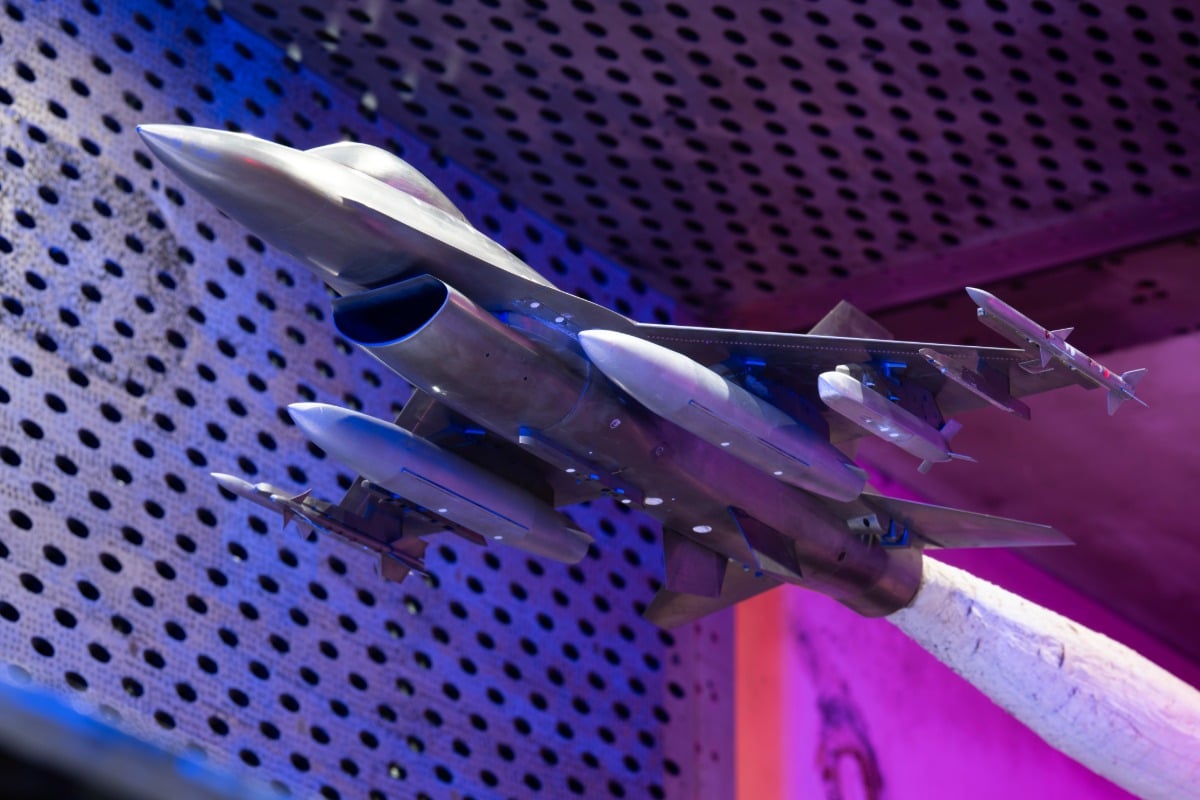
The integration of the U.S.-made Zeus guided missile into Ukraine’s unmanned aerial vehicle (UAV) ecosystems represents a shift from improvised munitions to standardized, precision-engineered kinetic effects. While media coverage often focuses on the novelty of "flying missiles," the actual strategic value lies in the reduction of the circular error probable (CEP) and the optimization of the payload-to-weight ratio for medium-altitude long-endurance (MALE) and tactical drone platforms. This transition addresses a critical bottleneck in current Ukrainian drone operations: the high failure rate and limited effective range of gravity-dropped thermobaric or anti-tank grenades.
The Kinematics of Zeus Precision
Standard drone-dropped munitions rely on ballistic trajectories influenced heavily by wind shear, altitude, and the horizontal velocity of the carrier platform. The Zeus missile removes these variables through an active guidance package. To understand the operational impact, we must break down the missile’s functionality into three distinct subsystems: the seeker head, the flight control surfaces, and the propulsion module.
Seeker Mechanics and Signal Processing
The Zeus utilizes a semi-active laser (SAL) homing system or an electro-optical/infrared (EO/IR) seeker, depending on the specific block configuration. In a SAL configuration, the UAV or a ground-based spotter "paints" the target with a coded laser pulse. The Zeus seeker detects the reflected energy and calculates the line-of-sight rate to the target. This creates a closed-loop feedback system where the missile constantly corrects its flight path, ensuring the impact point remains within centimeters of the laser spot.
Control Surface Dynamics
Unlike fixed-fin munitions, the Zeus employs movable canards or tail fins. These surfaces allow the missile to perform high-G maneuvers to intercept moving targets—a feat nearly impossible for gravity-fed "dumb" bombs. The flight computer translates seeker data into mechanical commands, adjusting the angle of attack to maintain an optimal glide or powered slope.
Strategic Calculus of Payload Efficiency
The Zeus is not merely a weapon; it is a weight-optimization solution. In the context of UAV operations, every gram of payload subtracted from the airframe equals seconds of additional loiter time or kilometers of extended range.
- Mass-to-Effect Ratio: Traditional drone-dropped ordnance often requires multiple sorties to neutralize a hardened target due to accuracy variance. A Zeus missile, with a nearly 100% hit probability under ideal conditions, allows a single drone to achieve the same result as a swarm of less sophisticated aircraft.
- Stand-off Distance: Dropping a grenade requires a UAV to fly directly over the target, exposing it to short-range electronic warfare (EW) and small-arms fire. Zeus provides a "stand-off" capability, allowing the drone to launch from a distance of several kilometers. This preserves the high-value asset—the drone—while still delivering the kinetic effect.
Logistics and the Interoperability Barrier
The deployment of U.S. missile technology onto non-NATO drone platforms introduces significant engineering friction. This is not a "plug-and-play" scenario. The integration requires a sophisticated Interface Control Document (ICD) to sync the drone’s mission computer with the missile’s launch sequences.
Data Link Synchronization
The drone must communicate with the Zeus to provide pre-launch coordinates and health status updates. In many Ukrainian drones, which use open-source or proprietary localized software, this requires an intermediate hardware bridge. This bridge translates encrypted U.S. signals into a format the Ukrainian flight controller can process without compromising the security of the missile’s guidance software.
The Power Distribution Challenge
Guidance systems and fin actuators require a consistent power draw. Most tactical drones are optimized for endurance, meaning their battery or fuel systems are tightly calibrated. Adding a powered missile rack requires a redesign of the UAV’s power management system to ensure that firing the missile does not brown out the drone's primary flight sensors or motor controllers.
The Cost-Benefit Asymmetry
The primary critique of using guided missiles like Zeus on relatively cheap drones is the cost-per-kill. A Zeus missile costs significantly more than a modified FPV (First Person View) drone or a 3D-printed drop-shroud for a mortar round. However, this critique ignores the broader economic reality of attrition.
- Pilot Survivability: High-skill drone pilots are a scarce resource. By using guided stand-off weapons, pilots can remain further from the front lines, reducing the risk of being targeted by counter-battery fire or "hunter-killer" drones.
- Asset Retention: Losing a $50,000 MALE drone because it had to hover at 300 meters to drop a grenade is a net loss. Spending $20,000 on a missile to kill a $2 million tank while keeping the drone safe is a net gain.
- Target Priority: Zeus is not intended for suppressing infantry in trenches. Its role is the surgical elimination of "high-value targets" (HVTs) such as mobile radar units, command-and-control vehicles, and sophisticated air defense systems.
Electronic Warfare Vulnerability
No precision weapon is immune to the electromagnetic environment of the modern battlefield. The Zeus must contend with several layers of Russian EW interference.
- GPS Jamming: If the Zeus relies on GPS for mid-course navigation, localized jamming can cause the missile to drift before the seeker head acquires the target.
- Laser Spoofing: Sophisticated defense systems can detect incoming laser designation and deploy "decoy" spots to confuse the SAL seeker.
- Link Interference: The command link between the drone pilot and the aircraft remains the weakest point. If the drone cannot see the target or receive the "fire" command, the missile is an expensive paperweight.
Industrial Scaling and Global Supply Chains
The announcement of Zeus integration implies a transition from prototype testing to industrial-scale deployment. This requires a robust supply chain that can bypass the "bottleneck of bespoke production." Ukraine’s ability to utilize these missiles depends on the U.S. defense industrial base’s capacity to produce the Zeus at a rate that exceeds its expenditure on the front.
Standardization is the key. By adopting the Zeus, Ukraine moves closer to the NATO "Universal Armament Interface," making it easier to swap out various weapon types as they become available from different donor nations. This modularity reduces the training burden on ground crews, who only need to learn one loading and maintenance protocol for a variety of air-to-ground effects.
Operational Deployment Logic
Fielding the Zeus will likely follow a tiered deployment strategy. Initially, the missiles will be reserved for specialized "Precision Strike Cells" operating deep behind the line of contact. These cells will use long-range drones to hunt for S-300/S-400 components or electronic jamming stations.
As the supply of missiles increases, the technology will filter down to tactical units. This creates a psychological "denial of area" effect. When enemy forces know that any drone in the sky might be carrying a guided missile with a 5-kilometer range rather than a simple drop-bomb, their movement patterns must change, slowing down their logistics and forcing them to expend more resources on localized air defense.
The effectiveness of the Zeus integration will be measured not by the number of missiles fired, but by the decrease in the "cost-per-destroyed-target" and the increase in UAV airframe longevity. The shift from "volume of fire" to "precision of effect" is the only sustainable path in a high-intensity conflict where the enemy holds a numerical advantage in raw ordnance.
Military planners must now prioritize the hardening of the data links and the expansion of laser-designation capabilities across the front. If the seeker cannot see the target due to smoke, weather, or EW, the kinetic potential of the Zeus remains untapped. The focus should shift toward multi-modal seekers—combining infrared with semi-active laser—to ensure high lethality in all-weather conditions. This is the final step in turning the Ukrainian drone fleet from a nuisance into a dominant tactical air force.