Geopolitical conflict alters energy pricing mechanisms not through abstract market sentiment, but through immediate physical blockades at strategic maritime chokepoints. When military actions halt crude shipments passing through the Strait of Hormuz, global supply curves shift vertically overnight.
This physical contraction creates an immediate structural disconnect between extraction marginal costs and spot market prices. Energy producers do not set the global commodity price; they capture the rent generated by scarcity. Understanding why major operators report multi-billion dollar quarterly surpluses during active military engagements requires analyzing the pricing friction points of integrated energy markets rather than ascribing intent to corporate actors.
The Anatomy of Commodity Rent Generation
Energy markets operate on a marginal pricing model where the price of the last barrel required to satisfy global demand dictates the price of all barrels. When a critical artery handling a significant portion of daily seaborne crude trade faces disruption, the supply contraction forces buyers to bid aggressively for non-restricted barrels or alternative inventory.
Upstream producers experience a cost function that remains largely static during initial supply shocks. Labor, seismic data acquisition, well drilling, and completion expenditures do not scale linearly with international crude spikes. Consequently, every dollar increase in Brent or West Texas Intermediate above the operational break-even threshold flows directly into operating margins.
The financial mechanics follow a strict sequence during a maritime blockade:
- Physical throughput restrictions remove supply from the spot market.
- Refiners and intermediaries compete for remaining uncommitted physical volumes.
- Spot price markers escalate independently of corporate extraction expenditure.
- Fixed unit production costs paired with elevated commodity realization yields asymmetric cash flow expansion.
This structural reality explains why firms like ExxonMobil and Chevron report quarterly profits reaching record tiers during active conflict periods. The financial upside is a mathematical artifact of the marginal pricing structure inherent to global commodities.
The Retail Transmission Lag and Margin Compression
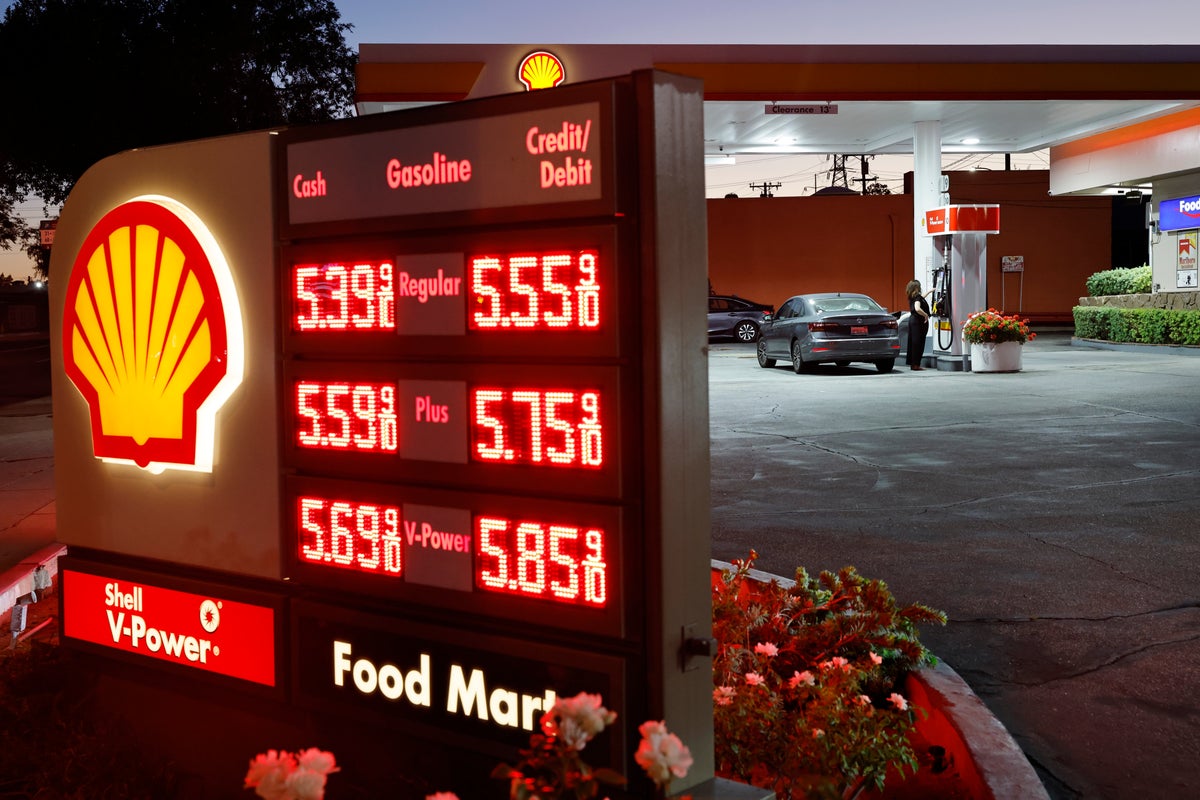
Political friction frequently targets downstream retailers when pump prices fail to drop at the same velocity as wholesale crude. Public frustration centers on the perceived delay between spot market corrections and consumer-facing relief. However, this delay represents an operational feature of the retail fuel supply chain rather than coordinated price gouging.
Refining, terminal storage, and transport logistics create working capital buffers. Retail operators purchase inventory at historical wholesale prices and hold stock across distribution networks. When spot prices drop rapidly following temporary diplomatic breakthroughs or strategic reserve releases, retailers must clear high-cost inventory before adjusting pump prices downward to avoid immediate inventory write-downs.
The transmission timeline involves three distinct operational layers:
- Upstream extraction entities realize immediate spot market adjustments.
- Midstream logistics and refining networks absorb inventory pricing friction over weeks.
- Downstream retail outlets clear legacy stock before resetting local price boards.
Demanding immediate retail price parity ignores the physical realities of inventory turnover. Forced rapid repricing below inventory acquisition cost threatens independent station operators with insolvency, concentrating retail market share further among integrated supermajors.
Strategic Capital Allocation Under Regulatory Pressure
When political authorities pressure energy executives to return capital or suppress retail prices, firms face a capital allocation dilemma. Publicly traded operators answer to fiduciary mandates requiring capital preservation and shareholder return, yet they operate under sovereign regulatory oversight that controls federal leases, export licenses, and antitrust scrutiny.
During periods of elevated cash generation, firms typically distribute capital across three vectors: share buybacks, dividend distributions, and capital expenditures aimed at future reserve replacement. Directing surplus cash toward artificial retail price subsidies conflicts with corporate governance statutes. Executives lack the legal authority to arbitrarily gift corporate assets to consumers without board approval and shareholder alignment.
Furthermore, capital expenditure cycles in the energy sector span decades. Punitive measures or direct price controls introduced during short-term geopolitical volatility distort long-term investment signals. If upstream operators anticipate price caps or windfall asset seizures during upcycles, capital allocation shifts away from domestic production capacity toward short-cycle assets or alternate sectors. This behavioral shift creates multi-year supply deficits that ultimately drive future price spikes higher than the current disruption.
Navigating structural energy inflation requires policy instruments that address the physical blockage rather than penalizing the mathematical outcome of market mechanics. Resolving transit security at maritime chokepoints remains the sole effective mechanism to normalize global pricing vectors and compress producer margins organically.
How Iran Blocking the Strait of Hormuz Affects the U.S.
This video provides an operational overview of how the maritime blockade in the Strait of Hormuz reshapes global oil flows and pricing mechanisms.
http://googleusercontent.com/youtube_content/1


.png?width=1200&auto=webp&trim=0%2C0%2C0%2C0)