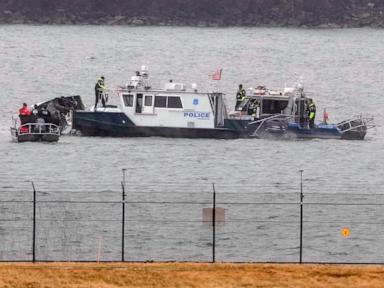
The convergence of military rotorcraft and commercial jet transport in high-density terminal maneuvering areas represents an operational failure mode rooted in systemic institutional disconnects rather than isolated human error. The official findings released by the United States Army regarding the fatal midair collision over the Potomac River near Ronald Reagan Washington National Airport expose critical vulnerabilities in multi-agency airspace management, cockpit sensor configuration, and vertical separation tolerances.
To understand why 67 lives were lost, the inquiry must move past surface-level attributions of pilot misidentification and examine the structural cost functions, technological gaps, and regulatory assumptions that permitted the disaster to manifest.
The Architecture of Spatial Compression
Airspace design is fundamentally an exercise in risk allocation. In congested corridors like the Washington, D.C., Special Flight Rules Area, civilian commercial traffic operating under Instrument Flight Rules descends through fixed arrival and departure gates, while military visual flight rules rotorcraft traverse low-altitude corridors mapped along geographic features such as riverbanks.
The primary structural flaw identified in the Army review is the dangerously compressed vertical threshold built into these overlapping flight paths. The designated helicopter route allowed a nominal vertical separation of merely 75 feet between a transiting rotorcraft and an airliner landing on a secondary runway. This calculation relied on an unyielding operational assumption: that helicopters would maintain strict lateral adherence to the riverbank and remain at exact barometric altitudes.
This assumption ignores basic aerospace engineering realities. Standard altimeter error margins, combined with the atmospheric turbulence generated by urban topography, introduce altitude discrepancies that routinely exceed 75 feet. In the case of the accident aircraft, civilian NTSB investigators established that the Black Hawk was flying nearly 100 feet higher than its barometric altimeter indicated. When design tolerances are narrower than the operational error band of standard onboard instrumentation, a catastrophic intersection is no longer a question of if, but when.
Technological Isolation and Sensor Blind Spots
A modern airspace management system relies on cooperative surveillance. Transponders, ADS-B Out systems, and Traffic Collision Avoidance Systems form an electronic mesh designed to maintain situational awareness independently of human visual acquisition. The post-accident technical audit revealed a critical systemic breakdown in this electronic safety net: the mishap Black Hawk's ADS-B Out system was improperly configured and failed to broadcast its position data.
Operating without active electronic conspicuity in high-density airspace forces an absolute reliance on visual flight rules and verbal air traffic control advisories. This reliance breaks down under the weight of cognitive overload and environmental degradation:
- Visual Suppression: The military flight crew was utilizing night-vision goggles to navigate at low altitude. While NVGs amplify ambient light, they drastically constrict peripheral field of view, introduce monochromatic distortion, and make it exceedingly difficult to discern external aircraft lighting against the high-contrast backdrop of an illuminated urban landscape.
- Communication Latency: Air traffic control communications leading up to the collision suffered from imprecision and failed handoffs. Controllers did not issue explicit, high-priority vectors to alert the descending jet pilot to the rotorcraft's exact location, nor did they provide the helicopter crew with unambiguous conflict telemetry.
- Friction in Crew Resource Management: The multi-place cockpit of the Black Hawk experienced breakdowns in internal coordination, failing to establish a shared mental model of the surrounding traffic pattern during a critical phase of flight.
When electronic surveillance is inactive, visual aids are environmentally degraded, and radio transmissions are ambiguous, the system operates without redundancy.
Regulatory Divergence and Oversight Deficits
The systemic failure extends beyond the cockpit and the local tower into the regulatory oversight bodies governing civil-military integration. The Federal Aviation Administration and the Department of Defense operate under distinct safety cultures, disparate equipment standards, and siloed reporting structures.
While the NTSB's civilian investigation emphasized historical warning signs and missed opportunities by the FAA to reform crowded terminal operations, the Army's internal review highlighted deficiencies in military flight risk monitoring. Historically, military units operating in joint-use civilian airspace have prioritized mission execution parameters over the rigorous standardization demanded by commercial air carriers.
Post-accident institutional responses highlight a severe asymmetry in remediation speed. While the Army instituted immediate corrective actions—inspecting and reconfiguring thousands of rotorcraft ADS-B systems, updating crew resource management training, and restricting controllers from relying solely on pilot-maintained visual separation in complex corridors—civilian regulatory updates have faced implementation backlogs. This divergence suggests that inter-agency coordination mechanisms remain reactive rather than predictive.
Systemic Remediation Framework
Preventing identical failures in metropolitan airspaces across the United States requires moving beyond punitive individual accountability and restructuring the operational parameters of mixed-fleet corridors.
First, vertical and lateral buffer zones must be mathematically decoupled from best-case operational assumptions. If altimeter error bands and urban draft dynamics create a 100-foot variance, minimum vertical separation thresholds must be expanded exponentially, or physical route relocations must be enforced.
Second, non-negotiable electronic conspicuity mandates must be applied universally. Aircraft operating in congested terminal areas without functional, verified ADS-B In and Out capabilities must be prohibited from entering shared corridors, regardless of flight rules classification.
Finally, joint civilian-military air traffic management must transition from manual voice-based advisory separation to automated conflict prediction software that alerts controllers and flight crews simultaneously when convergence vectors breach safety parameters.
This video provides additional context regarding the Army's findings and recommended safety fixes.


