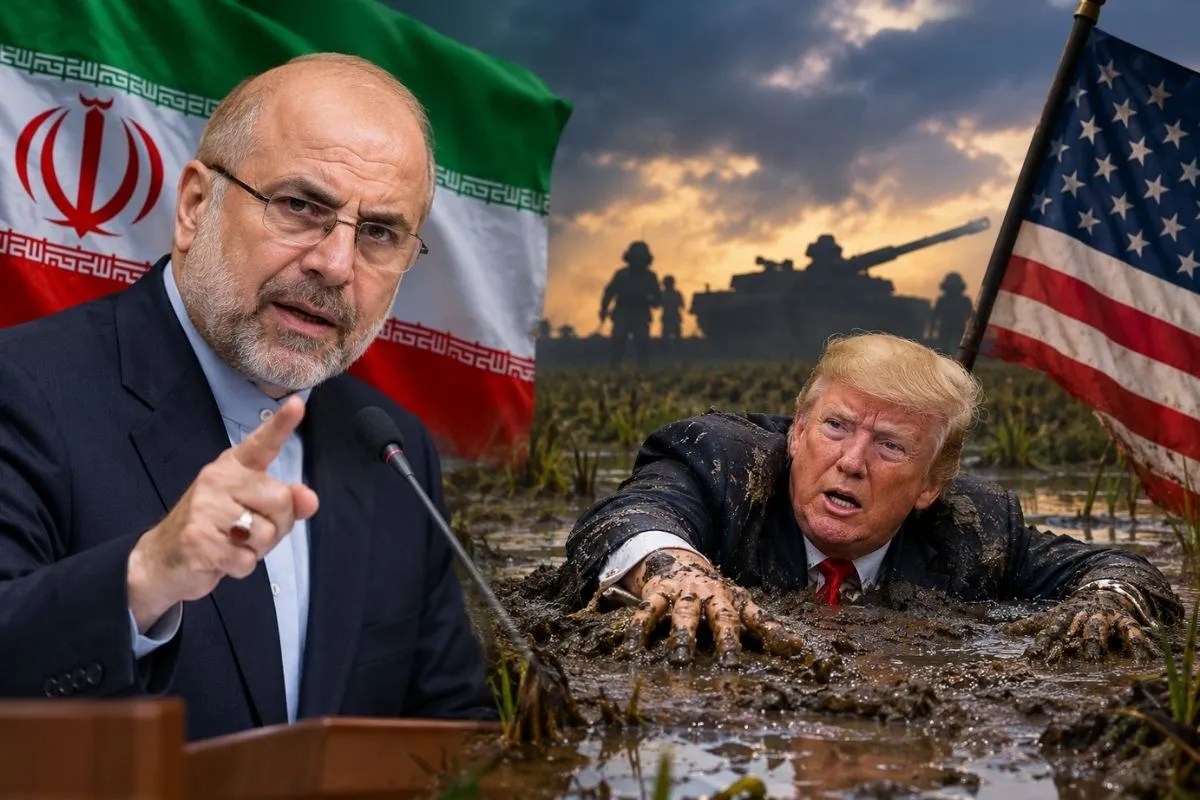
Geopolitical posture shifting from ambiguity to direct deterrence requires dismantling the traditional diplomatic buffers that states use to absorb shocks. When Mohammad Bagher Ghalibaf, Speaker of the Iranian Parliament, declared that Iran would no longer operate within the paradigm of neither war nor peace, he signaled an operational pivot away from strategic patience. This transition from a state of passive attrition to active signaling carries specific systemic costs and structural adjustments for regional stability, economic supply chains, and bilateral security architectures.
Understanding this shift requires analyzing the mechanics of the previous doctrine. For decades, the non-war non-peace equilibrium functioned as a shock absorber. It allowed proxy networks to exert localized pressure while sovereign actors maintained plausible deniability. This equilibrium minimized the risk of direct state-on-state kinetic conflict by keeping expenditures low and diplomatic off-ramps accessible. However, the cost function of this strategy changed as economic sanctions compounded and military capabilities modernized. The tolerance for prolonged strategic stasis eroded because the maintenance costs of ambiguity began to outweigh the deterrent value. You might also find this similar story interesting: Why Israeli Drones Are Hovering Outside Windows in Southern Lebanon.
The shift toward a definitive posture alters three primary variables within the security calculus: escalation velocity, resource allocation, and alliance dependency.
The Compression of Escalation Timelines
Under the previous framework, friction points between state actors were managed through prolonged diplomatic channels and calibrated proxy responses. This created a wide buffer zone where miscalculations could be corrected without triggering a systemic crisis. As discussed in recent articles by Associated Press, the implications are worth noting.
When a state abandons the middle ground, the operational window for crisis management shrinks. Retaliation mechanisms transition from asymmetrical, delayed responses to immediate, symmetrical, or preemptive signaling. The consequence of this compression is an increased sensitivity to tactical friction. A localized skirmish that previously would have remained contained can now function as a tripwire, forcing automatic escalation because neither party can afford to project weakness or hesitation.
Traditional Buffer Model:
[Friction Point] -> [Diplomatic Chokepoint] -> [Calibrated Proxy Response] -> [Equilibrium Restored]

Compressed Deterrence Model:
[Friction Point] -> [Immediate Kinetic/Economic Signaling] -> [Systemic Escalation]
This structural compression forces military planners to move away from flexible response doctrines toward rigid, automated posture readiness. The economic cost of maintaining high-readiness posture across multiple theaters introduces severe fiscal strain, particularly for a state operating under heavy structural trade restrictions.
Resource Allocation Under Direct Posture
The transition from proxy-centric deterrence to direct posture demands a reallocation of national capital. Maintaining a perpetual state of heightened readiness consumes foreign exchange reserves, strains domestic infrastructure, and disrupts regional trade corridors.
When strategic communication relies on direct state signaling rather than ambiguous proxy operations, the transparency of military expenditures increases. Adversaries can more accurately model resource depletion rates, turning economic endurance into a primary battleground. The cost function is no longer distributed across external networks; it concentrates directly on the central state treasury. This creates an internal vulnerability where financial sustainability dictates the longevity of the new strategic posture.
- Fiscal Strain: Increased defense outlays squeeze non-military state budgets, exacerbating domestic inflation and currency devaluation.
- Trade Friction: Regional trade partners factor the heightened risk of direct conflict into insurance premiums, shipping routes, and long-term investment commitments.
- Technological Investment: Capital must shift toward advanced air defense, command-and-control hardening, and rapid-response capabilities, diverting funds from economic modernization.
Regional Spillover and Alliance Mechanics
A direct posture alters the behavioral incentives of neighboring states and external superpowers. When a regional power signals the end of strategic ambiguity, adjacent actors can no longer maintain neutral or transactional relationships without incurring high security risks.
Bilateral diplomacy is replaced by rigid alignment frameworks. States that previously profited from hedging between competing geopolitical poles face mounting pressure to choose primary security guarantees. This polarization reduces the flexibility of regional middle powers, who find their economic ambitions subordinated to broader security alignments.
Furthermore, the relationship between the central state and its non-state allies undergoes a functional renegotiation. When deterrence becomes centralized and direct, the autonomy of proxy networks narrows. They transition from independent instruments of regional leverage to subordinate nodes in a centralized defense architecture. This reduces the state's ability to maintain plausible deniability, increasing the direct attribution of any regional friction point back to the sovereign capital.
The Long-Term Economic Cost Function
The elimination of the gray zone forces an evaluation of systemic resilience. A state cannot permanently sustain a posture of direct confrontation without restructuring its internal economy to function under permanent siege conditions.
This requires the institutionalization of import substitution, the diversification of illicit or alternative trade routes, and the tightening of internal security to suppress domestic dissent arising from economic contraction. The paradox of the Ghalibaf doctrine is that while it seeks to maximize external deterrence, it simultaneously deepens internal structural vulnerabilities by accelerating the militarization of the civil economy.
Strategic analysts must monitor specific leading indicators to measure the operationalization of this shift:
- Changes in the frequency and nature of direct state-to-state communications during diplomatic crises.
- The formal codification of military coordination between state armed forces and regional allied networks.
- Shifts in national budgetary allocations toward rapid infrastructure hardening and domestic industrial self-sufficiency.
The shift away from the middle ground is not merely a rhetorical adjustment; it is a fundamental recalibration of risk. By discarding the safety valves of ambiguity, the state accepts higher near-term volatility in exchange for the promise of long-term deterrence credibility. The viability of this strategy will be determined not by political declarations, but by the systemic capacity to absorb the compounding economic and kinetic costs of permanent readiness.