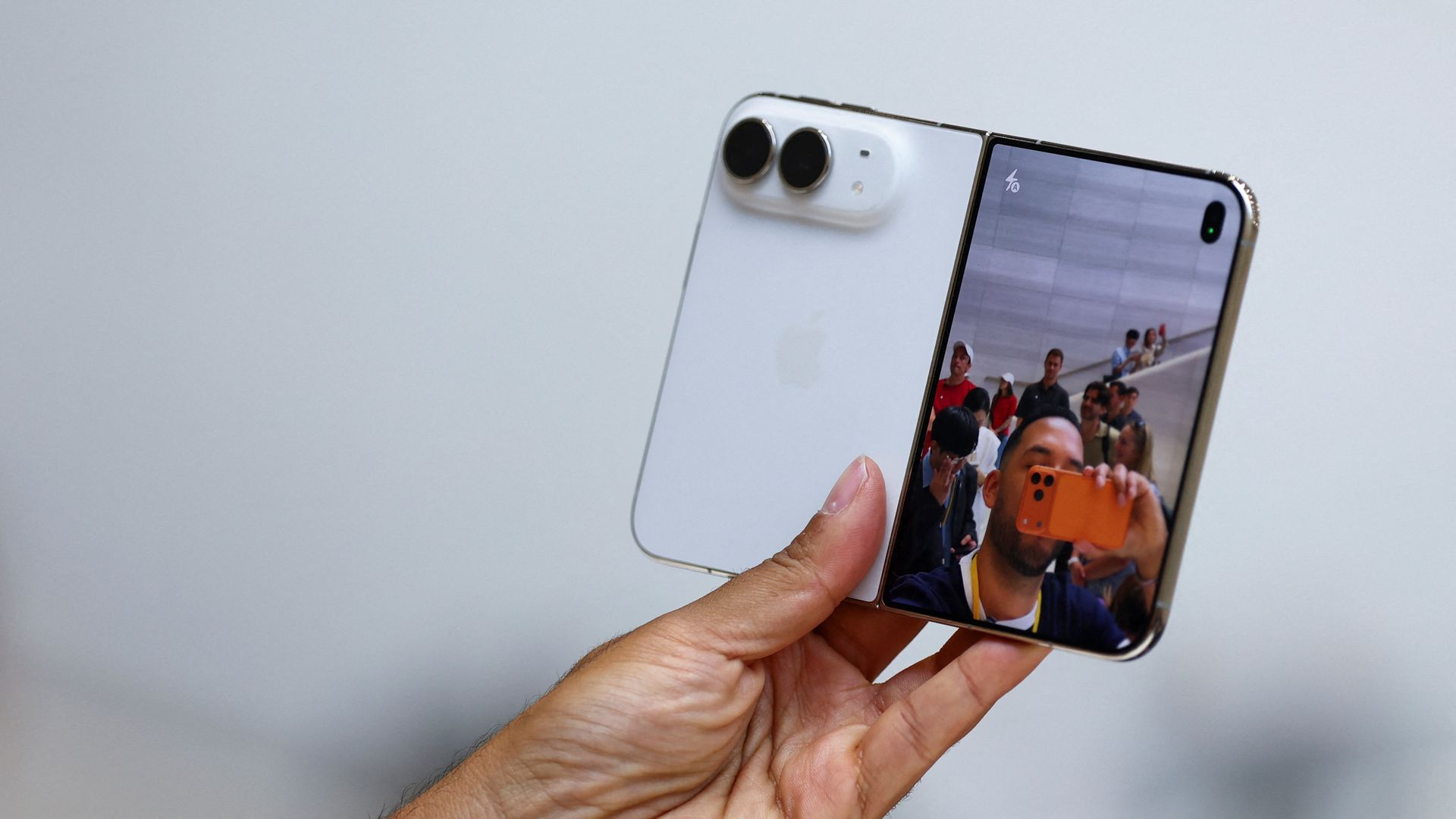
The introduction of Apple's first foldable device, the iPhone Duo, marks a calculated shift in supply chain execution and industrial design. Rather than rushing an early concept to market, Apple waited for material science to catch up to its internal durability thresholds. The resulting hardware represents an exercise in managing competing physical constraints: minimizing thickness while housing a complex mechanical hinge and dual-screen architecture.
Evaluating the device requires looking past marketing terminology and dissecting the mechanical engineering choices. A foldable phone is fundamentally an exercise in stress management. Every time a flexible OLED panel bends, mechanical fatigue concentrates along the crease axis. Traditional foldable devices manage this by accepting a visible crease or utilizing soft, easily scratched plastic polymer protective layers.
The iPhone Duo bypasses these compromises through a multi-layer lamination design. Viscoelastic adhesives allow the internal display layers to glide against each other during movement, mimicking the mechanics of pages turning in a book. This shear-stress distribution prevents permanent plastic deformation of the organic light-emitting diode substrate. Simultaneously, a custom hinge composed of over one hundred micro-components uses carbon fiber support plates to maintain a rigid structural platform when the device is fully open. This eliminates the flex point failure modes that plagued early market entrants from competitors.
Display geometry dictates usability in the foldable category. Most Android foldables opted for a tall, narrow outer screen that created an awkward aspect ratio when closed, forcing developers to support non-standard layouts. The iPhone Duo utilizes a passport-sized 5.4-inch outer display with a balanced aspect ratio, expanding into a 7.6-inch inner canvas. By matching the dimensional logic of an iPad mini, the device provides developers with a predictable layout space rather than an arbitrary rectangular constraint.
Thermal dynamics present another critical bottleneck for ultra-thin foldable frames. Concentrating high-performance silicon inside a dual-screen chassis with restricted airflow creates immediate thermal throttling risks. Apple addresses this by integrating a custom-designed vapor chamber alongside the A20 Pro chip, paired with a dual-battery architecture split across the two device halves. This layout dissipates thermal energy horizontally across the titanium chassis, allowing the system to sustain higher performance metrics without localized hot spots near the user's hands.
The pricing strategy for the iPhone Duo establishes a rigid boundary for the ultra-premium segment. Starting at $1,999 for the 256GB base configuration, the device is positioned far above standard flagship tiers, targeting enterprise users, power consumers, and early adopters willing to pay a heavy tax for early category maturity. At this price point, the product does not need immediate mass-market volume to justify its research and development costs. Instead, it serves as a high-margin halo device that stress-tests Apple’s manufacturing yields for flexible glass and precision hinges before component costs scale downward.
Network connectivity within this chassis relies on an eSIM-only framework globally. Removing the physical SIM tray recovers critical internal volume, which is reallocated toward battery capacity and structural reinforcement plates. Furthermore, on-device artificial intelligence routines running locally on the A20 Pro manage cellular handover protocols, optimizing signal lock in fringe coverage areas to compensate for the attenuation caused by dual titanium enclosure frames.
The camera subsystem adapts to the folding form factor by redefining user feedback loops. By utilizing a 48-megapixel fusion main sensor, the hardware allows framing previews on the outer display while shooting with the primary optics, removing the traditional usability penalty associated with selfies or group composition. Software automation handles group timing via algorithmic scene analysis, removing manual shutter delays.
Deploying capital into the foldable category requires enterprise software validation. Organizations evaluating fleet adoption of the iPhone Duo must account for the dual-display multitasking environment. iOS adapts by shifting essential controls into thumb-reachable side zones and supporting dual-app persistence, enabling side-by-side workflows that mimic desktop window management. However, applications lacking native dynamic layout support will default to legacy letterboxing, introducing a fragmentation tax for enterprise developers.
Deploy the iPhone Duo in enterprise environments strictly for mobile knowledge workers who benefit from split-screen data visualization, treating it as a specialized productivity terminal rather than a universal hardware refresh.