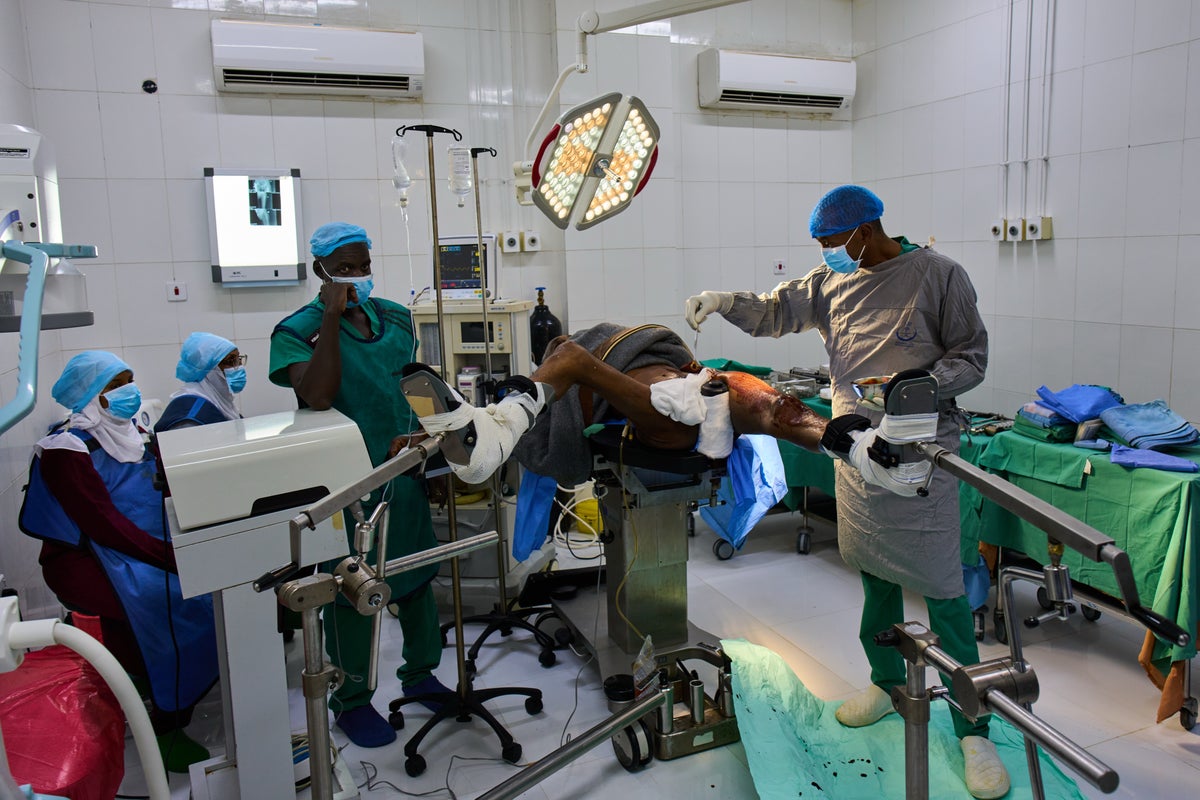
Surgeons in Sudan aren't just fighting death. They’re fighting an entire system that’s collapsed under the weight of a brutal civil war. While the world looks away, a handful of medical professionals are performing miracles in rooms that barely pass for operating theaters. I've looked at the reports coming out of places like Khartoum and El Fasher, and the reality is grimmer than any headline suggests. We’re talking about doctors doing vascular surgery by flashlight while shells shake the walls. This isn't a "humanitarian crisis" in the abstract. It’s a daily choice between who lives and who dies because you only have one bottle of oxygen left.
The conflict between the Sudanese Armed Forces (SAF) and the Rapid Support Forces (RSF) has turned hospitals into targets. International law says hospitals are sanctified ground. In Sudan, they’re tactical assets or collateral damage. When you hear about a "hero surgeon" in these zones, you need to understand they aren't just talented with a scalpel. They're logistics experts, negotiators, and often the only thing standing between a community and total extinction.
Why Sudan’s Medical Collapse is Different
Most war zones have a front line. Sudan’s war is a fragmented mess. In the capital, Khartoum, the very infrastructure of health has been gutted. It’s not just that the buildings are hit. The supply chains are severed. If you’re a surgeon in a war hospital there, you don't call a supplier for more sutures. You scavenge. You reuse what shouldn't be reused. You pray the generator has enough fuel for the next two hours of a thoracic procedure.
The World Health Organization (WHO) reports that nearly 70% to 80% of hospitals in conflict-affected areas are non-functional. Think about that number. That’s not a "strain" on the system. It’s a total wipeout. The facilities still standing are overwhelmed by a surge of trauma cases that would break a Level 1 trauma center in London or New York. We're seeing blast injuries, high-velocity gunshot wounds, and shrapnel damage in children who were just sitting in their living rooms.
The surgeons staying behind are often volunteers or locals who refused to flee. They stay because if they leave, the mortality rate in their neighborhood hits 100%. They’re treating injuries with the bare minimum. Honestly, the mental toll of knowing you could save someone if you just had a basic lab setup—but you don't—is what kills these doctors slowly.
The Brutal Logic of Triage in a War Zone
Triage in a normal setting is about order. Triage in a Sudan war hospital is about heartbreak. When fifty people arrive at once after an airstrike and you have two functioning operating tables, the math gets ugly. Doctors have to decide in seconds. You skip the person who needs four hours of surgery to save the five people who each need twenty minutes. It’s cold. It’s necessary. It haunts every person who wears scrubs in that building.
I’ve seen accounts of surgeons working 36-hour shifts. They aren't doing it for glory. They’re doing it because the line of people outside the door doesn't end. They're dealing with "triple threats." First, the trauma of the war itself. Second, the lack of supplies like blood bags and anesthetics. Third, the return of preventable diseases. Cholera and malnutrition are creeping into the wards, complicating every single surgical recovery. A patient might survive a complex abdominal surgery only to die of an infection because the "clean" water isn't actually clean.
What the Media Misses About the Logistics
The news likes the "hero" narrative. It sells. But the hero narrative ignores the mundane horror of logistics. A surgeon can’t operate without a team. They need nurses, anesthetists, and cleaners. In Sudan, these staff members are often displaced themselves. They’re walking hours through checkpoints, risking detention or death, just to show up for work.
Then there’s the issue of "targeted" attacks. We’ve seen repeated instances where medical workers are harassed or even killed. This isn't accidental. It’s a strategy to demoralize the population. If you kill the doctor, you kill the hope of the entire district. Organizations like Médecins Sans Frontières (MSF) have been vocal about the "strangulation" of aid. Supplies are blocked at borders or stuck in bureaucratic red tape. It’s a man-made famine and a man-made medical catastrophe.
Living Through the Siege of El Fasher
El Fasher in North Darfur has become a flashpoint that defines this struggle. The city is packed with hundreds of thousands of displaced people. The few hospitals left are under constant fire. Surgeons there describe a "hellscape." They’re treating patients on the floor. There are no beds left. There are no painkillers left. Imagine undergoing a limb debridement with nothing but a local anesthetic that’s half-expired.
This is the reality of the Sudan war hospital. It’s not a sterile environment. It’s a blood-slicked room where the air smells like copper and smoke. The surgeons aren't just "lifting the lid" on this; they're screaming into a void while the international community offers thoughts and prayers instead of cargo planes full of surgical kits.
The Cost of Staying Behind
We talk about the patients, but the surgeons are breaking too. Many have sent their families across the border to Chad or Egypt while they stay. They live on tea and lentils. They sleep on office chairs. They’ve lost colleagues to the very shells that bring them their patients.
One surgeon noted that the hardest part isn't the blood. It's the silence of the world. They feel forgotten. When a war hospital in Ukraine is hit, it’s global news for a week. When a hospital in Sudan is raided, it’s a footnote. This disparity in "global empathy" is something every medical worker in Sudan feels deeply. They’re doing the same work, with fewer resources, under higher stakes, with zero recognition.
Concrete Numbers of the Crisis
- Displacement: Over 10 million people have fled their homes, the largest displacement crisis on Earth right now.
- Healthcare Access: In parts of Darfur, there is literally one surgeon for every few hundred thousand people.
- Fatality: While official death tolls are in the tens of thousands, researchers suggest the actual number—including those dying from lack of medical care—is significantly higher.
Beyond the Operating Table
The impact of these war hospitals goes beyond the immediate trauma. When a surgeon saves a father, they’re saving a family from starvation. When they save a mother, they’re keeping a group of orphans off the street. These hospitals are the last remnants of a functioning society. They’re the only places where the rules of the war don't—or shouldn't—apply.
But the pressure is reaching a breaking point. You can only "make do" for so long. Eventually, the last bottle of antiseptic runs out. Eventually, the last surgical blade gets too dull to use. We are watching the slow-motion collapse of an entire nation's medical IQ as doctors are forced to flee or are killed in the line of duty.
How to Actually Support Sudan’s Medical Frontline
Stop looking for "awareness" campaigns that don't lead to action. The people on the ground need hard resources. They need pressure put on the warring factions to allow humanitarian corridors. This isn't a "both sides" issue when it comes to medical neutrality. Both sides have failed to protect the healers.
If you want to help, you go to the source. Support organizations that actually have boots on the ground in the "red zones."
- Donate to Médecins Sans Frontières (MSF). They are one of the few groups still operating in the hardest-hit areas of Khartoum and Darfur. They provide the actual surgical kits these doctors are begging for.
- Support the Sudan Doctors’ Union. They provide direct support to local medics who aren't part of international NGOs but are doing the bulk of the work.
- Pressure your representatives. The lack of a ceasefire is what’s killing people. Medical aid is a band-aid on a gunshot wound. The gunshot wound is the war itself.
The surgeons in Sudan don't want to be heroes. They want to be doctors. They want a world where they have electricity, a full staff, and a patient who isn't coming in with a hole in their chest from a sniper. Until that happens, they’ll keep working in the dark, literally and figuratively. The least we can do is look at what they're doing and admit that we've failed them.
The situation is desperate, but the resilience of the Sudanese medical community is staggering. They are showing us the absolute best of humanity in the absolute worst conditions imaginable. They don't need our pity. They need the tools to do their jobs. Get those tools to them. Support the organizations that bypass the bureaucracy and get supplies directly into the hands of the people holding the scalpels.