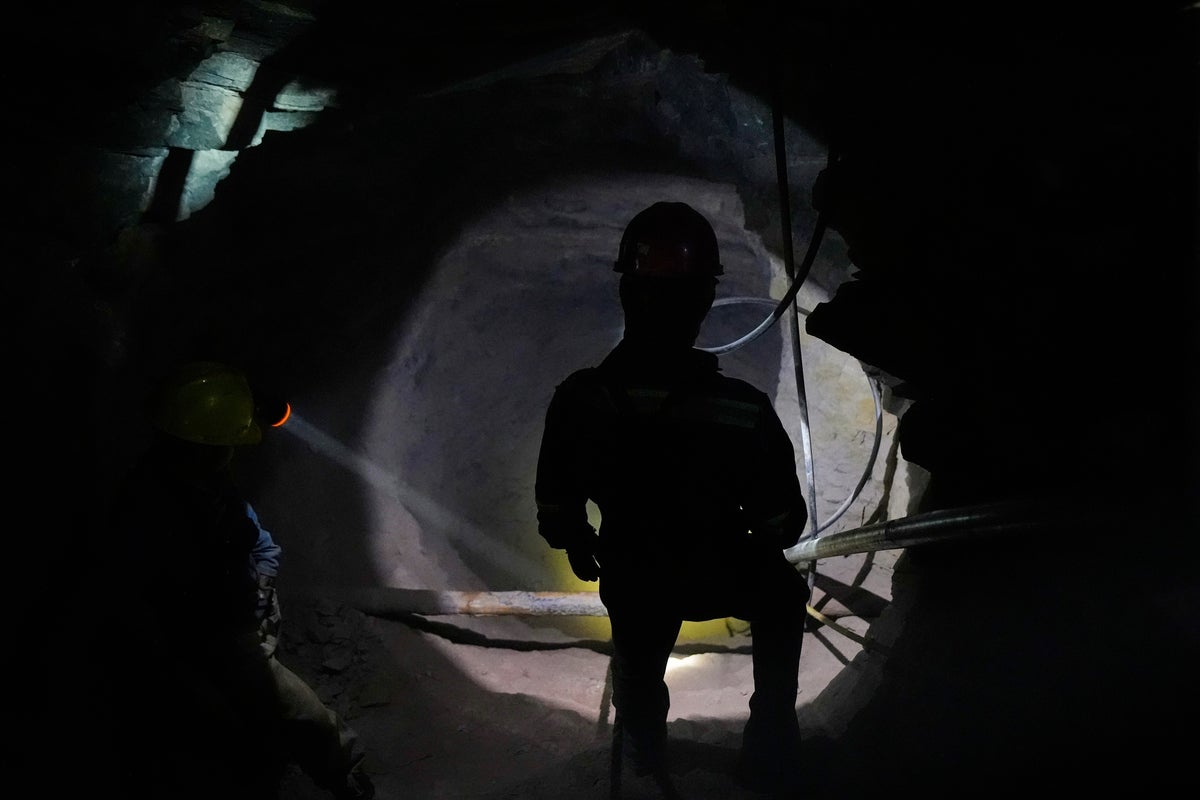
The media loves a miracle. When a miner walks out of a collapsed, flooded shaft after fourteen days of darkness, the headlines write themselves. They talk about "the human spirit," "divine intervention," and "heroic rescue efforts."
They are lying to you.
Calling a survival event a miracle is a convenient way for mining corporations and regulatory bodies to avoid talking about the cold, hard math of structural failure and the catastrophic inadequacy of modern rescue technology. If it’s a miracle, no one has to be accountable for the thirteen days and twenty-three hours of failure that preceded the extraction. If it’s a miracle, we don't have to admit that the survivor didn't beat the odds—the odds were simply calculated incorrectly by people sitting in air-conditioned offices miles away from the face.
I have spent twenty years in industrial risk assessment. I have seen the "miracles" and I have seen the body bags. The difference between the two isn't hope. It’s fluid dynamics, metabolic suppression, and the brutal reality that our current safety standards are designed to protect balance sheets, not lungs.
The Myth of the Unforeseeable Collapse
The competitor rags will tell you this collapse was a "freak accident." There is no such thing as a freak accident in a flooded mine. Water is the most predictable variable in geology. We know its weight, its pressure, and its path. When a mine floods and collapses, it isn't an act of God; it is a failure of geotechnical engineering.
Most "unforeseeable" incidents are actually "ignored data points."
- Hydrological Saturation: The industry relies on static models. But the earth is dynamic. When you ignore the rate of seepage because "it’s within tolerance," you are gambling with hydrostatic pressure.
- Structural Fatigue: We treat rock like a solid. It isn't. It’s a series of stress points held together by friction.
- Sensor Over-Reliance: We’ve replaced experienced shift bosses with digital sensors that have a 4% margin of error. In a deep-shaft environment, that 4% is the difference between a stable ceiling and three thousand tons of debris.
The "miracle" survivor didn't survive because of luck. They survived because the collapse was inefficient. The void that saved them was a mathematical certainty of chaotic piling, not a gift from the universe.
Why Your Rescue Technology is Obsolete
The rescue took fourteen days. In 2026, that is an embarrassment.
We are using thermal imaging and acoustic sensors that struggle to penetrate medium-density shale, let alone high-velocity floodwaters. The "status quo" in rescue operations is to drill "hope holes"—narrow boreholes aimed at where we think the miners might be based on outdated maps.
We should be talking about autonomous subterranean drones and real-time seismic tomography. Instead, we are still using technology that wouldn't look out of place in the 1970s. Why? Because high-spec rescue gear is a "bad investment." It has zero ROI until someone is dying.
Corporate boards look at the cost of a $5 million rapid-response boring machine and see a liability. They would rather pay the insurance premium on a dead miner than the maintenance cost on a machine that might never be used. That is the "nuance" the mainstream media misses while they’re interviewing the survivor's family.
The Biology of the Fourteen-Day Window
Let’s talk about the "fourteen days." The public thinks this is the limit of human endurance. It isn't.
Under the right conditions—low temperature, high humidity (reducing respiratory water loss), and metabolic suppression—the human body can go far longer than the "Rule of Threes" suggests. The survivor in this story didn't "fight" to stay alive in the way people imagine. They survived because they entered a state of involuntary dormancy.
- Hypothermic Preservation: Cold water is usually a killer. But in a confined space, a slight drop in core temperature can actually slow organ failure.
- Atmospheric Stagnation: High $CO_2$ levels usually trigger panic. But if the rise is gradual, the body adapts to a state of hypercapnic lethargy.
The survivor didn't win a fight; their body successfully shut down. We shouldn't be celebrating their "will." We should be studying the environmental variables that allowed their biology to override their panic.
The Cost of the "Hero" Narrative
When we focus on the heroics of the rescue team, we shift the focus away from the negligence of the operators.
I’ve sat in the rooms where these "recovery" missions are planned. The first priority isn't the life of the miner; it’s the "stabilization of the asset." They won't send a team in if it risks further collapse of a profitable seam. They wait. They deliberate. They "assess."
The fourteen-day delay wasn't just about the difficulty of the terrain. It was about the legal and financial risk of the rescue itself. If the rescue team dies, the company is liable for a PR nightmare and massive lawsuits. If the trapped miner dies, it's just an "unfortunate industrial incident."
Stop Asking if They Are Safe
People always ask: "Are mines getting safer?"
It’s the wrong question. The question is: "Is the price of a human life still lower than the cost of prevention?"
Currently, the answer is yes.
We have the technology to make mining 100% remote. We have the robotics to ensure no human ever has to stand under a saturated hanging wall again. But humans are cheaper than robots. Humans are flexible, they are self-maintaining, and they are replaceable.
Until we stop treating these survival stories as feel-good "miracles" and start treating them as "preventable systemic failures," nothing changes.
The Hard Truth About Survival
If you are ever trapped in a collapse, don't pray for a miracle.
Pray that the company's liability insurance is lower than the cost of the PR hit they'll take if they stop digging.
Survival in the modern industrial age isn't about grit. It’s about being more expensive to leave behind than to bring up. The fourteen-day survivor wasn't saved by a team of heroes; they were saved by a series of fortunate physics and the fact that their continued existence became a political necessity.
The next time you see a headline about a "miracle" rescue, ask yourself what they aren't telling you about the thirteen days of silence. Ask why the "borehole" took a week to start. Ask why the sensors didn't trigger.
Stop buying the miracle. Start demanding the engineering.
Go back to work.