Romantic lightning survival stories make terrible medicine. They also make terrible relationship advice.
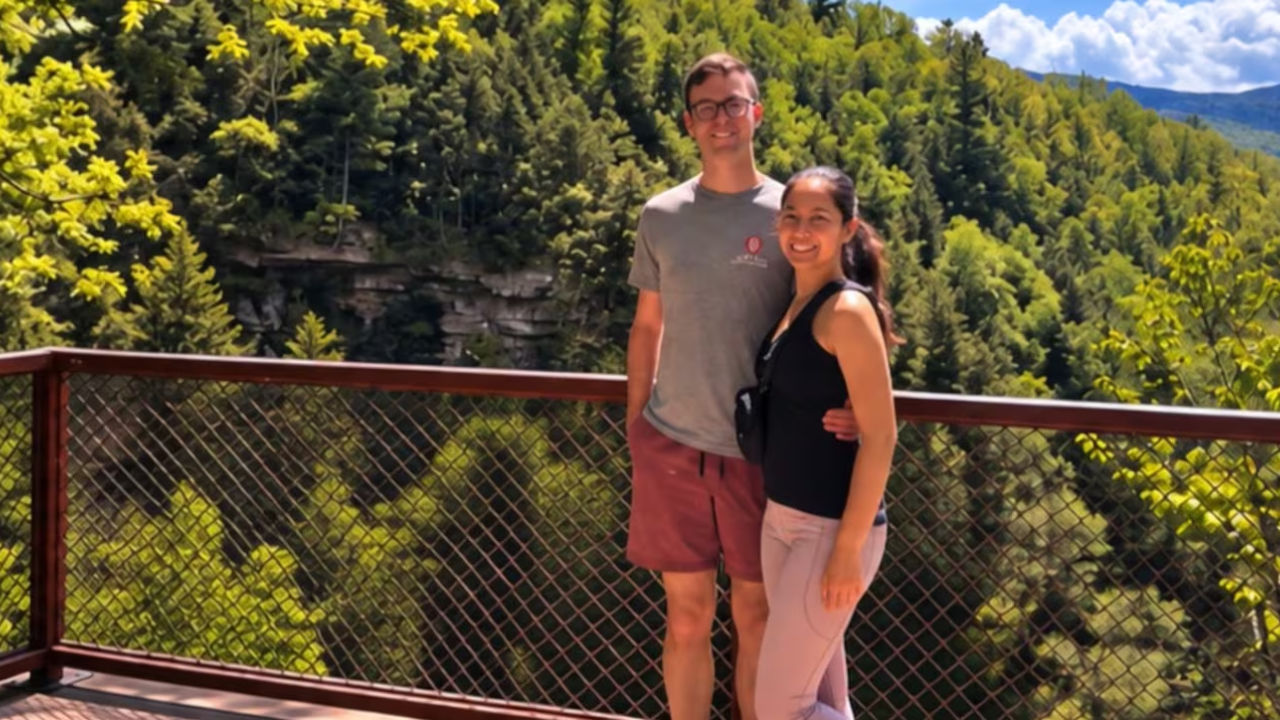
Whenever a headline announces that a woman revived her boyfriend twice after a lightning strike and walked down the aisle a year later, the internet reaches for its tissues. Out comes the lazy consensus. Lightning is framed as a poetic bolt of fate. Bystander resuscitation is packaged like a movie montage. Surviving a near-death event together is treated as instant proof of an unbreakable bond.
That narrative is comforting. It is also dangerously misleading.
I have spent years dissecting emergency response failures, training lay rescuers, and watching high-stress systems crack when people confuse dramatic TV tropes with real physiology. When we turn a freak atmospheric event and a brutal medical emergency into a wedding-anniversary fairy tale, we distort how cardiac arrest works, how trauma reshapes human relationships, and what preparedness actually requires.
Let us strip away the romance and look at what is really happening when lightning hits two people—and why the "a year later, they got married" angle misses the hardest part of the story.
Why "Revived Twice" Usually Means Something Different in Real Medicine
Popular retellings love dramatic counts. Revived once. Revived twice. It sounds like a video game with extra lives.
In clinical reality, "revived twice" usually points to one of two things: either the victim experienced recurrent arrhythmias or rearrest after initial return of spontaneous circulation, or non-medical witnesses are compressing a chaotic sequence of events—such as unresponsiveness, agonal gasping, changing pulse quality, or repeated collapses—into a neat headline number.
Lightning strikes do not behave like Hollywood defibrillator shocks. When a massive electrical discharge hits a human body, current flows across the skin (flashover), through vascular and nervous pathways, or via ground current and side flashes. Unlike household or industrial alternating current that locks muscles onto a live wire for seconds, a lightning strike delivers an enormous burst of energy over a fraction of a second—typically milliseconds.
That brief, massive surge can depolarize the myocardium all at once and trigger electrical instability, including asystole (flatline) or ventricular fibrillation. Here is the physiological twist that catches most people off guard: because the exposure is brief and the heart has its own intrinsic pacemaker capability, a lightning-induced arrest can sometimes resolve spontaneously or respond rapidly if oxygenation and circulation are supported immediately.
Do not mistake that nuance for a free pass. A victim in cardiac arrest needs immediate cardiopulmonary resuscitation (CPR) and automated external defibrillator (AED) access without hesitation. In fact, in mass-casualty or multiple-victim lightning incidents, standard triage logic flips: responders prioritize apparent fatalities in cardiac arrest because they have a real chance of recovery with prompt airway, breathing, and circulation support, whereas people walking around talking are less likely to arrest later.
Still, calling every recovery a "miracle" obscures the real work. Survival in sudden cardiac arrest hinges on rapid recognition, high-quality chest compressions, early defibrillation when a shockable rhythm is present, and post-resuscitation care. Calling it magic lets people skip learning the mechanics.
The Premise You Should Question Before Looking for Romance
When readers see a headline about two lightning survivors getting married, their mental search bar fills up with predictable questions:
- How do you survive being struck by lightning?
- Can you really bring someone back to life twice?
- Does surviving trauma together make a couple stronger?
Every one of those questions carries a trap.
Asking how to "survive" a strike focuses on the last second instead of the thirty minutes before the storm arrived. Lightning safety is a logistics and behavior problem long before it is a medical one. Once thunder is audible, you are already inside the risk zone. Waiting for rain—or waiting until the sky turns black—is how smart people end up on stretchers.
Asking about being "revived twice" treats resuscitation like a light switch rather than a fragile physiological transition. Getting a pulse back is step one, not the finish line. Rearrest happens. Neurological injury from hypoxia is real. Delayed complications—from acute kidney injury and rhabdomyolysis to burns, tympanic membrane rupture, and autonomic dysfunction—can surface hours or days later.
And asking whether shared near-death trauma makes a couple stronger confuses intensity with compatibility. Crisis creates bonding chemicals and sharp focus. It does not automatically build emotional regulation, financial alignment, conflict resolution, or long-term resilience once the hospital bracelets come off and ordinary Tuesday-morning friction returns.
Trauma Bonding Is Not the Same as Relationship Readiness
There is a reason wedding arcs tacked onto survival stories hit so hard emotionally. Human beings love redemptive symmetry. If pain goes in, permanent love should come out.
Real life is messier. Surviving a catastrophic event together can forge intense loyalty, deep gratitude, and a shared vocabulary that outsiders cannot fathom. Those are real strengths. Yet trauma also introduces invisible strain that can show up long after the engagement photos are posted.
Consider what happens after a severe electrical or blast-like shock:
- Cognitive and sensory shifts: Survivors frequently report memory gaps, brain fog, headaches, tinnitus, light or sound sensitivity, and persistent fatigue.
- Emotional volatility: Hypervigilance, startle responses, irritability, and post-traumatic stress do not politely clock out because a wedding date is set.
- Caregiver imbalance: When one partner is the rescuer or primary supporter and the other is the injured survivor, subtle identity shifts can form. One person may feel pressure to stay perpetually strong; the other may feel guilt over lingering limitations.
Imagine a scenario where a couple survives a terrifying storm together, leans heavily on adrenaline and relief for several months, and marries quickly to celebrate being alive. A year later, the novelty of survival fades, one partner still struggles with sleep and nerve pain, and the other is exhausted from playing steady anchor. That does not mean their love is fake. It means surviving a crisis is a test of acute endurance, not a substitute for boring, unglamorous everyday partnership.
The headline rarely stays around to cover year three.
What Emergency Medicine Actually Gets Right—and Where Public Habits Fail
To give credit where it is due, emergency physicians, trauma researchers, and outdoor safety educators—figures whose clinical and field work underpins modern resuscitation and lightning guidelines, such as wilderness medicine authorities and resuscitation councils—have spent decades dismantling dangerous myths.
One of the biggest myths is that touching a lightning strike victim will electrocute you. Unlike a downed high-voltage power line that continues to energize a scene, a lightning strike has already discharged. You will not be electrocuted by starting CPR on someone struck by lightning. Hesitating out of fear of "catching the current" wastes precious seconds.
Another common error is treating lightning injuries purely like thermal burns. While superficial skin burns, feathering (ferning) patterns, or entry/exit marks can occur, the primary immediate threat is electrical disruption of the heart and nervous system, plus blunt trauma if the person was thrown or fell.
Where public habits fail is much simpler: people treat outdoor risk as an aesthetic backdrop instead of an environmental hazard.
I have seen teams, event planners, and everyday families ignore distant thunder because nobody wanted to ruin the afternoon. People stay in open fields, near tall isolated trees, on exposed ridges, or around water because "it hasn't started pouring yet." By the time the first heavy drops hit, the most dangerous cloud-to-ground strikes may already be firing ahead of the rain shaft.
A More Honest Playbook for Storms, Emergencies, and Big Life Decisions
If you want something more useful than a sentimental story, take the contrarian route on all three fronts.
1. Treat Lightning Safety as Boring Discipline, Not Heroism
- Follow the shelter rule early: When thunder roars, go indoors into a substantial building with wiring and plumbing—not a tiny open pavilion, tent, or lone tree. If no substantial structure exists, a hard-topped metal vehicle with windows rolled up is far better than standing in the open.
- Wait out the clock: Do not rush back outside the second the sky brightens. Lightning can strike from retreating storms and clear-looking air near an active cell.
2. Learn Real Resuscitation Before You Ever Need It
- Get hands-on CPR and AED training: Reading a viral post about someone being revived is entertainment. Knowing chest compression depth, rate, and how to power on an AED without freezing is a real skill.
- Expect instability after recovery: If someone regains responsiveness or a pulse, keep monitoring closely until emergency medical services take over. Do not assume the danger is over because their eyes opened.
3. Separate Adrenaline From Long-Term Commitment
- Give major life milestones room to breathe: High-stakes events—medical scares, accidents, career shocks, moves—compress time and heighten emotion. Let the dust settle enough to see how you both handle ordinary stress, not just emergencies.
- Talk about the aftermath, not just the rescue: Ask what recovery actually looks like over months, how fear or fatigue shows up, and how support is shared when nobody is clapping.
The Downside of Being This Blunt
Let us be honest about the cost of taking a cold, analytical look at an inspiring story.
If you strip away the fairy-tale framing, you can sound cynical. You risk flattening genuine human courage—like a partner refusing to panic in a nightmare moment and stepping up when seconds mattered. A contrarian lens can over-index on risk and mechanics while under-appreciating grit, grace, and sheer luck.
That is a fair critique. Good critical thinking should sharpen judgment, not harden your heart. You can admire someone's composure in an emergency without turning their survival into a universal blueprint for medicine or marriage.
Headline writers want neat arcs: lightning strikes, love conquers, wedding bells ring. Reality is far less tidy, far more demanding, and infinitely more interesting once you stop looking away from the mechanics.
Do not romanticize the bolt. Learn the physiology, respect the weather, and judge a relationship by how it handles quiet mornings—not just surviving the storm.