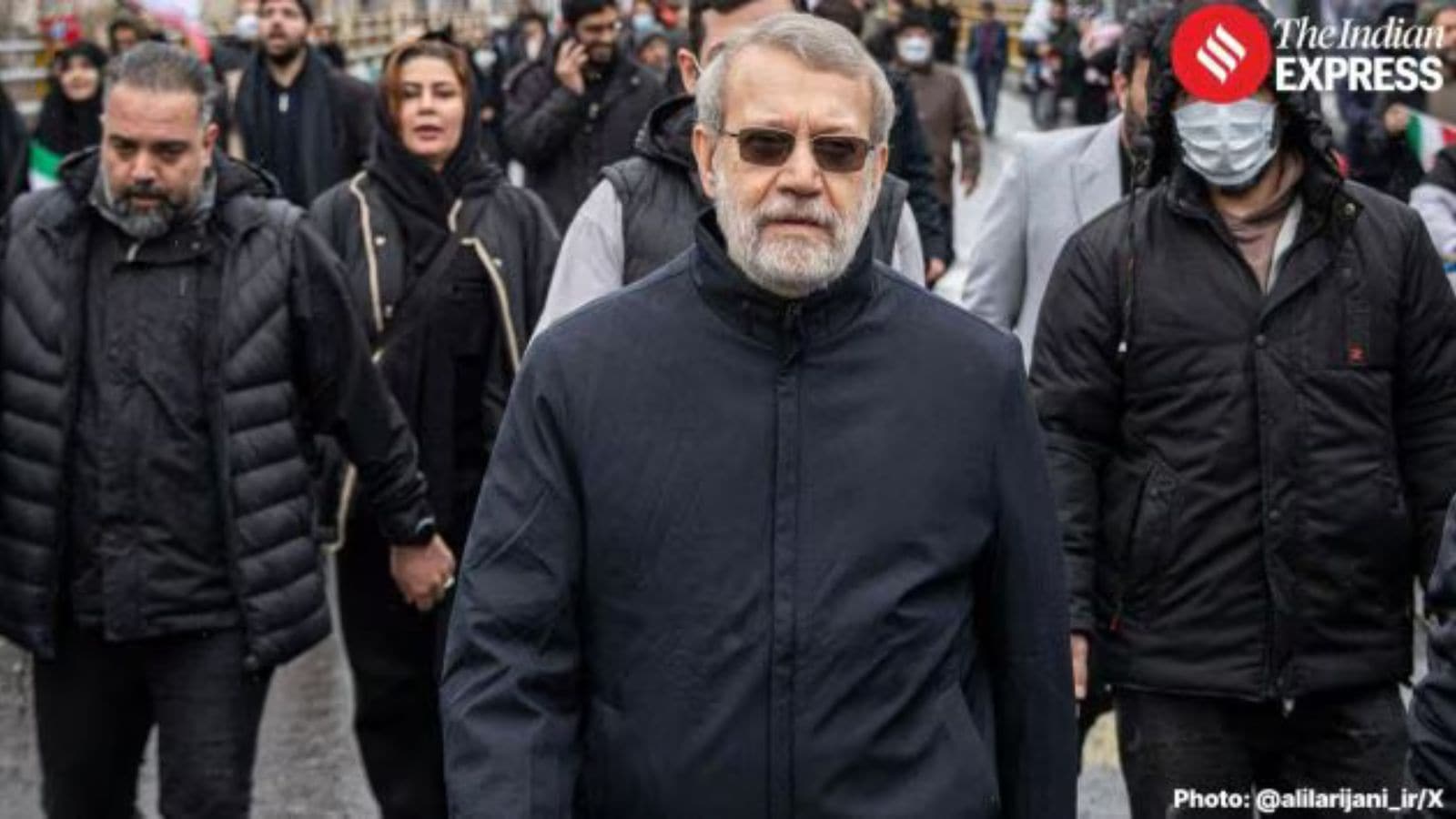
The targeted killing of Ali Larijani in Tehran has effectively dismantled the remaining guardrails of Middle Eastern diplomacy. While the Kremlin issues sharp condemnations of what it terms a joint U.S.-Israeli operation and Pakistan’s leadership pleads for restraint, the mechanical reality of the situation is far more clinical. This was not merely the removal of a high-ranking official. It was a deliberate strike against the very architecture of Iran’s pragmatic conservative wing. By eliminating a figure who served as a bridge between the hardline Islamic Revolutionary Guard Corps (IRGC) and the more traditional bureaucratic state, the architects of this operation have forced Tehran into a corner where "strategic patience" is no longer a viable currency.
International relations usually operate on a predictable set of unspoken rules. You don’t kill the negotiators. You don’t strike the capital cities of nuclear-adjacent powers without expecting a total breakdown of the status quo. The death of Larijani—a former speaker of parliament and a key advisor to the Supreme Leader—signals that those rules have been incinerated. The Kremlin’s rhetoric, while predictable, highlights a growing concern in Moscow that the regional conflict is spinning beyond the reach of traditional power-brokering. For Russia, a destabilized Iran is a logistical nightmare that threatens their own interests in Syria and the Caucasus.
The Myth of the Surgical Strike
Military analysts often use the term "surgical" to sanitize the messy reality of urban assassinations. In truth, there is nothing surgical about the political fallout of such an event. When a figure like Larijani is neutralized, it creates a vacuum that is rarely filled by moderates. History shows that when the pragmatic elements of a revolutionary government are targeted, the security apparatus tends to seize total control.
We are seeing the immediate effects of this shift in the way the IRGC has mobilized since the announcement. The talk in the halls of power is no longer about back-channel communications or nuclear deal positioning. The conversation has shifted entirely to kinetic response. This is the danger of the "decapitation" strategy. It assumes that the body will die once the head is removed. In the case of the Iranian political structure, removing a head often results in the growth of two far more aggressive ones.
The Pakistani Dilemma and the Border of Chaos
Pakistan’s call for de-escalation is not born out of a simple desire for world peace. It is a frantic attempt to prevent a fire from jumping the fence. Islamabad shares a long, porous, and often violent border with Iran. Any full-scale shift toward war in Iran sends shockwaves through Pakistan’s Balochistan province, where separatist movements are already a constant thorn in the side of the central government.
President Asif Ali Zardari’s plea reflects a deep-seated fear of a refugee crisis and the potential for sectarian spillover. If Iran decides to project power outward to compensate for its internal security failure, the entire neighborhood feels the heat. Pakistan is currently balancing a delicate relationship with both the West and its neighbors. A regional war forces a choice that Islamabad is nowhere near ready to make.
Russia and the End of the Multi-Polar Buffer
Moscow’s condemnation serves as a reminder that the Middle East is no longer a vacuum. For years, the Kremlin used Iran as a counterweight to American influence in the region. By labeling the killing a "murder," Russia is attempting to seize the moral high ground in the Global South, painting the U.S. and Israel as rogue actors who ignore international law at whim.
However, beneath the fiery statements lies a sense of impotence. Russia’s military resources are heavily committed elsewhere, and their ability to physically intervene to protect Iranian assets is limited. This creates a dangerous scenario where Iran may feel it has no choice but to rely on its own "Axis of Resistance" rather than waiting for a diplomatic lifeline from its partners in the East.
The Intelligence Failure in Tehran
One cannot discuss the killing of a high-level official without addressing the catastrophic breach of Iranian internal security. This is the most significant takeaway for those watching from the shadows. To hit a target of Larijani’s stature requires more than just a drone or a long-range missile. It requires local assets, real-time intelligence, and a level of penetration into the Iranian state that should be terrifying to its leadership.
The paranoia now gripping the Iranian establishment will likely lead to internal purges. When a government realizes its inner circle is compromised, it stops looking outward and starts looking inward. This internal friction often leads to erratic foreign policy decisions as different factions compete to prove their loyalty and toughness. The "how" of this killing—the technical and human intelligence required—is just as damaging to the Iranian regime as the loss of the man himself.
Economic Aftershocks and the Energy Question
The markets have reacted with the expected volatility, but the real story isn't the temporary spike in crude prices. It is the long-term viability of energy transit through the Strait of Hormuz. If Iran feels that the international community has sanctioned a "hunting season" on its leaders, it has one major lever to pull. It can make global shipping unbearable.
We are looking at a scenario where the cost of insurance for tankers could become prohibitive. This isn't just a problem for the West; it’s a problem for China, which remains the largest buyer of Iranian oil. By squeezing Iran this hard, the actors involved are indirectly putting pressure on Beijing’s energy security. This creates a secondary layer of geopolitical tension that moves the conflict from a regional skirmish to a global economic threat.
The Miscalculation of the Hardline Pivot
There is a school of thought in some Western intelligence circles that intensifying pressure on Iran will lead to a popular uprising or a collapse of the clerical system. This perspective ignores forty years of history. External threats almost always serve to unify the disparate factions of the Iranian state against a common enemy.
Larijani represented the "old guard" of the revolution—men who knew how to play the long game. His removal leaves the field open to a younger, more ideological generation of IRGC commanders who have grown up under sanctions and have little memory of a time when diplomacy was a functional tool. These are not men who value de-escalation. They are men who value "proportional response," a term that in the Middle East usually translates to a cycle of violence that has no clear exit ramp.
The Strategic Dead End
The U.S. and Israel have demonstrated that they can strike anyone, anywhere, at any time. This is a formidable display of power, but it is not a strategy. A strategy requires a clear "day after" plan. What happens when the moderate voices in Tehran are silenced? What happens when the only people left at the table are the ones holding the detonators?
The international community is now operating in a landscape where the primary goal is no longer peace, but the management of a slow-motion explosion. Pakistan’s rhetoric, Russia’s anger, and the silence from other regional capitals all point to the same conclusion. The era of the "shadow war" is over. We have entered a period of overt confrontation where the targets are no longer just munitions depots or proxy commanders, but the very sovereign identity of the Iranian state.
The fallout from the Larijani killing will not be measured in days or weeks, but in the permanent hardening of positions across the map. When the smoke clears in Tehran, the realization will set in that the region has crossed a threshold from which there is no easy return. The objective was to weaken the Iranian position, but the result may be a more desperate, and therefore more dangerous, adversary.
Prepare for a decade of friction.