Silence.
That is the first thing you notice on a trading floor—or in the cramped spare bedroom of a retired schoolteacher watching her life savings tick across a glowing monitor—right before the opening bell rings on the Wednesday morning after a midterm election. It is not the frantic, movie-style screaming people expect. It is the heavy, suffocating quiet of millions of people holding their breath at the exact same moment, waiting to find out if the rules of their financial lives are about to be rewritten overnight. Meanwhile, you can read other stories here: The Structural Economics of an Anthropic Initial Public Offering.
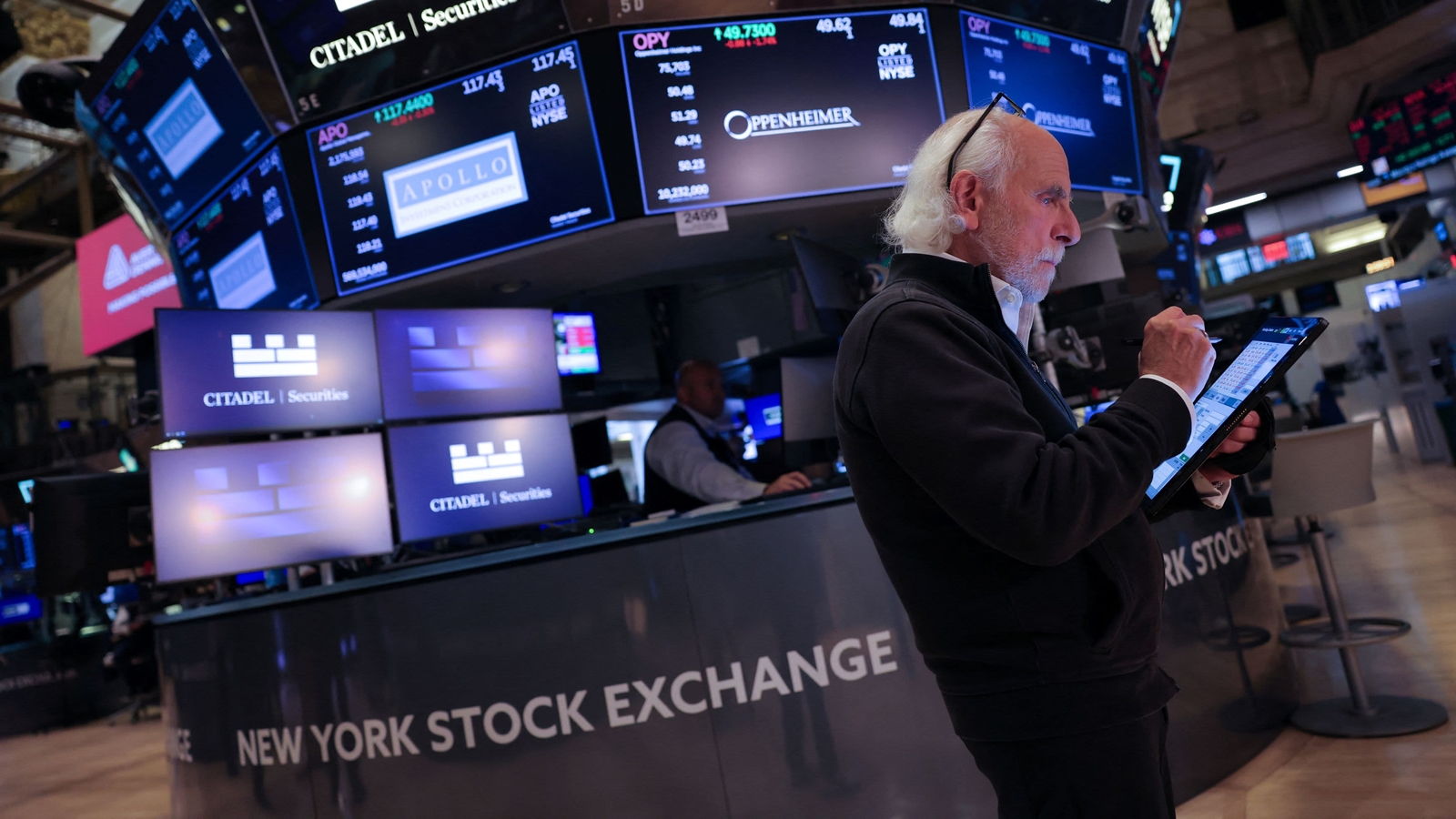
Then the bell rings. And on the morning after the midterms, the Dow Jones Industrial Average didn't just exhale; it roared upward by more than a thousand points.
Financial headlines treat a 1,000-point surge like a scoreboard update at the end of a blowout game. They throw around sterile words like rallies, sector rotations, and investor sentiment. They treat the market as if it were a giant, cold calculator spitting out an inevitable equation. It isn't. A thousand-point jump in the Dow is the collective sigh of relief from millions of ordinary people who spent the last six months terrified that Washington was about to break their retirement accounts. To understand the bigger picture, we recommend the detailed analysis by The Wall Street Journal.
To understand what really happened when Wall Street digested those midterm results, you have to stop looking at the ticker tape and start looking at the kitchen tables where the real stakes live.
The Anatomy of a Tuesday Night Panic
Consider a hypothetical couple—let’s call them David and Elena—living just outside Columbus, Ohio. David is sixty-two, a mid-level logistics manager whose knees ache every time it rains, counting down the forty-one months until he can finally turn off his 5:00 AM alarm for good. Elena works part-time at a pediatric clinic. Together, over thirty-four years of skipping vacations, driving twelve-year-old sedans, and stuffing every spare dollar into an index fund, they built a nest egg of roughly $680,000.
To a Wall Street hedge fund manager, $680,000 is a rounding error on a Tuesday afternoon. To David and Elena, it is freedom. It is the difference between spending their seventies visiting their grandchildren in Oregon or spending them figuring out which prescription medications they can afford to split in half.
For months leading up to the midterm elections, David couldn't sleep. Every time he turned on the television, he heard a different version of the apocalypse. One channel warned that a sweep by one party would trigger massive corporate tax hikes, crushing the very companies holding up his 401(k). Another channel warned that the opposing party would ignite a debt-ceiling standoff so reckless it would downgrade American credit and send bond yields spiraling into chaos.
I know that specific brand of nausea intimately. Years ago, during an election cycle marked by razor-thin margins and bitter legislative threats, I watched a fifth of my own modest savings evaporate in six weeks—not because a single factory closed or a single product failed, but because nobody in New York knew what the people in Washington were going to do next. Watching numbers bleed red on a screen when you have zero control over the outcome feels like sitting in the backseat of a car while two people fight over the steering wheel at eighty miles an hour.
That is the secret Wall Street rarely admits out loud: the stock market does not actually care who wins an election nearly as much as it cares about knowing who won.
Why Wall Street Loves a Traffic Jam
Think of the American economy as a massive, eighteen-wheel freight truck hauling trillions of dollars in goods down a mountain highway. Business owners, factory floor supervisors, software engineers, and retirees like David and Elena are all riding in the back. They can handle steep hills. They can handle bad weather. What they cannot handle is a driver who yanks the wheel hard to the left every two years, then yanks it hard to the right two years later.
When voters go to the polls in a midterm election, they almost always deliver what political analysts call "divided government"—a split Congress, or a legislative branch controlled by the opposite party of the sitting president. To voters watching cable news, a divided Washington looks like dysfunction. It looks like endless hearings, stalled bills, and politicians shouting past each other on the Capitol steps.
To the financial markets, that gridlock is pure gold.
Why? Because when neither party holds total control, radical legislation dies on the vine. Massive, overnight overhauls to the tax code become mathematically impossible. Sweeping new regulatory crackdowns get stuck in committee. Reckless spending sprees hit a brick wall. Suddenly, the rules of the game are frozen in place for at least the next twenty-four months.
Consider what happens next inside the boardroom of a mid-sized manufacturing company in Pennsylvania—another hypothetical example grounded in how corporate finance actually operates. For six months prior to November, the company's chief financial officer has been sitting on $40 million in cash. She wants to build a new assembly line and hire eighty machinists, but she refuses to sign the checks because she doesn't know if her corporate tax rate is about to jump by seven percentage points in January.
The moment the midterm results confirm a divided government, that uncertainty vanishes. By 9:35 AM on Wednesday morning, the calculus changes completely. The tax rate isn't moving. The regulations aren't shifting. She picks up the phone, approves the factory expansion, and releases the capital. Multiply that single phone call by ten thousand companies across the country, and you begin to see why the Dow Jones Industrial Average added more than a thousand points in a single session.
The Ghost in the Machine: Historical Gravity
Skeptics love to claim that post-election rallies are nothing more than blind euphoria—a sugar high cooked up by wealthy traders looking for an excuse to bid up stock prices. The history books tell a much more stubborn, fascinating story.
Look back across nearly a century of American market data, stretching all the way back to the Hoover administration, and one of the most reliable patterns in modern finance emerges from the noise. In the twelve months following a midterm election, the S&P 500 has finished higher almost every single time—roughly nineteen out of the last twenty-one cycles, delivering an average gain that towers above non-election years.
Wait. Stop and think about those odds.
Across world wars, oil embargoes, stagflation, dot-com crashes, housing collapses, and global pandemics, the year after a midterm election has been an almost unbroken streak of upward momentum. Not because politicians suddenly became geniuses on the first Wednesday in November, and not because the economy magically healed its wounds overnight.
The market surges because of relief.
Before a midterm election, institutional investors—the pension funds managing retirement money for firefighters, nurses, and municipal workers—pull billions of dollars off the table and park it in cash. They buy expensive insurance contracts called "puts" to protect themselves against a surprise political earthquake. The entire financial system coils up like a steel spring pushed down by a heavy boot.
When the ballots are counted and the world hasn't ended, that boot lifts. All that hoarded cash comes flooding back into stocks at once. Traders unwind their emergency hedges. Algorithms programmed to detect falling volatility start buying millions of shares automatically, pushing prices higher, which triggers more human buyers who are terrified of missing the boat.
The Trap Hidden Inside a 1,000-Point Surge
Yet if you ask any seasoned market veteran—someone who has survived the dot-com bust of 2000, the banking collapse of 2008, and the inflation shocks of the early 2020s—they will tell you that a 1,000-point jump is also a dangerous illusion.
Numbers that big distort our judgment. When the Dow sat at 10,000 points twenty-five years ago, a 1,000-point move meant the entire value of blue-chip corporate America had jumped by ten percent in a single afternoon—an earth-shattering event. When the Dow sits above 30,000 or 40,000 points, a 1,000-point surge is really just a 2.5% to 3% gain. It looks cinematic on a breaking-news banner, yet in percentage terms, it is simply a very good day at the office.
More importantly, a celebratory rally on Wall Street does not magically lower the price of a carton of eggs, a gallon of diesel, or a thirty-year mortgage.
Let’s return to David and Elena in Ohio. On Wednesday evening, David opened his brokerage app while dinner was in the oven and saw that his retirement account had jumped by nearly $19,000 in six and a half hours. His shoulders dropped two inches. He poured two glasses of wine. For the first time since spring, he felt like the finish line was actually within reach.
But beneath that $19,000 bounce, the real economic weather hadn't changed at all. The Federal Reserve was still watching inflation numbers like a hawk. Interest rates on credit cards and auto loans were still biting into working families' paychecks. Consumer debt was still climbing, and overseas supply chains remained fragile.
Wall Street is a forward-looking machine; it prices in what it thinks will happen six to nine months from now, completely ignoring how much pain people are feeling at the grocery store today. That disconnect is why post-election rallies often feel so jarring to ordinary workers. You look at your paycheck and feel squeezed, then you look at the evening news and hear that billionaires just made another fortune before lunch.
What the Smart Money Does While Everyone Else Celebrates
If you want to survive the emotional whiplash of political markets without losing your mind—or your shirt—you have to stop treating election weeks like a casino bet.
During the worst market swings of my own life, the best financial decision I ever made was forcing myself to close my browser tab and walk outside for an hour whenever a headline made my pulse spike. Every time I tried to outsmart an election—selling stocks in October because I was sure a political crisis was coming, waiting until November to buy back in—I lost money. I sold when fear was highest and bought back after the 1,000-point relief rally had already happened without me.
Institutional investors spend billions of dollars on supercomputers and satellite imagery just to shave milliseconds off their trades, and even they get political predictions wrong half the time. In 2016, futures markets plunged hundreds of points overnight as election results rolled in, only to reverse completely and close sharply higher by the following afternoon. Anyone who panicked and sold in the dark at 2:00 AM locked in devastating losses just hours before the recovery began.
The real lesson of a thousand-point midterm surge isn't about which political party is better for your wallet. Both parties have presided over roaring bull markets, and both parties have presided over painful recessions.
The real lesson is about the sheer power of human psychology. Fear makes us sell assets we spent decades building just to make the anxiety stop. Uncertainty paralyzes businesses from hiring, building, and innovating. And the moment that fog clears—even if the clarity comes in the form of messy, imperfect political gridlock—human ambition rushes back into the vacuum with enough force to move trillions of dollars before sunset.
Late that Wednesday night in Ohio, after the dishes were washed and the television was finally turned off, David walked back into his study. He didn't log into his brokerage account again. He didn't try to guess what Congress would do in January, or what the Federal Reserve would say next month, or whether the Dow would gain another thousand points or give half of them back by Friday.
He simply opened a worn manila folder on his desk, pulled out a yellow legal pad where he had written down his retirement budget three years earlier, and drew a quiet, steady checkmark beside the current year.