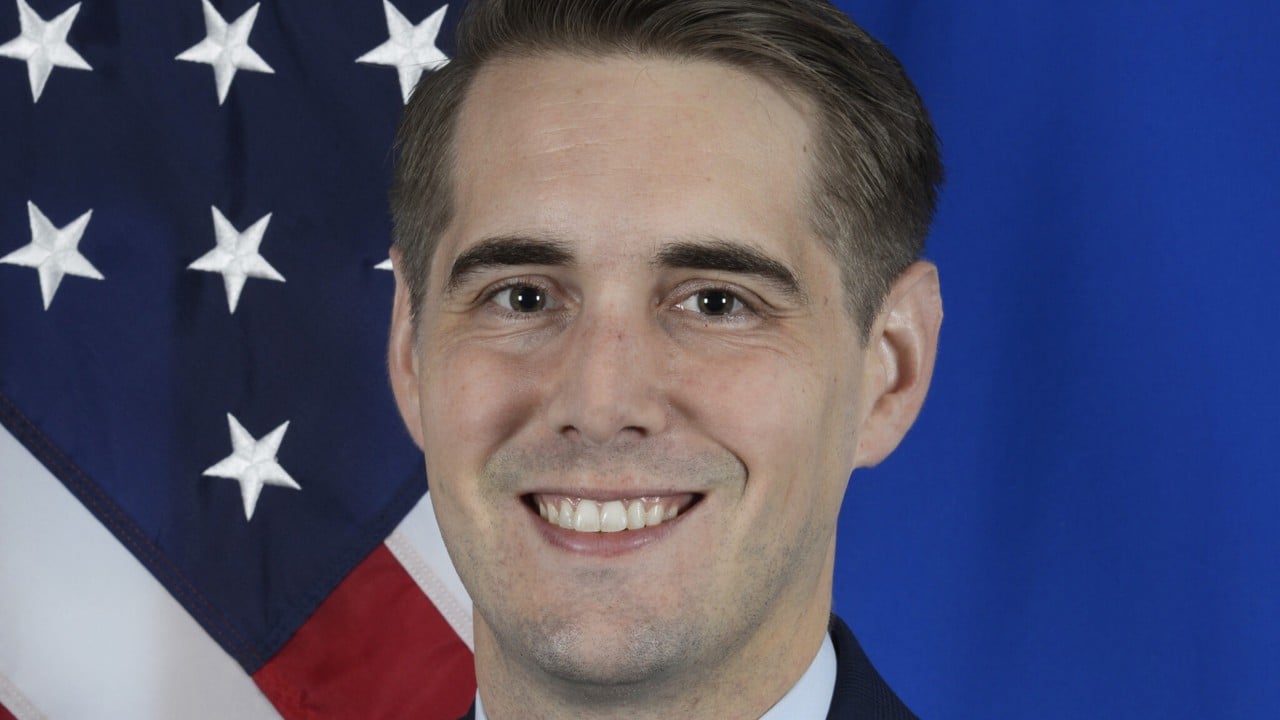
The February 2026 appointment of Riley M. Barnes as the U.S. Special Coordinator for Tibetan Issues is not a routine diplomatic fill. It is a calculated hardening of the American stance toward Beijing as the race to define the post-Dalai Lama era reaches a fever pitch. By placing the Assistant Secretary for Democracy, Human Rights, and Labor into this dual role, Secretary of State Marco Rubio has signaled that Tibet is no longer a peripheral human rights concern. It is now a central pillar of the broader Indo-Pacific strategy designed to challenge Chinese sovereignty claims and resource dominance.
For decades, the "Tibet question" has been a barometer for the U.S.-China relationship. When trade deals are on the line, the Tibet issue often fades. When geopolitical friction rises, the Tibetan cause returns to the forefront. The current appointment of Barnes, specifically timed with the Tibetan New Year (Losar), follows years of legislative buildup, including the Tibet Policy and Support Act (TPSA) and the Resolve Tibet Act. These laws have done something unprecedented: they have codified into American statute that the succession of the Dalai Lama is a purely religious matter, and any Chinese interference will be met with targeted sanctions.
The timing is critical because the 14th Dalai Lama, Tenzin Gyatso, is now 90 years old.
The Successor Crisis and the Looming Double Dalai Lama
Beijing has spent the last decade laying the groundwork for what it calls the "reincarnation in accordance with Chinese law." The Chinese Communist Party (CCP) views the selection of the 15th Dalai Lama as a matter of national security. Their plan is to utilize the "Golden Urn" ceremony to name a successor who is loyal to the party, effectively turning the most influential figure in Tibetan Buddhism into a tool for state-led "Sinicization."
Washington is moving to preempt this. The U.S. strategy is to build a "fortress of legitimacy" around the current Dalai Lama’s chosen process. By appointing Barnes, the State Department is creating a permanent office to coordinate with the Central Tibetan Administration (CTA) in Dharamsala. This is about more than religion. It is about preventing a "Panchen Lama" repeat, where in 1995 the CCP kidnapped the boy recognized by the Dalai Lama and replaced him with their own candidate.
The stakes for the global community extend far beyond spiritual leadership. Tibet is the "Water Tower of Asia," the source of rivers that sustain nearly 2 billion people. Control over the plateau gives China the power to manipulate the water security of India, Southeast Asia, and Pakistan through mega-dams and diversion projects. The U.S. Special Coordinator’s mandate now explicitly includes environmental monitoring and the protection of water rights, a move that links Tibetan human rights directly to the regional stability of the Indo-Pacific.
The Silicon Shield and Himalayan Surveillance
An overlooked factor in this new policy push is the technological dimension. Tibet has become a testing ground for China's most advanced surveillance technologies, including DNA sequencing, iris scanning, and real-time facial recognition in monasteries. This is not just about local control. It is an exportable model of "digital authoritarianism" that the U.S. is desperate to contain.
The appointment of Barnes coincides with a push to integrate Tibetan issues into the U.S. tech-competition strategy. By documenting human rights abuses facilitated by specific Chinese tech firms in Lhasa, the U.S. can justify broader export controls and "Entity List" additions. This turns Tibet into a functional piece of the economic war. If a company provides the "backbone" for repression in Tibet, it loses access to the American market.
| Feature | Chinese Strategy (State-Led) | U.S. Strategy (Values-Based) |
|---|---|---|
| Succession | State-controlled via Golden Urn | Religious autonomy via TPSA |
| Diplomacy | "Internal Matter" narrative | Internationalized via Coordinator |
| Technology | Surveillance and Sinicization | Documentation and Sanctions |
| Geography | Militarized Himalayan border | Zone of Peace / Water Security |
The CCP's reaction was swift and predictably harsh. Foreign Ministry spokespeople characterized the Barnes appointment as a "gross interference in internal affairs." However, the U.S. is no longer asking for permission. The reinstatement of Tibetan-language broadcasting at Radio Free Asia (RFA) and Voice of America (VOA) earlier this year suggests a return to "information warfare" tactics. These broadcasts are lifelines for Tibetans inside the PRC, countering the state's narrative and maintaining a shared cultural space between the diaspora and the homeland.
The India Factor
New Delhi remains the silent, yet essential, partner in this dance. While the U.S. provides the diplomatic and legal framework, India provides the physical ground. The Tibetan government-in-exile operates out of Himachal Pradesh. Any move the U.S. makes must be synchronized with India’s own fragile border situation with China.
Recent clashes along the Line of Actual Control (LAC) have made India more willing to play the "Tibet card." While India officially recognizes Tibet as part of China, its hospitality toward the Dalai Lama and the growing U.S. presence in the region suggest a shift. The U.S. Special Coordinator’s role is partly to bridge this gap, ensuring that the Tibetan movement doesn't become a casualty of shifting New Delhi-Beijing relations.
The danger of this "Pivot" is that it turns the Tibetan people into a geopolitical instrument. If the U.S. uses Tibet merely as a "cudgel" to extract trade concessions from Beijing, the moral authority of the position vanishes. The challenge for Barnes will be to maintain a focus on the meaningful autonomy of the Tibetan people while navigating a White House that often prioritizes transactional outcomes.
The battle for the next Dalai Lama will likely be the most significant soft-power conflict of the 21st century. It will determine whether a 2,000-year-old culture can survive the pressure of a 21st-century superpower. By formalizing the Coordinator role and backing it with sanction-ready legislation, Washington has declared that it will not be a spectator in the coming succession crisis.
Would you like me to analyze the specific sanctions available under the Global Magnitsky Act that could be applied to Chinese officials in Tibet?


