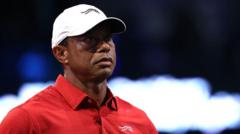
The golf media is currently mourning a ghost. Tiger Woods turned down the 2027 Ryder Cup captaincy for Adare Manor, and the consensus is that it’s a tragedy for the sport. Analysts are scrambling to find a "worthy" backup, acting as if the American team just lost its North Star.
They are wrong. They are remarkably, consistently wrong.
Woods declining the role isn't a setback for Team USA; it is a stay of execution. The assumption that the greatest individual golfer to ever live would somehow translate that brilliance into the specific, bureaucratic, and highly emotional labor of captaincy is a fundamental misunderstanding of what makes a winning leader. We have spent twenty years watching Woods dominate his peers by being a singular, impenetrable force. Now, we expect him to be a middle manager?
Stop mourning. Start realizing that the Ryder Cup is better off without the Tiger-centric circus.
The Myth of the Great Player as Great Captain
The sporting world loves the "Great Player Trap." We see it in every league. We assume that because someone mastered the mechanics of a sport, they possess the pedagogical and psychological tools to lead others to do the same.
In golf, this logic is even more flawed. The Ryder Cup is the only time these athletes aren't total islands. For fifty-one weeks a year, Tiger Woods has been an apex predator whose primary weapon was psychological warfare against the very people he would now be tasked with "mentoring."
Being a captain isn't about hitting the "Stinger." It is about logistics. It is about ego management. It is about understanding the granular statistics of alternate-shot pairings—a format Woods historically struggled with. If you look at the math, Tiger’s personal Ryder Cup record is 13–21–3. He has a losing record. He was often a difficult partner because his presence is so gravitational it crushes the person standing next to him.
Why would we want that energy in the team room?
A captain needs to be a facilitator, not a monument. Keegan Bradley, the eventual choice for 2025 (and likely the template for 2027), represents a shift toward a "player-manager" who actually cares about the team dynamic more than their own brand legacy. Tiger is a brand. The Ryder Cup is a brawl.
The Adare Manor Distraction
The "official" reason given for the decline is Tiger’s workload. Between his duties on the PGA Tour Policy Board and the launch of TGL, he claims he doesn't have the "time" to do the job justice.
This is a polite fiction.
Tiger Woods has all the time in the world for things he believes will enhance his legacy. The truth is that Tiger knows the current state of the American team is a fractured mess. The LIV Golf vs. PGA Tour civil war has created a locker room environment where "unity" is a marketing slogan, not a reality.
If Tiger takes the captaincy and loses—especially on European soil, where the U.S. hasn't won since the early nineties—it’s a stain. If he wins, people say, "Of course he won, he’s Tiger." There is no upside for a man who has spent his entire career calculating risk vs. reward with surgical precision.
He didn't decline because he’s busy. He declined because the Ryder Cup captaincy is a thankless job where the captain gets all the blame for a loss and the players get all the credit for a win. Tiger doesn't do "thankless."
The Tactical Superiority of the "Average" Captain
If we look at the most successful captains of the last two decades, they aren't the icons. They are the grinders.
- Paul McGinley (2014): Not a superstar. A tactical genius who used data and communication to dismantle a superior U.S. roster.
- Thomas Bjørn (2018): A journeyman by comparison to the greats, but a master of man-management.
- Luke Donald (2023): Quiet, focused, and utterly devoted to the spreadsheet.
The U.S. keeps trying to appoint "Legends." We want the glitz. We want the press conference to look like a Hollywood premiere. But legendary players often lack empathy for the struggles of those less gifted than them. They can’t explain "how" they did it because, for them, it was instinct.
Imagine a scenario where a young player is struggling with a high-pressure putt on the 16th at Adare Manor. Does he want Tiger Woods—a man who never felt that kind of human frailty—staring at him from a golf cart? Or does he want a captain who has been in the trenches, who has missed those putts, and who knows how to talk a player through the nerves?
The "Tiger Effect" is real, but in a team setting, it is often suffocating. Players spend more time trying to impress Tiger than they do trying to beat the Europeans.
The Logistics of the 2027 Disaster
The 2027 Ryder Cup will be held at Adare Manor in Ireland. It is going to be a partisan cauldron. The European fans are the best in the world at turning a golf course into a football stadium.
To win there, the U.S. captain needs to be someone who can disappear. They need to be a "servant leader." The captaincy requires hundreds of hours of mundane tasks: picking out uniforms, scouting the course conditions, negotiating with the PGA of America, and managing the delicate egos of twelve multi-millionaires who all think they should be starting every session.
Tiger Woods has lived a life where people do those things for him.
The idea of Tiger Woods sitting in a room arguing over the fabric of a rain jacket or the specific timing of a team dinner is laughable. He is a king. Kings don't make the sandwiches. But the best Ryder Cup captains? They are the ones willing to make the sandwiches if it means their players are five percent more comfortable.
Why the "People Also Ask" Crowd is Wrong
If you search for "Why did Tiger turn down the Ryder Cup?" you’ll find articles talking about his leg injury or his commitment to "growing the game."
That is the sanitized version.
The real question should be: "Why are we still obsessed with Tiger's approval?"
The golf world is suffering from a collective case of Stockholm Syndrome. We are so indebted to what Tiger did for the purses and the ratings in 2000 that we refuse to let the sport evolve into its next phase. By begging Tiger to be the captain, we are admitting that the current crop of players isn't interesting enough to carry the torch.
That is a self-fulfilling prophecy. Every time we center a Ryder Cup around a non-playing Tiger Woods, we diminish the twelve guys actually hitting the shots.
The LIV Factor: The Elephant in the Team Room
We cannot discuss the 2027 captaincy without acknowledging the schism. The captain of that team will have to navigate the optics of LIV players. Can you imagine Tiger Woods, the staunchest defender of the PGA Tour, having to play "nice" with Bryson DeChambeau or Brooks Koepka (if they are on the team) for the sake of a trophy?
It would be a disaster. The tension would be the only story.
The media would spend the entire week tracking Tiger’s body language toward the LIV contingent. It would be a circus of "Who snubbed whom?" instead of "Who is up 2-up through five?"
By stepping away, Tiger is doing the one thing he rarely does: being selfless. He is removing the biggest potential distraction from the room. He is allowing the team to be a team, rather than a backdrop for his latest comeback narrative.
The Path Forward: Embrace the "Boring" Captain
The U.S. needs to stop looking for a hero and start looking for a manager.
We need someone who understands that the Ryder Cup isn't won with "clutch" speeches in the locker room. It’s won in the months leading up to the event by ensuring the players are rested, the pairings are statistically sound, and the course setup (as much as the away team can influence it) doesn't actively penalize the American style of play.
We need a captain who doesn't care about their "brand." We need someone who is willing to be the most boring person in the room so the players can be the stars.
Tiger Woods is many things. "Boring" is not one of them. "Subtle" is not one of them. "Logistics-oriented" is not one of them.
The Hard Truth
The tragedy isn't that Tiger Woods said no. The tragedy is that we were so desperate for him to say yes.
Golf is at a crossroads. It is trying to find its identity in a post-Tiger world while simultaneously refusing to let go of his coat-tails. The Ryder Cup is the premier event in the sport, a showcase of passion and team spirit that transcends individual prize money.
To keep it that way, the event needs to belong to the players on the grass, not the legends in the carts.
Tiger Woods' legacy is secure. He is the greatest to ever play the game. But being the greatest player doesn't give you a divine right to lead, nor does it mean you should. In 2027, when the U.S. team walks out onto the first tee at Adare Manor, they need a captain who is looking at the scoreboard, not at their own place in history.
Stop asking Tiger to save golf. He already did that twenty years ago. Let him be a spectator. Let him be a mentor from afar. But for the love of the game, stop trying to force a square peg into a round hole just because the peg is made of 24-karat gold.
The U.S. team doesn't need a goat. It needs a win. And those two things are no longer the same.