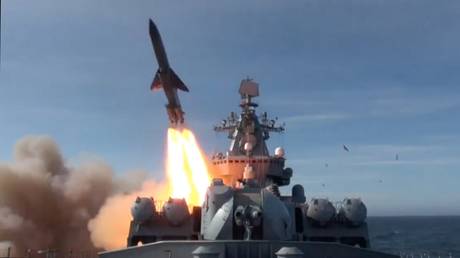
Every headline regarding the Kuril Islands follows a tired, predictable script. Moscow conducts a missile test. Tokyo issues a stern diplomatic protest. Analysts panic about rising tensions in the North Pacific. The lazy consensus tells you this is a dangerous escalation, a direct threat to Japan's sovereignty, and a sign of deteriorating stability in Asia.
That narrative is completely backwards.
Tokyo does not view these drills with blind panic. Behind closed doors in Nagatacho, Japanese defense planners quietly welcome the timing. These Russian military exercises provide the exact political grease the ruling Liberal Democratic Party needs to accelerate its historic remilitarization. For decades, Article Nine of Japan's pacifist constitution handcuffed the nation's strategic ambitions. Every missile test off Etorofu or Kunashiri hands Tokyo a free PR campaign to justify defense budget hikes, counterstrike capabilities, and tighter integration with the United States military.
Let us strip away the diplomatic theater and look at the actual incentives driving this friction.
The Geopolitical Masquerade
Standard media coverage treats territorial disputes as static arguments over rocks and fishing rights. This is fundamentally naive. The Kuril Islands dispute—known in Japan as the Northern Territories—is not about reclaiming cold volcanic real estate. It is a permanent justification mechanism for security policy.
When Moscow rattles sabers in the Sea of Okhotsk, it gifts Tokyo an immediate external threat. Imagine a scenario where Russia completely demilitarized the region, signed a peace treaty, and invited Japanese tourists and joint economic ventures. Japan's defense hawks would lose their primary existential talking point for maritime expansion. The current status quo of perpetual low-grade tension suits both capitals. Moscow gets to project domestic strength and signal defiance against Western sanctions, while Tokyo gets an uninterrupted mandate to upgrade its Izumo-class destroyers into de facto aircraft carriers and purchase hundreds of long-range Tomahawk missiles.
Defense spending in Japan has broken decades-old taboos, soaring toward two percent of GDP. Do you think that happens without the backdrop of Russian naval drills and Chinese coast guard incursions? The missiles near the Kurils are not a warning to Japan to back off; they are the exact fuel Tokyo uses to power its own military normalization.
Dismantling the Sovereignty Myth
The common public misconception is that these military drills bring the two nations closer to kinetic conflict. History teaches us otherwise. Major nuclear-armed or nuclear-backed states do not stumble into total war over disputed archipelagoes in the subarctic.
Russia's Eastern Military District uses these ranges because they are geographically necessary for testing ballistic and anti-ship systems in an isolated maritime theater. The Pacific Fleet requires open water with minimal commercial traffic to telemetry-track missile tests. The Kurils offer the exact geographic corridor required for these exercises.
When Japanese diplomats issue their routine protests, they are performing a script written decades ago. The Ministry of Foreign Affairs logs the protest for domestic political consumption. The Russian Foreign Ministry issues a curt dismissal stating that sovereign territory is none of Tokyo's concern. Both sides walk away having satisfied their domestic audiences. The mistake is taking the public posturing at face value.
"In great power politics, your loudest adversary is often your most useful strategic alibi."
Look past the diplomatic communiques. Trade channels, energy dialogues, and backchannel intelligence sharing operate on an entirely different frequency from public posturing. Japan still maintains stakes in key Russian energy projects like Sakhalin-2 because resource security trumps ideological posturing when winter temperatures drop.
The Real Danger in the North Pacific
The genuine risk is not a stray Russian missile hitting Hokkaido. The real danger is that Western observers continue to misread Asian security dynamics through a purely European lens.
In Europe, borders are existential flashpoints because armies roll across flat plains. In Northeast Asia, maritime geography dictates a completely different calculus. Japan is an unsinkable aircraft carrier anchored off the coast of the Asian mainland. Its security depends entirely on maintaining control of critical sea lanes, anti-submarine warfare chains, and missile defense architectures like the Aegis Ashore systems.
By hyper-focusing on the theater of Kuril Island protests, analysts miss the broader transformation. Japan is shedding its post-war defense constraints at breakneck speed. It is developing autonomous power-projection capabilities that haven't existed since 1945. The catalysts driving this shift are multi-directional, but Russian military activity in the north provides the convenient, undeniable evidence required to convince a historically pacifist domestic populace that the neighborhood is hostile.
Stop viewing Tokyo as the helpless victim of northern aggression. They are masterfully leveraging every missile test in the Kurils to build the exact military apparatus they have wanted for thirty years.
The next time a red alert flashes across your screen about a Russian missile test near disputed northern waters, remember who benefits most from the noise.