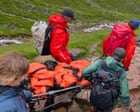
A Labrador retriever had to be carried down the slopes of Ben Nevis after consuming discarded cannabis left behind by hikers. Mountain rescue teams, already stretched thin by a massive influx of casual tourists, spent hours coordinating the evacuation of a heavy, semi-conscious animal.
This is not an isolated incident of bad luck. It is the predictable consequence of a structural failure in how public lands are managed amid the modern outdoor boom.
The narrative surrounding recreational drug use in national parks usually focuses on human safety or legal policing. When dogs become the casualties, the conversation shifts to irresponsible pet ownership. That misses the target. The real crisis lies at the intersection of surging, uneducated visitor numbers and the unique chemical vulnerability of domestic animals to modern cannabis products.
The Chemistry of Canine Vulnerability
Dogs do not experience cannabis the way humans do.
They possess a significantly higher density of cannabinoid receptors in their brains, particularly in the cerebellum. This makes them profoundly sensitive to tetrahydrocannabinol (THC), the primary psychoactive compound in the plant. What might cause a mild intoxicating effect in an adult human can induce severe toxicity in a canine.
When a hiker drops a high-potency edible or a concentrated stub on a trail, they are leaving behind a biological landmine. The problem has worsened with the commercialization of cannabis. Legal and illicit markets alike have shifted toward products with heavily elevated THC concentrations. Edibles, often baked into sweet treats or packaged as gummies, are highly appealing to a foraging dog.
Once ingested, the onset of symptoms is rapid. Owners typically report a sudden loss of motor coordination, a condition known as ataxia. The dog staggers, its limbs uncoordinated. This is followed by a dropping heart rate, urinary incontinence, and extreme hyperesthesia—a state where the animal overreacts violently to sound or touch despite being visibly lethargic. In severe cases, it leads to seizures or coma.
On a steep, rocky peak like Ben Nevis, a disoriented, 80-pound dog is effectively stranded. It cannot walk down. It cannot easily be carried by a single owner over miles of uneven terrain. The rescue becomes a multi-person logistical operation, pulling resources away from human emergencies.
The Infrastructure Breaking Point
Mountain rescue teams in Scotland operate as charities. They rely on volunteers who leave their day jobs to respond to emergencies.
The post-pandemic surge in outdoor recreation has pushed these teams to their limits. Ben Nevis attracts hundreds of thousands of walkers annually, many of whom lack basic mountain literacy. When you mix this demographic shift with the normalization of recreational drug use on public trails, friction is inevitable.
Volunteers are now forced to balance life-and-death human rescues with preventable animal evacuations. Carrying a human stretcher requires a coordinated team of at least six to eight people. Extracting a large dog requires similar manpower due to the awkwardness of securing an animal that may be panicking or entirely limp.
The financial and physical strain on these teams is unsustainable. Every hour spent carrying a pet down a mountain is an hour that volunteers are away from their families, risking injury on slick scree slopes. Public land management has failed to keep pace with the sheer volume of foot traffic. There are no trash receptacles on the upper reaches of major peaks, and the "Leave No Trace" ethos has degraded into a meaningless slogan for a subset of new weekend hikers.
The Policy Failure of Public Lands
Blaming the individual hiker who dropped the substance is satisfying, but it does nothing to fix the systemic issue. The root cause is a lack of targeted education and inadequate waste infrastructure at trailheads.
Most visitors who consume cannabis outdoors do not view their discarded waste as a biohazard. They assume a joint butt or a dropped piece of an edible will biodegrade harmlessly. Education campaigns by forestry authorities focus almost exclusively on littering as a visual blight or a fire risk. They rarely detail the specific, lethal threats that modern chemical waste poses to local wildlife and domestic pets.
Furthermore, the legal ambiguity of cannabis in the United Kingdom creates an environment of secrecy. Hikers who consume illicit substances on the trail are highly likely to discard the evidence quickly if they see other walkers or authority figures approaching. This rapid, panicked littering means items are tossed directly into the brush alongside the path—the exact zone where dogs track scents.
Practical Steps for Trail Safety
If you take a dog into high-traffic mountain areas, reliance on public education is a losing strategy. Protection requires active intervention.
- Utilize a short lead in high-density visitor areas or near summit cairns where people frequently stop to eat and rest.
- Condition a strict "leave it" command to prevent the consumption of discarded food remnants on the path.
- Carry an emergency rescue sling capable of supporting your dog's weight if you must carry them down a trail yourself.
- Recognize the early signs of toxicity immediately—stumbling, glassiness in the eyes, and dribbling urine—and begin an immediate descent before full immobilization sets in.
The highlands are wild spaces, but they are increasingly managed like urban parks without the corresponding maintenance infrastructure. Until land managers treat high-traffic trails like the dense public zones they have become, the burden of these systemic failures will continue to fall on volunteer rescue teams and the animals unlucky enough to cross their paths.