The Chronic Contamination Cycle
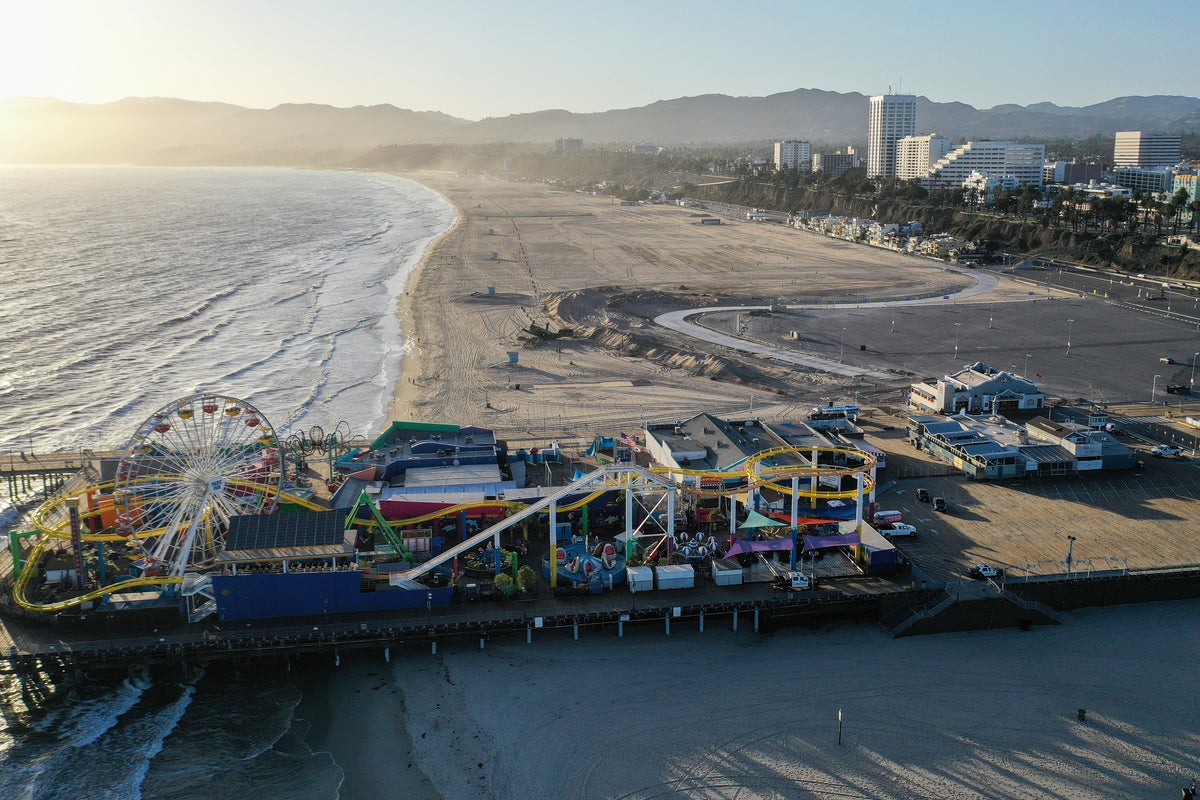
Santa Monica Pier and Venice Beach are under active water quality warnings due to dangerously high bacteria levels. For anyone planning a weekend trip to the Pacific, the immediate takeaway is straightforward. Stay out of the water. County health officials routinely issue these advisories when bacterial counts exceed state standards following rainstorms or mysterious runoff events, warning swimmers of potential illness ranging from skin rashes to severe gastrointestinal distress.
Yet treating these recurring advisories as temporary anomalies misses the deeper systemic failure. This is not a random weather-related fluke. It is a predictable, chronic crisis driven by infrastructure that cannot cope with modern urbanization.
Every time heavy precipitation hits the Los Angeles basin, millions of gallons of untreated urban runoff surge down concrete channels and pour directly onto public beaches. The stormwater system is ancient, fragmented, and fundamentally broken. It was engineered to whisk water away from the streets as fast as possible to prevent flooding, completely ignoring the toxic payload that water carries straight into the ocean.
Anatomy of an Urban Drainage Failure
To understand why Southern California coastlines regularly fail bacterial benchmarks, you have to look miles inland. The concrete arteries of the Los Angeles River and Ballona Creek drain an immense, heavily paved watershed. When rain falls on asphalt, roofs, and parking lots, it cannot soak into the ground. Instead, it picks up a lethal cocktail of contaminants.
- Animal waste left on suburban streets washes directly into storm drains without treatment.
- Motor oil, heavy metals, and rubber particles from highway tires strip off pavement surfaces.
- Trash, fertilizers, and decaying organic matter accumulate in dry riverbeds for months, only to be flushed out in a single violent surge.
Unlike sanitary sewage, which flows to specialized reclamation plants for rigorous treatment before discharge, municipal storm runoff goes straight to the sea. The ocean acts as the region's ultimate disposal sink. When these plumes of polluted water hit the surf zone around the Santa Monica Pier, they stall. Coastal currents often trap the contaminated water in a shallow eddy, creating a literal petri dish of elevated fecal indicator bacteria.
The Flawed Metrics of Public Safety
Public health agencies rely on specific indicator bacteria—such as total coliform, fecal coliform, and enterococcus—to determine if water is safe for human contact. These organisms are not necessarily pathogens themselves, but they serve as proxies for sewage contamination and the presence of disease-causing viruses and bacteria.
However, the testing mechanism has a built-in delay that frustrates public health advocates and endangers unsuspecting beachgoers. Water samples must be collected, transported to a laboratory, and cultured for eighteen to twenty-four hours before results become available.
By the time a warning sign goes up on the sand at Venice Beach, people have often already spent a weekend swimming in contaminated water. The system tells you yesterday where it was dangerous to swim, leaving today's visitors guessing. Rapid-testing technology exists, but municipal adoption remains slow due to chronic funding shortages and bureaucratic inertia.
Infrastructure Investment Versus Band-Aid Fixes
Local authorities point to multi-million-dollar projects like diversion systems and underground retention basins as proof of progress. Facilities designed to capture dry-weather runoff and divert it to the sewage treatment plant have undoubtedly improved baseline summer water quality.
During significant storm events, those systems are instantly overwhelmed. The sheer volume of water dwarfs storage capacity, forcing officials to open flood gates and let the polluted torrents run free to prevent catastrophic inland flooding. Protecting property from inundation will always take precedence over protecting the nearshore marine ecosystem in municipal planning priorities.
Fixing this permanently requires a massive, generational transformation of the entire urban watershed. Cities must pivot toward distributed green infrastructure. That means tearing up concrete, installing permeable pavement, building engineered wetlands, and forcing real estate developers to retain stormwater on-site rather than dumping it onto public streets.
Until regional leaders commit to redesigning the urban plumbing of Southern California, the warning signs at Santa Monica and Venice will remain a permanent fixture of coastal life. The ocean is screaming for help, and the response is a laminated sign taped to a lifeguard tower.