Fear is a quiet thing before it pulls a trigger. It does not arrive with a roar or a cinematic flourish. It creeps into the marrow of a forearm, tightens the tendons in an index finger, and converts a human being into a bundle of raw, defensive reflexes.
Imagine standing in a sunlit hallway in Queens. The air smells faintly of old plaster and brewed coffee. You hear a knock. Or perhaps you do not hear a knock; perhaps you simply hear the heavy, authoritative thud of boots against wood, followed by the splintering of a doorframe. In fractions of a second, the universe collapses to a single, terrifying binary: us or them. Threat or survival.
That is the justification offered in courtrooms and precinct debriefings. We felt unsafe.
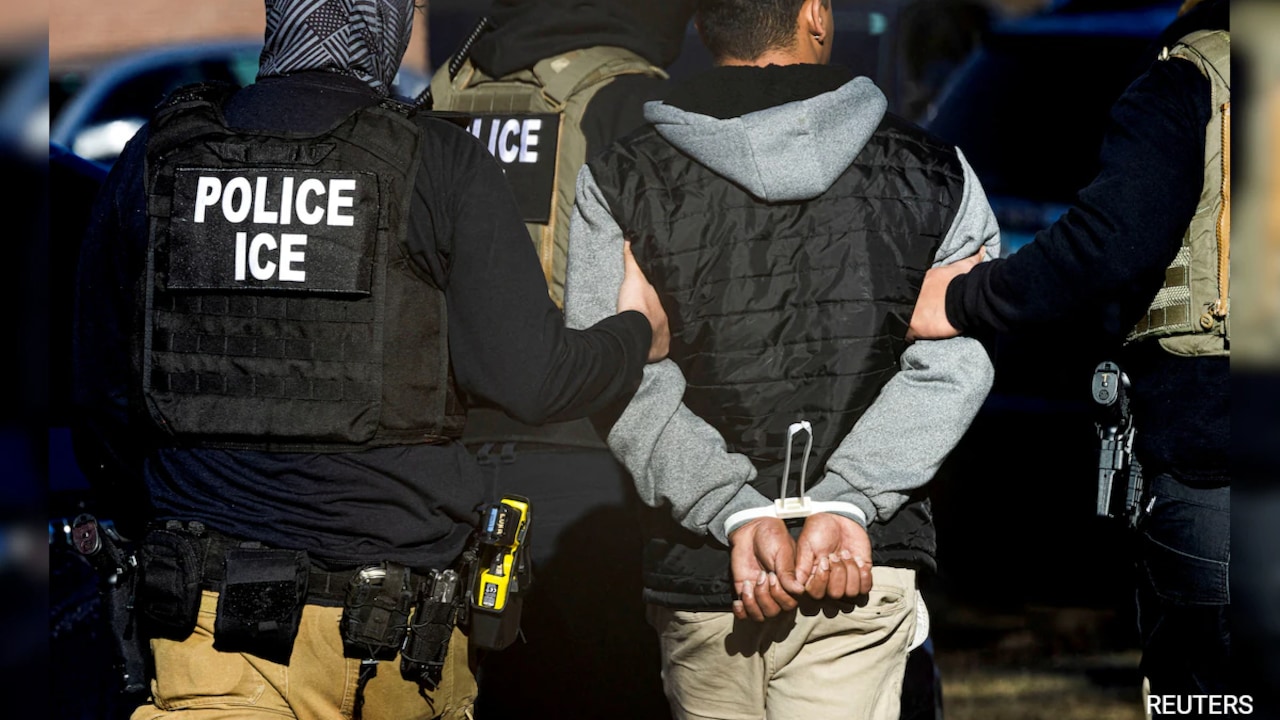
It is a phrase designed to end arguments. It invokes a primal shield that absorbs scrutiny, deflects accountability, and closes the book on an inquiry before it can properly begin. But when Immigration and Customs Enforcement agents fired shots at a New York man during an operational encounter, that phrase did more than justify a tactical choice. It exposed the widening chasm between the bureaucratic state and the pavement where actual human lives unfold.
Let us look past the badge and the uniform for a moment. Strip away the institutional boilerplate of press releases and senior officer statements. Look instead at the mechanics of panic.
When a federal agent enters a domestic space—whether an apartment complex in Brooklyn or a suburban driveway in Long Island—they carry an invisible cargo. They carry the weight of policy directives, political pressure, quotas, and an underlying operational narrative that paints urban neighborhoods not as communities of mothers, children, and shift workers, but as hostile territory. When you view a neighborhood as hostile territory, every sudden movement is an ambush. Every startled exclamation is a declaration of war.
This is the tyranny of the perceived threat.
In standard law enforcement training, officers are taught the split-second calculus of lethal force. The Supreme Court's standard—objective reasonableness—demands that we evaluate a shooting from the perspective of a reasonable officer on the scene, rather than with the 20/20 clarity of hindsight. It is a necessary legal guardrail designed to protect people who run toward danger. Yet, when applied to immigration enforcement operations conducted inside residential homes, that guardrail becomes a loophole.
Why? Because the baseline assumption of danger is radically distorted.
An immigration enforcement action is fundamentally different from a narcotics raid or a homicide arrest. It is an administrative enforcement mechanism weaponized into a tactical operation. When armed federal personnel conduct operations in civilian clothes or specialized tactical gear without the traditional local policing integration, the element of terror multiplies exponentially for the civilian on the receiving end.
Consider the perspective of the man who hears the door crash open. He is not necessarily thinking about federal code or administrative warrants. He is thinking about his family, his dignity, and his immediate safety. He moves. He reaches out a hand to steady himself, or to shield a spouse, or simply in the disoriented panic of waking up to violence.
To the agent, conditioned to expect resistance in a jurisdiction that limits cooperation with federal immigration authorities, that reach is interpreted as a weapon.
Bang.
The physics of the encounter take over. Steel meets lead. Blood hits linoleum. And then comes the administrative machinery of absolution.
Senior officers step forward to explain the calculus. They point to the perceived danger. They cite the chaotic environment. They wrap the incident in the protective cloak of officer safety, a concept so paramount in American jurisprudence that challenging it feels like treason. Officer safety matters. Every human being deserves to return home at the end of a shift. That is an absolute truth.
But safety cannot be treated as a zero-sum game where the preservation of an officer's life requires the wholesale suspension of a citizen's or resident's right to exist without being shot in their own living room.
When we accept We felt unsafe as an unassailable end to an investigation, we establish a dangerous precedent. We create a legal and moral hazard where the mere presence of an armed state actor in a community they distrust justifies whatever violence follows. It inverts the social contract. The government is no longer securing the peace; it is managing its own anxiety with lethal force.
The streets of New York have long been a crucible of overlapping jurisdictions and cultural friction. From the sanctuary city debates to the complex relationships between local police departments and federal agencies, every interaction is freighted with political friction. When federal immigration enforcement operates in a hostile political climate, the psychological pressure on the ground intensifies. Agents feel isolated. They feel unsupported. They feel, quite genuinely, unsafe.
And yet, feeling unsafe is an emotion. Bullets are physical realities.
We must demand a higher standard of our institutions than the institutionalization of panic. If federal agents cannot execute administrative warrants without resorting to firearms because the local environment makes them feel vulnerable, then the entire architecture of interior immigration enforcement must be examined. You cannot build a sustainable policy on a foundation of mutual terror.
The smoke clears from the apartment in New York. The paperwork is filed. The internal reviews clear the actors involved, finding their actions within the broad bounds of policy and legal precedent. The neighborhood absorbs the trauma, adding another scar to the collective memory of marginalized communities who view the knock on the door not as a function of justice, but as an impending catastrophe.
A man recovers from his wounds or carries the invisible weight of having stared down the barrel of state-sanctioned fear. He is left with a profound, quiet understanding of how fragile his place in the world truly is.
The trigger was pulled because of a feeling. The consequences remain long after the smoke has vanished into the damp New York air.