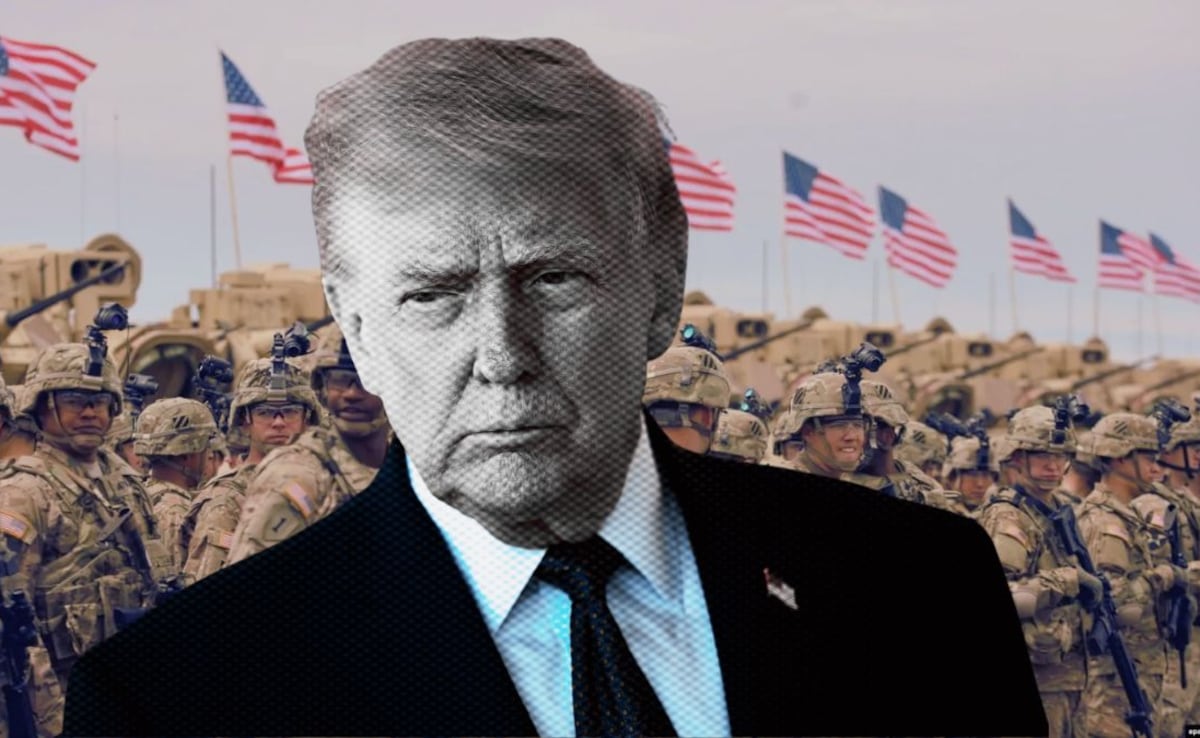
The headlines are predictable. They read like a script from 2003. "US to send more troops to Middle East." The narrative is always the same: a ceasefire is shaky, a regional power is posturing, and the only dial the Pentagon knows how to turn is the one labeled "Personnel."
It is a knee-jerk reaction born of intellectual laziness.
Most analysts view troop deployments as a show of strength. They see a "deterrent." They are wrong. In the current geopolitical climate, flooding the desert with more boots on the ground isn't a display of power; it is an admission of diplomatic bankruptcy and a massive tactical liability. We aren't projecting force. We are providing targets.
The Deterrence Delusion
The "lazy consensus" argues that more troops equals more stability. The logic suggests that if you put enough hardware and humans in a specific geography, the adversary will blink.
This ignores the fundamental shift in modern warfare.
We are no longer in an era of state-on-state symmetric posturing where a division of tanks on a border changes the calculus of a rational actor. We are dealing with proxy networks, asymmetric drone swarms, and cyber-warfare. Against these threats, a thousand extra soldiers in a fixed base are not a deterrent. They are a vulnerability.
Every additional soldier requires a massive logistical tail. They need food, fuel, water, and protection. This creates a "gravity well" of resources. Instead of focusing on strategic maneuvering or high-level intelligence, our command structure becomes obsessed with the physical security of the very people sent there to "stabilize" the region.
The Target Rich Environment
Let’s be brutally honest about what happens when these deployments land.
I’ve seen this cycle repeat for decades. We move three thousand troops into a region to "signal resolve." Within six months, fifty percent of those troops are dedicated solely to force protection—protecting themselves from the very instability they were sent to prevent.
The adversary doesn't see a wall of steel. They see a target-rich environment.
In the age of $2,000 suicide drones, a multi-billion dollar base housing five thousand Americans is a liability, not an asset. The math doesn't work. When we increase our physical footprint, we give our opponents more ways to bleed us without ever having to engage in a "real" war. They don't need to win a battle; they just need to ensure a steady stream of "incidents" that drain our political will and treasury.
Misunderstanding the Ceasefire Mechanics
The media frames the end of a ceasefire as a ticking clock that can only be stopped by American military presence. This is a fundamental misunderstanding of how regional power dynamics work.
Ceasefires in the Middle East aren't usually broken because one side lacks "fear" of the US military. They are broken because the internal political pressures on the ground—inflation, water rights, religious factionalism—become more dangerous to the local leaders than the threat of a distant superpower.
By sending more troops, we actually disincentivize local actors from doing the hard work of diplomacy. Why negotiate a lasting peace when you can manipulate the American military into being your permanent security guard? We have become the "useful idiots" of regional players who use our troop surges to bolster their own domestic standing while we foot the bill and take the casualties.
The Logistics of Decline
The US military is currently facing its worst recruitment crisis in fifty years.
Every time the Pentagon decides to shuffle several thousand troops to the Middle East for a "temporary" deployment that inevitably becomes permanent, they are straining a system that is already at its breaking point. This isn't just about the soldiers on the ground; it's about the degradation of the global force.
- Training Cycles: Constant deployments to "hot zones" for posturing purposes ruin the training cycles for high-intensity conflict elsewhere.
- Maintenance: Equipment used in the harsh environments of the Middle East ages three times faster than in standard rotations.
- Retention: Junior officers and NCOs are walking away because they are tired of being used as pawns in "signaling" exercises that lack a clear exit strategy.
We are sacrificing our long-term readiness for short-term optics. It is a classic case of burning the house to stay warm for an hour.
The Intellectual Failure of "More"
People often ask: "If we don't send troops, won't the region descend into chaos?"
This is a flawed premise. It assumes the region isn't already in chaos because of our persistent, heavy-handed presence.
The counter-intuitive truth is that a smaller, more mobile, and less visible footprint is far more intimidating. A carrier strike group over the horizon is a strategic threat. A few thousand soldiers sitting in a base in the desert are just hostages to fortune.
We need to stop asking "How many troops do we need?" and start asking "What is the specific, attainable political objective?" If the answer is "to show we care" or "to monitor the situation," then keep the troops at home. Satellite imagery and signals intelligence "monitor" just fine.
The High Cost of Being "Present"
I have watched the US government pour trillions into "stability operations" that resulted in less stability.
The mistake is always the same: confusing presence with influence. We think that by being there, we control the outcome. In reality, our presence often acts as a catalyst for opposition. It gives disparate groups a common enemy. It provides a recruitment tool for radicals.
If we truly wanted to deter regional aggression, we would stop telegraphing our moves with slow-moving troop transports and start hitting the adversaries where it actually hurts: their bank accounts, their energy infrastructure, and their digital command networks. These are levers of power that don't require 19-year-olds from Ohio to stand guard in a sandbox.
Strategic Narcissism
H.R. McMaster often speaks about "strategic narcissism"—the tendency of the US to believe that the world revolves around its actions and that its enemies will simply react according to our plans.
Sending more troops is the ultimate act of strategic narcissism. It assumes the adversary cares more about our troop numbers than their own long-term ideological goals. It assumes that our "resolve" is the only variable that matters.
The truth is that the Middle East is moving toward a post-American reality whether we like it or not. Regional powers are hedging their bets, looking toward China and Russia, and forming their own security blocs. A few thousand more American troops won't change that trajectory; it will only make our inevitable withdrawal more messy and expensive.
The Hard Reality
If a ceasefire is nearing its end, the solution isn't more infantry. It is more leverage.
Leverage comes from economic pressure, technological dominance, and the ability to strike with precision from a distance. It does not come from increasing the number of targets we have stationed in range of enemy mortars.
We are playing a 20th-century game in a 21st-century world. The Pentagon’s obsession with troop numbers is a relic of a bygone era, a security blanket for policymakers who are too afraid to admit that the old playbook is burned.
Stop treating troop deployments like a diplomatic "Like" button. It’s a massive, expensive, and dangerous commitment that rarely achieves the stated goal.
The most powerful thing the US can do is stop being predictable. As long as the adversary knows exactly how we will react—by sending more vulnerable humans into their backyard—they will always have the upper hand.
Pull the troops back. Force the regional players to deal with their own mess. Stop being the world’s most expensive security guard for a neighborhood that doesn't want you there.
The era of the "deterrent surge" is dead. It’s time we acted like we knew it.