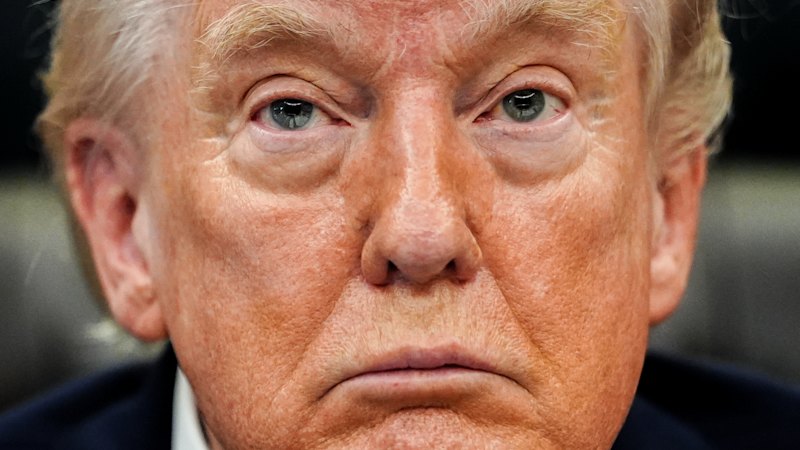
Donald Trump thinks he can walk back into the Oval Office and pick up exactly where he left off with Tehran. He's wrong. The Middle East he’s inherited in 2026 isn't the same chessboard he played on during his first term. Back then, he had the "maximum pressure" campaign, a series of targeted strikes, and a fairly predictable set of Iranian leaders to deal with. Today, the regional architecture has shifted. The "sheriffs" in Tehran have changed their stripes, and the fragile hopes for a ceasefire in various proxy wars are hanging by a thread. If you think a few tweets and some new sanctions will solve this, you haven't been paying attention to how much the ground has moved.
The reality is that Iran has spent the last few years hardening its stance. They aren't just reacting anymore; they’re anticipating. Trump’s return comes at a moment when the Iranian leadership feels it has less to lose and more to prove. They’ve watched the U.S. struggle with domestic polarization and seen the limits of Western intervention in Ukraine and Gaza. This isn't a regime looking for a way out. It’s a regime looking for leverage.
The new guard in Tehran doesn't care about your sanctions
For years, the West assumed that if you squeezed Iran's economy hard enough, the people would rise up or the leaders would crawl to the negotiating table. That didn't happen. Instead, a harder, more cynical generation of officials has taken the reins. These "new sheriffs" aren't the soft-spoken diplomats who negotiated the original nuclear deal. They are career hardliners who view any concession as a death sentence.
They’ve seen how Trump operates. They know his "Art of the Deal" style involves creating a crisis to force a lopsided bargain. This time, they’re pre-empting the crisis. By accelerating uranium enrichment and deepening ties with Moscow and Beijing, they’ve built a buffer that didn't exist in 2017. When Trump tries to tighten the noose, he’ll find that the rope isn't as long as it used to be.
China is now a major buyer of Iranian oil, often through "ghost fleets" and creative accounting that bypasses traditional banking systems. Russia, bogged down in its own conflicts, has turned to Iran for drones and missile tech. This creates a feedback loop. Iran provides the hardware; Russia provides the diplomatic cover at the UN. Trump is walking into a room where the door has been deadbolted from the inside.
Why a ceasefire is further away than ever
Everyone wants to talk about peace deals and regional stability. It sounds great on a teleprompter. But look at the actual incentives on the ground. For a ceasefire to hold—whether in Lebanon, Yemen, or Gaza—the primary sponsors need to feel that peace is more profitable than chaos. Right now, Tehran sees chaos as its best defense.
As long as Trump threatens to dismantle the Iranian state or its economy, the Revolutionary Guard has every reason to keep their proxies active. It’s their insurance policy. If Trump strikes, the proxies fire. If Trump sanctions, the proxies disrupt shipping lanes. It’s a simple, brutal math.
We also have to consider the internal politics of the "Axis of Resistance." Groups like Hezbollah or the Houthis aren't just Iranian puppets. They have their own agendas, their own battle-hardened commanders, and their own domestic pressures. Even if Trump somehow convinced Tehran to back off, these groups might not listen. They’ve grown accustomed to a level of autonomy that makes a top-down "grand bargain" almost impossible to execute.
The nuclear clock is ticking faster
Let’s be blunt about the technical side. Iran is closer to a nuclear weapon today than at any point in history. The "breakout time"—the period needed to produce enough weapons-grade material for a single bomb—is now measured in days or weeks, not months. This isn't just a talking point. It’s a physical reality confirmed by international inspectors.
Trump’s previous strategy was to exit the JCPOA and wait for Iran to collapse. It didn't. Now, he faces a binary choice that he managed to avoid last time. He either accepts a nuclear-capable Iran or he goes to war to stop it. There is very little middle ground left. The diplomatic "on-ramps" have been demolished by years of broken trust and escalating rhetoric.
The intelligence gap
One thing people often miss is how much the intelligence landscape has changed. In 2020, the U.S. could claim a high degree of confidence in tracking Iranian movements. But the Iranians have learned. They’ve moved their most sensitive operations deep underground, sometimes hundreds of meters into mountains that conventional bunker-busters can't reach.
They’ve also decentralized their command structure. Killing a single general, as Trump did with Qasem Soleimani, might have worked as a shock tactic once. Now, the system is designed to absorb those hits. There are three more people ready to step into any vacancy, each more radical than the last.
Regional allies are hedging their bets
In the past, you could count on the Gulf states to cheer for a hardline U.S. stance against Iran. That’s not a safe bet anymore. Saudi Arabia and the UAE have spent the last two years mending fences with Tehran. They realized that if a war starts, their oil refineries and desalination plants are the first targets. They aren't interested in being the battlefield for a U.S.-Iran showdown.
Trump might find that his traditional allies are surprisingly quiet when he calls for "maximum pressure 2.0." They’ll pay lip service to the alliance, but behind the scenes, they’re keeping their channels to Tehran wide open. They want stability, not a crusade. If Trump pushes too hard, he might find himself standing alone, while his "allies" coordinate with his "enemies" to prevent a regional meltdown.
The economic reality of 2026
The global economy is fragile. Energy prices are sensitive to the slightest hint of trouble in the Strait of Hormuz. In 2018, the U.S. was in a period of relative growth and could absorb some market shocks. In 2026, with inflation still a lingering ghost and global supply chains stretched thin, a major spike in oil prices could be political suicide. Tehran knows this. They know that Trump’s base cares more about the price of gas than the percentage of enriched uranium in a centrifuge in Natanz.
Negotiating with people who don't want to talk
The biggest hurdle is the lack of a phone number. During the Obama and early Trump years, there were back-channels. There were people you could call. Most of those bridges are burned. The current Iranian leadership views talking to the U.S. as a sign of weakness that could get them ousted by even more radical factions at home.
Trump likes to say he can get anyone to the table. But the table is currently in a room that he’s not invited to. To even get a meeting, he’d likely have to offer massive front-end concessions—something his political brand doesn't allow. It’s a stalemate where both sides have painted themselves into corners with very expensive paint.
What you should actually watch for
Don't listen to the grand announcements or the aggressive posturing. If you want to know where this is going, look at the small things.
- Cyber activity: Watch for an uptick in attacks on infrastructure. This is where the real war is being fought right now. It’s low-cost, high-impact, and offers plausible deniability.
- Third-party intermediaries: Keep an eye on Oman and Qatar. If they start making frequent trips between Washington and Tehran, something is moving. If they stay home, the situation is frozen.
- The IAEA reports: These are the only objective measures of how close we are to the edge. If the language in these reports turns from "concerned" to "alarmed," the window for diplomacy is officially shut.
The situation is messy, dangerous, and lacks an easy fix. Trump is dealing with an Iran that has grown up, toughened up, and found new friends. The "new sheriffs" aren't impressed by the old playbook. They’ve written a new one.
Stop waiting for a "grand bargain" or a sudden collapse of the Iranian government. Neither is coming. Instead, prepare for a long, grinding period of high-tension containment. The goal isn't a "win" anymore; it's just avoiding a total explosion. If Trump wants to keep the peace, he’ll have to learn to navigate a world where he isn't the only one holding the cards.
Keep your eye on the enrichment levels. That’s the only metric that truly matters in the end. Everything else is just noise.