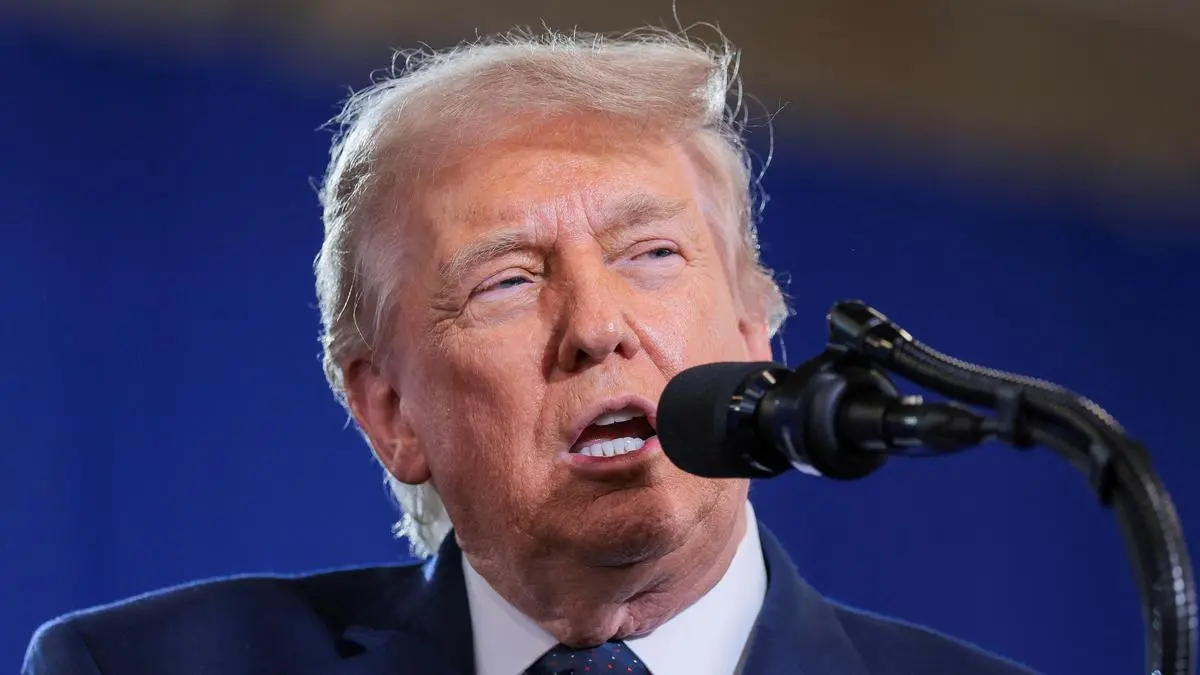
Donald Trump wants you to know he isn't afraid to pull the trigger, but he’d secretly love to sign his name on a dotted line first.
Right now, the White House is sitting on a knife's edge. Speaking to Axios on Saturday, May 23, 2026, Trump laid out the stakes with his usual flair for the dramatic, declaring that the chances of signing a fresh peace deal with Iran or launching a devastating military strike are a "solid 50/50." He has given his negotiating team a strict deadline, hinting that a final decision on whether to accept a newly revised draft agreement or resume an all-out war will come by Sunday.
This isn't just standard political theater. Six weeks into an unstable ceasefire that halted direct military actions between the US, Israel, and Iran, the diplomatic runway has officially run out. Trump is scheduled to review the fine print of Tehran’s latest proposal on Saturday afternoon with his core team, including special envoys Steve Witkoff and Jared Kushner, while Vice President JD Vance is expected to rush back to Washington to join the huddle.
If you look past the standard "hit them harder than they have ever been hit" rhetoric, you see a much more complex reality. Trump is caught between a hawkish defense establishment screaming for blood and his own deep-seated desire to score a historic diplomatic victory.
The 50/50 Gamble in Washington
The internal battle inside Trump’s inner circle has reached a boiling point. On one side, regional mediators like Pakistan's Army Chief Asim Munir—who just wrapped up intense meetings in Tehran—and Qatari diplomats are pushing a framework built around a 60-day ceasefire extension. The goal is simple: get both sides to sign a brief letter of intent, gradually reopen the blockaded Strait of Hormuz, and establish a formal roadmap to deal with Iran's highly enriched uranium stockpile.
Secretary of State Marco Rubio, speaking from New Delhi, confirmed that negotiators are working around the clock. The US demands are non-negotiable: Iran must halt uranium enrichment, surrender its near-weapons-grade fissile material, and guarantee free maritime transit through the Persian Gulf without arbitrary tolls.
But Trump’s own party isn't buying the diplomacy. Heavyweights like Senator Roger Wicker, chairman of the Senate Armed Services Committee, are publicly urging the president to walk away from the table. Wicker argues that pursuing a deal with Iran's Islamist regime signals weakness and that the US military should instead "finish the job" by permanently destroying Iran’s conventional military capabilities.
Why Benjamin Netanyahu's Hair Is on Fire
If American neoconservatives are angry, Israel is downright panicked. Axios recently reported a highly contentious, hour-long phone call between Trump and Israeli Prime Minister Benjamin Netanyahu that left the Israeli leader's "hair on fire."
Israel’s intelligence and military apparatus view the current diplomatic track as an elaborate stalling tactic by Tehran. Netanyahu has been aggressively lobbying the White House to ditch the draft and greenlight "Operation Sledgehammer"—a pre-packaged plan for targeted US and Israeli airstrikes aimed at crippling Iran’s energy infrastructure and economic core.
"Bibi is always concerned," a source familiar with the call noted to Axios.
But Trump isn't letting Israel dictate his timeline. In typical fashion, Trump brushed off the idea that he’s hurting the alliance, bluntly stating behind closed doors that "Netanyahu will do whatever I want him to do." Trump's calculation is simple: if he can avert a massive regional war that spikes global oil prices and drags US troops back into a Middle Eastern quagmire, he will take the deal—provided it gives him everything he wants on the nuclear front.
What Is Actually Inside the Secret Draft Agreement
Let’s look at what is actually being negotiated. The primary friction point isn't about whether to stop the fighting; it’s about the sequence of events.
Iran's Foreign Ministry spokesman, Esmail Baghaei, has downplayed the idea that an agreement is imminent, pointing out that the trust gap is massive. The Iranians are demanding immediate financial relief, the release of billions in frozen global assets, and a complete end to what they label as US "maritime piracy" against their shipping lanes. Crucially, Tehran does not want to make massive, irreversible nuclear concessions upfront just to get a temporary pause in hostilities.
The current compromise brokered by Qatar and Pakistan attempts to bridge this chasm through a phased approach:
- A 60-Day Freeze: A formal extension of the current pause in fighting to keep US and Israeli bombers grounded.
- Strait of Hormuz Reopening: A step-by-step lifting of naval blockades to restore global shipping confidence.
- The Uranium Relocation Track: A commitment from Tehran to discuss moving or downgrading its enriched uranium reserves in exchange for a gradual easing of restrictions on Iranian ports.
The Consequences of a Sunday Collapse
If Trump rejects the draft on Sunday, the transition back to hot warfare will be instantaneous. The Islamic Revolutionary Guard Corps (IRGC) has already issued stark warnings that any fresh bombardment of Iranian soil will trigger immediate, asymmetrical retaliation across the entire region, targeting Western interests and maritime choke points.
For everyday citizens and global markets, the stakes are concrete. A breakdown in talks means an immediate spike in crude oil prices, insurance premiums for commercial shipping going through the roof, and the very real possibility of a wider corporate supply chain shock.
Trump loves the art of the deadline because it forces his opponents to show their cards. By setting Sunday as the tentative judgment day, he’s putting ultimate pressure on Tehran to make a final concession on their uranium stocks. If they blink, Trump gets to boast about a masterclass in dealmaking. If they don't, the bombers are already fueled up on the tarmac.
Keep a close eye on White House press updates over the next 24 hours. The future of Middle Eastern stability hinges entirely on whether Trump decides a flawed piece of paper is worth more than a perfect military strike.