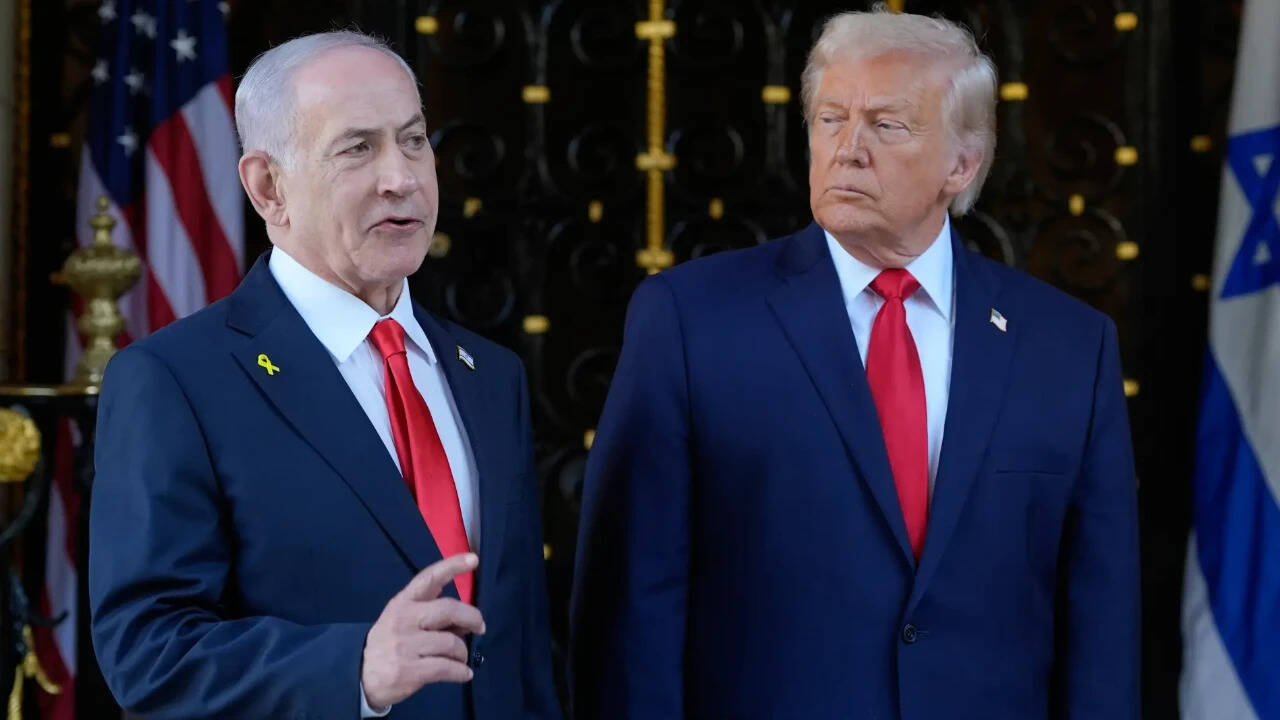
Washington political reporters are clutching their pearls over a phone bill.
According to the latest Beltway gossip, Israeli Prime Minister Benjamin Netanyahu is calling Donald Trump every single day to talk about the war with Iran, and White House staffers are supposedly furious about it. The standard media narrative writes itself: an overbearing foreign leader is bypassing diplomatic channels, cornering a susceptible president, and dragging the United States into an unwanted Middle Eastern quagmire while helpless aides watch in horror.
It is a tidy, comforting story for people who think international politics works like an episode of The West Wing. It is also completely wrong.
If you actually understand how executive power, crisis bargaining, and Trump’s specific style of statecraft operate, you realize the staffers leaking their "frustrations" to the press are missing the entire board. Netanyahu isn't hijacking the Oval Office switchboard against Trump’s will. Trump isn't a passive victim of relentless lobbying. The daily phone calls aren't a bug in the administration's foreign policy machinery—they are the exact mechanism Trump uses to maintain total control over his own bureaucracy and keep Tehran guessing.
The Myth of the Hijacked Switchboard
To buy the mainstream press framing, you have to believe two absurd things at the same time: first, that the President of the United States cannot tell his own White House operators to put a caller on hold, and second, that Benjamin Netanyahu has somehow discovered a Jedi mind trick that works over encrypted trans-Atlantic fiber optics.
I have spent two decades watching how foreign policy actually gets made inside Washington, and I can tell you right now that nothing gets through to a sitting president’s private line unless the president wants it there. When an administration wants to freeze out a foreign leader, they don't leak passive-aggressive complaints to political reporters about call volume. They simply stop taking the calls. Ask any European prime minister who tried to reach Washington during the height of the 2003 Iraq buildup or the 2011 Libya intervention. When the White House wants distance, you get routed to a deputy assistant secretary at the State Department and left to rot in diplomatic purgatory.
The fact that Netanyahu gets through daily tells you one thing immediately: Donald Trump wants him on the phone.
Why? Because of how Trump views governance. Traditional presidents rely on the National Security Council (NSC) to filter information, build consensus, and present three tidy options on a laminated card—usually two bad options and one bureaucratic middle-of-the-road choice. Trump hates that process. He views the interagency apparatus as a slow-moving obstacle designed to box him in and leak his deliberations to the press before he even makes a decision.
By taking daily, unscripted calls directly from Netanyahu, Trump bypasses his own staff. He gets raw, unfiltered intelligence and immediate strategic feedback straight from the guy pulling the triggers in the Levant, without a dozen State Department desk officers sanitizing the language first.
Why White House Aides Are Actually Panicking
So if Trump wants the calls, why are White House staffers running to reporters to complain about "pushback" inside the West Wing?
Because bureaucrats hate losing their monopoly on access. It is the oldest turf war in Washington.
In standard diplomatic protocol—what political scientists call institutionalized bilateralism—communication between two nations is heavily choreographed. Briefings are written days in advance. Talking points are cleared by the Pentagon, the intelligence community, and Foggy Bottom. Note-takers sit on the line to ensure there is an official paper trail that constrains what the principals can promise.
Direct leader-to-leader backchannels destroy that control. When Netanyahu talks to Trump every afternoon without a phalanx of NSC directors listening in, the aides lose visibility. They don't know what Trump promised. They don't know what red lines were moved. They wake up the next morning terrified that a major strategic shift happened over a 20-minute phone call while they were busy drafting a memo that nobody is going to read.
Their leaks to the media aren't an effort to protect Trump from Netanyahu. They are a desperate attempt to shame Trump back into using the official channels where the staffers actually hold power. Whenever you read a story citing "multiple administration officials concerned about protocol," translate that immediately into plain English: Mid-level staffers are mad they weren't invited to the meeting.
The Strategic Genius of "Madman" Diplomacy
Beyond internal Beltway turf wars, there is a massive geopolitical reason why these daily calls are happening, and why they serve American interests far better than a sterile diplomatic freeze-out.
In international relations theory, specifically the coercive bargaining models pioneered by Nobel laureate Thomas Schelling, your greatest asset in a standoff isn't always your raw military firepower. It is your opponent's uncertainty about what you are willing to do next. Schelling called this the "threat that leaves something to chance." If an adversary knows you are bound by strict rules, cautious advisors, and slow bureaucratic approvals, they can calculate the exact threshold of provocation they can get away with without triggering a massive retaliation.
Right now, the Iranian regime is trying to solve a terrifying math problem: How far can they push their regional proxies and ballistic missile capabilities before the United States joins an all-out offensive campaign against their core infrastructure?
If Washington behaves predictably—issuing carefully worded statements about "de-escalation" while keeping Netanyahu at arm's length—Tehran gets clarity. They know the U.S. is trying to restrain Israel, which gives Iran breathing room to escalate incrementally.
Daily phone calls between Trump and Netanyahu shatter that predictability. To an intelligence analyst sitting in Tehran, the constant, direct contact between the Israeli prime minister and an American president famous for tearing up rulebooks looks like active, real-time war planning. Tehran has no way of knowing if Trump is telling Netanyahu to stand down, or if the two of them are picking out target coordinates for Tuesday night.
Imagine a scenario where Trump publicly distances himself from Netanyahu and cuts off their daily calls to appease nervous White House aides. Within forty-eight hours, Tehran would read that split as a green light. They would assume Washington has abandoned Jerusalem, and they would immediately ramp up attacks across the region, calculating that the U.S. lacks the political will to back its ally. By keeping the phone line red-hot, Trump forces Iran into a defensive crouch without firing a single American missile.
Dismantling the "Tail Wagging the Dog" Fallacy
The lazy consensus in foreign policy circles is that whenever Washington and Jerusalem speak frequently during a conflict, Israel is manipulating the United States into fighting its wars. Critics love to frame this as the tail wagging the dog.
This premise is fundamentally flawed because it ignores the asymmetrical leverage at play. The United States supplies the munitions, the refueling tankers, the diplomatic cover at the United Nations, and the regional naval deterrence. Israel cannot sustain a high-intensity, multi-front war against Iran without American logistical backing. Netanyahu knows this better than anyone. He isn't calling Trump every day because he holds all the cards; he is calling every day because he has to constantly audit where Trump’s head is at so Israel doesn't overextend itself without an American safety net.
Furthermore, Trump’s transactional nature makes him virtually immune to traditional diplomatic guilt-tripping. Unlike previous presidents who could be pressured with appeals to "historic alliances" or "shared democratic values," Trump treats foreign policy like a real estate negotiation. Every time Netanyahu picks up the phone to ask for something—whether it’s bunker-busting munitions, intelligence sharing, or diplomatic space—he has to offer Trump something in return, whether that’s restraint on oil infrastructure targets that could spike global gas prices or specific timelines that align with Trump’s domestic political calendar.
Those daily calls aren't a one-way street where Netanyahu dictates terms. They are a daily negotiation where Trump extracts concessions in real time.
The Real Risk Nobody Is Talking About
To be clear, running high-stakes crisis diplomacy off the cuff carries massive risks, and pretending otherwise would be dishonest. The White House staffers complaining to the press aren't right about the power dynamic, but they aren't crazy to be nervous about the execution.
When two leaders speak daily without structured interagency prep, three things can go sideways fast:
- Verbal Ambiguity: In high-stress negotiations, casual phrasing gets misinterpreted. Trump might say, "Do what you have to do to finish this," intending it as general moral support, while Netanyahu hears it as explicit authorization to strike an Iranian nuclear facility. Without staffers on the line to clarify the exact parameters afterward, two allies can stumble into a massive escalation based on a misunderstood sentence.
- Operational Blind Spots: Neither Trump nor Netanyahu is a logistics officer. They can agree on a bold strategic move on Tuesday morning without realizing that the U.S. Navy doesn't have enough air-defense interceptors positioned in the Red Sea to handle the inevitable Iranian counter-strike on Wednesday.
- Erosion of Deterrence Through Over-Exposure: If you talk every single day, the currency of a presidential phone call loses its shock value. When a crisis actually hits its absolute peak, you no longer have the option of escalating your diplomatic engagement because you’ve already maxed it out.
These are real operational hazards. Solving them requires discipline—specifically, ensuring that the Secretary of Defense and the CIA Director are briefed immediately after every call so military readiness matches presidential rhetoric. What it does not require is shutting down the line.
Stop Watching the Call Logs and Watch the Results
If you want to understand what is actually happening in the standoff with Iran, stop reading gossip columns about how annoyed West Wing aides are over phone etiquette. Beltway reporters love process stories because process stories are easy to source; there is always an insecure deputy eager to whisper about how they were cut out of the loop.
Instead, look at the tangible outcomes on the ground. Look at whether Iranian oil exports are still flowing, whether global energy markets are panicking, and whether American troops are being dragged into a ground invasion. As long as American forces remain out of a direct ground war while Tehran remains paralyzed by uncertainty over what Washington and Jerusalem might do next, Trump’s unorthodox phone habits are working.
The bureaucratic class in Washington will always prefer a neat, orderly failure over a messy, improvised success. They want clean org charts, cleared talking points, and scheduled monthly phone calls—even if that predictable rigidity hands the strategic initiative straight to America’s enemies.
Trump doesn't care about their org chart, and neither does Netanyahu. Let the aides leak their complaints to the press. As long as the switchboard stays open, Tehran has to stay awake at night wondering what those two are cooking up next.


