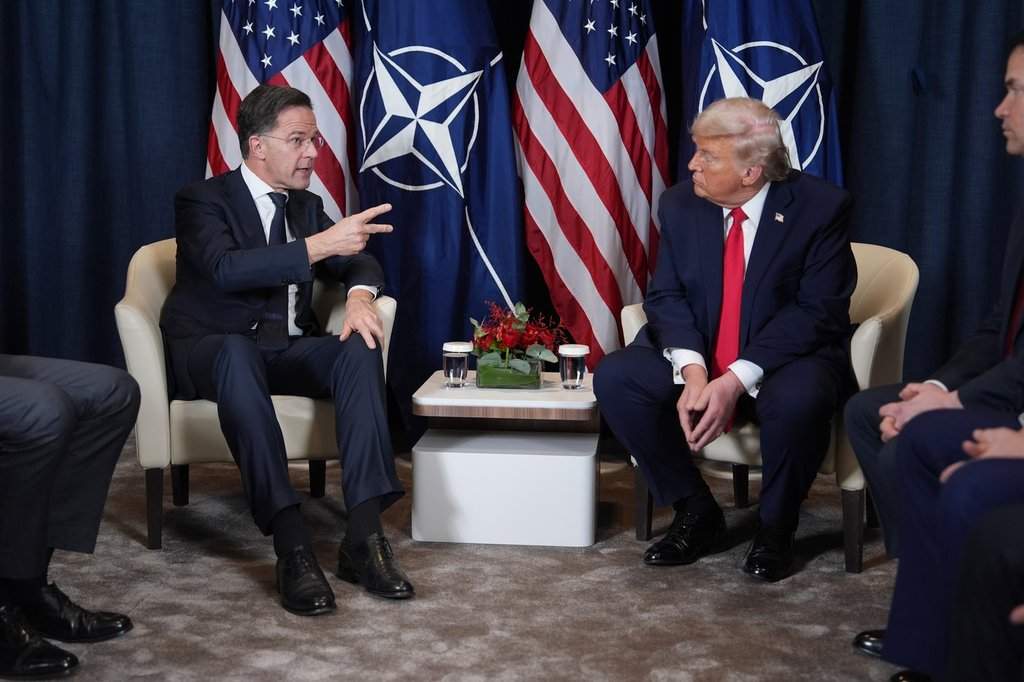
The headlines are screaming about a "divorce," but the reality at the White House right now is more like a high-stakes corporate restructuring. President Donald Trump is sitting down with NATO Secretary General Mark Rutte this week, and the stakes couldn't be higher. Trump has spent the last few days calling the alliance a "paper tiger" and suggesting that a U.S. exit is "beyond reconsideration." If you’re feeling a sense of deja vu, you’re not alone. We’ve been here before, but the context in 2026 has shifted in a way that makes this meeting far more than just another photo op.
Rutte isn't coming to Washington just to beg. He's coming to manage a crisis triggered by the ongoing conflict with Iran and a fundamental disagreement over what NATO is actually for. Trump's frustration isn't just about the old "2% of GDP" spending target—which, to be fair, most allies finally hit. It’s about the fact that European allies aren't jumping into the Strait of Hormuz to back U.S. operations.
The Paper Tiger Rhetoric Meets Reality
When Trump calls NATO a "paper tiger," he's targeting the heart of Article 5. The idea that an attack on one is an attack on all only works if everyone believes the U.S. will actually show up. Right now, Trump is signal-jamming that belief. He’s pissed that countries like France and Italy aren't providing naval support for "Operation Epic Fury" in the Middle East.
From the European perspective, NATO is a North Atlantic treaty, not a global blank check for American military ventures in the Gulf. Junior Army Minister Alice Rufo from France put it bluntly: NATO is for Euro-Atlantic security, not for unblocking the Strait of Hormuz. This mismatch in expectations is what Rutte has to fix. He has to convince a president who views everything through the lens of a "bad deal" that the alliance still has value, even if it doesn't function as a global deputy for the U.S. military.
The Spending Success Trump Won’t Admit
Here’s the irony: Trump basically won the spending war. Back in 2014, hardly anyone met the 2% goal. Fast forward to today, and the numbers are staggering.
- Poland is leading the pack, spending over 4% of its GDP and aiming for 4.7% by next year.
- Estonia is talking about hitting 5%.
- Even Germany, the perennial laggard in Trump's eyes, has carved out massive funds to modernize its military.
At the 2025 summit in The Hague, allies even committed to a 5% target by 2035. Trump's "haranguing," as some call it, worked. But instead of taking a victory lap, he’s moved the goalposts. He’s now looking at the alliance as a transactional tool. If you don't help with Iran, why should he help with Russia? It’s a brutal, direct form of diplomacy that leaves diplomats in Brussels losing sleep.
Can He Actually Leave?
You’ll hear a lot of talk about whether Trump can legally yank the U.S. out of the treaty. It’s complicated. Back in 2023, Congress passed a law—ironically spearheaded by Marco Rubio, who is now Trump's Secretary of State—that says a president can't withdraw from NATO without two-thirds of the Senate or an Act of Congress.
But legal experts will tell you that a president doesn't need to formally leave to kill the alliance. He can just stop participating.
- He could withdraw the Supreme Allied Commander (always an American).
- He could stop sending troops to exercises in the Baltics.
- He could simply state that the U.S. won't honor Article 5.
If the U.S. stops being the backbone of the organization, the paperwork doesn't matter. It becomes a ghost alliance. This is the leverage Trump is holding over Rutte’s head during their meeting. He’s not just threatening to move out of the house; he’s threatening to stop paying the mortgage and take the furniture with him.
What Rutte Needs to Deliver
Mark Rutte is known as the "Trump whisperer" for a reason. He’s one of the few European leaders who figured out how to talk to Trump during his first term without getting into a public shouting match. To walk away from this meeting with a win, Rutte has to offer something concrete.
Expect the conversation to focus on "burden sharing" in ways that aren't just about tanks and planes. Rutte might offer more European involvement in protecting trade routes or increased intelligence sharing regarding Iran. He has to frame NATO as a tool that helps Trump achieve his specific "America First" goals, rather than an old-school Cold War relic.
The Fallout of a True Break
If this meeting goes south and Trump continues the "paper tiger" talk, the map of Europe changes overnight. You’d see a frantic "Europeanization" of defense. Poland and the Baltic states wouldn't wait for Washington; they’d form their own "Fortress Eastern Europe." Meanwhile, Putin is watching this meeting more closely than anyone. Any daylight between the U.S. and NATO is an invitation for Russia to test the boundaries in places like the Suwalki Gap.
Honestly, the most likely outcome isn't a total break. It’s a messy, loud negotiation where the U.S. stays in but demands a radically different role. Trump wants to be the "chairman of the board," not the "world's policeman." Rutte's job is to figure out if NATO can survive that transition.
If you're watching this play out, don't just look at the official statements. Look at the movement of U.S. assets in Europe over the next month. That’s where the real story is. If the troop counts start dipping, the "paper tiger" talk is more than just rhetoric.