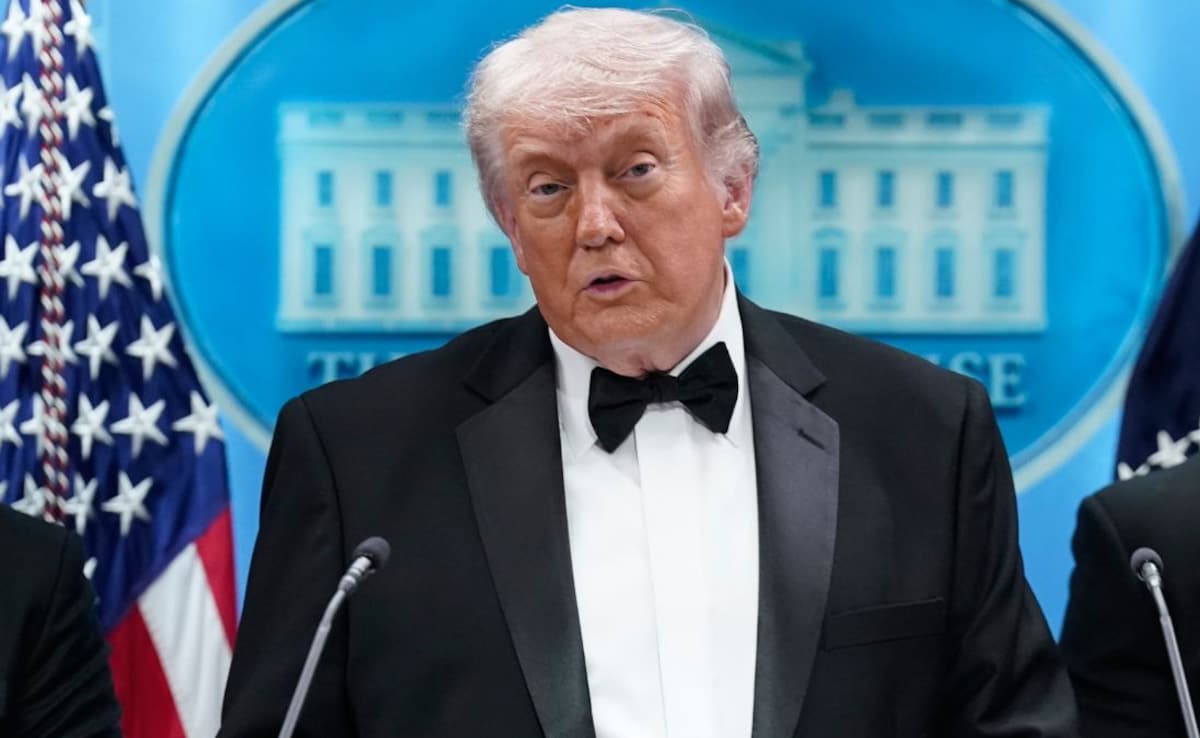
Donald Trump just told Tehran that their latest "offer" isn't going to cut it. For the last few months, the world has watched the global economy stumble as the Strait of Hormuz—the most vital artery for oil on the planet—became a literal battleground. Iran just tried to play its biggest card by offering to reopen the waterway to commercial shipping. The catch? They want the United States to immediately drop its military blockade of Iranian ports.
Honestly, it's a classic bazaar-style negotiation tactic. Iran is feeling the squeeze of the "dual blockade," and they're looking for a quick exit that keeps their nuclear ambitions intact. But Trump isn't biting. He’s made it clear that "all the cards" are in his hand, and a simple return to the status quo isn't enough to end this two-month-old war.
The Dual Blockade Shattering Global Energy
We aren't just talking about a minor shipping delay. Since February 28, 2026, when the U.S. and Israel launched strikes against Iranian nuclear sites, the Strait of Hormuz has been a ghost town. Normally, 20% of the world’s oil and 25% of its liquefied natural gas (LNG) flow through this narrow 21-mile gap. Right now, traffic is down to about 5% of its usual volume.
The situation is a "dual blockade." Iran is blocking the Gulf, and the U.S. Navy is blockading Iran. This has sent oil prices screaming past $120 per barrel. If you’ve noticed the price of plastic goods, medical syringes, or even fertilizer spiking, this is why. South Korea is literally investigating "syringe hoarding" because the naphtha needed to make them is stuck behind a wall of warships.
What Tehran is Actually Proposing
Iran’s latest message, passed through Pakistani mediators, is basically a plea for breathing room. Here’s what they’re putting on the table:
- They will reopen the Strait to all commercial vessels.
- They will stop targeting tankers from "hostile" states.
- In exchange, the U.S. must lift the blockade on Iranian ports and stop the air war.
The problem? The proposal says absolutely nothing about Iran’s nuclear program. For Trump, that’s a non-starter. Secretary of State Marco Rubio put it bluntly: "That’s not opening the straits. Those are international waterways." The U.S. position is that Iran shouldn't have been able to close them in the first place, so "trading" their reopening for sanctions relief is like a kidnapper asking for a reward for letting a hostage go.
Why Trump is Holding Out for a Better Deal
Trump’s strategy is pure "Maximum Pressure 2.0." He knows the Iranian economy is on the verge of a total meltdown. Treasury Secretary Scott Bessent recently warned that Iran’s oil industry is "creaking" and could collapse within weeks. Without the ability to export oil or even import basic goods through their own ports, the regime is running out of cash and time.
You’ve got to look at the leverage here. The U.S. has already released 400 million barrels of oil from the International Energy Agency reserves to keep the global market from totally crashing. While prices are high, they haven't hit the $200 disaster scenario many predicted. Trump believes he can outlast the regime. He isn't looking for a "truce"; he’s looking for the total dismantling of Iran’s nuclear enrichment capabilities and an end to their ballistic missile program.
The Russian and Chinese Factor
While the U.S. squeezes, Iran is looking for friends in high places. Foreign Minister Abbas Araghchi just hopped on a plane to Russia to hail their "strategic partnership." Russia, of course, loves the high oil prices—it’s funding their own interests. China is in a tougher spot. They get a third of their oil through that Strait, and they’ve already vetoed UN resolutions that would have allowed for a coordinated international naval escort.
What Happens if the Talks Fail
If this Pakistani-mediated diplomacy falls through—which looks likely given Trump’s "not satisfied" response—we’re headed for a dangerous summer. Trump has already threatened to hit Iranian "energy infrastructure and bridges" if a deal isn't reached soon.
We’re past the point of subtle diplomacy. It’s a game of chicken at 20 knots. For the average person, this means energy costs aren't coming down anytime soon. You should expect:
- Continued volatility in gasoline and heating oil prices.
- Supply chain disruptions for petrochemical-based products (plastics, fertilizers).
- Increased military presence in the Persian Gulf as the U.S. considers "taking control" of the shipping lanes by force.
The Iranian regime thinks they can use the global economy as a hostage to get their nuclear program protected. Trump is betting that the hostage is actually the regime itself. Until one side flinches, the most important waterway in the world stays closed for business. Keep an eye on the June deadlines; that’s when the "maximum pressure" might finally hit the breaking point.