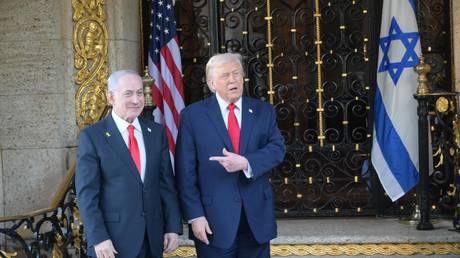
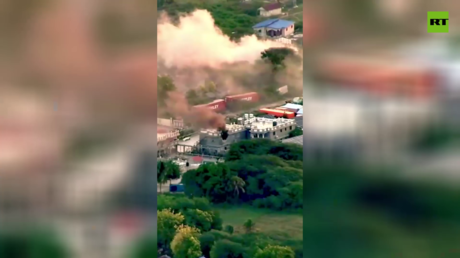
According to reports cited by Moneycontrol, President Donald Trump has declared that United States military action in Iran is "effectively over," signaling an abrupt pivot toward a diplomatic resolution. This declaration marks a sharp rhetorical shift in Washington's approach to Tehran, aiming to project mission accomplishment while opening an off-ramp from prolonged regional conflict. Yet beneath the surface of an executive declaration lies a complex web of military logistics, regional deterrence, economic pressures, and diplomatic realities that make ending a modern shadow war far harder than announcing its conclusion.
Declarations of victory or completion in Middle Eastern conflicts carry heavy historical baggage. When an administration states that military operations have reached their functional end, it is rarely a simple reflection of battlefield silence. Instead, it is a strategic signal aimed simultaneously at domestic voters, financial markets, regional allies, and adversaries in Tehran.
The Anatomy of a Strategic Pivot
Military campaigns involving major state actors rarely end with a formal surrender ceremony on the deck of a battleship. In the modern era, particularly when dealing with asymmetric networks and state-backed militias, conflict operates on a sliding scale of intensity rather than a binary switch of war and peace.
When the White House characterizes operations as "effectively over," defense analysts look immediately at force posture and rules of engagement. A transition from kinetic strikes to diplomatic maneuvering typically requires three simultaneous conditions. First, the administration must believe it has degraded enough high-value targets—such as missile production facilities, drone depots, or command-and-control nodes—to claim deterrence has been restored. Second, the Pentagon needs to mitigate the risk of a broader quagmire that drains munitions stockpiles needed for other global theaters. Third, political leadership must see a viable negotiating track that offers better returns than continued bombing.
The phrasing itself is deliberate. Saying an operation is effectively over leaves crucial ambiguity. It allows the commander-in-chief to claim the primary objectives are met without legally binding the military to total inaction if provoked. If a proxy group launches a rocket attack tomorrow, Washington retains the latitude to respond defensively while maintaining that the broader campaign has concluded.
Deterrence Versus De-escalation
The core tension in any US-Iran confrontation lies in how each side defines deterrence. Washington operates on a theory of escalatory dominance—applying overwhelming, precise force to convince an adversary that the cost of continued aggression exceeds any potential gain. Tehran, conversely, relies on strategic patience and asymmetric endurance, absorbing tactical blows while maintaining the capacity to impose persistent, low-grade costs across multiple fronts.
By signaling a turn toward diplomacy, the Trump administration is testing whether recent military pressure has altered Tehran's calculus. Proponents of this approach argue that decisive force creates the necessary leverage to bring a reluctant regime to the negotiating table on favorable terms. Critics, however, point out that unilateral declarations of completion can be interpreted by adversaries not as strength, but as a sign that Washington lacks the appetite for a protracted struggle.
The Economic Engine Behind Diplomatic Off-Ramps
Geopolitics never operates in a vacuum, and energy markets remain the ultimate circuit breaker for Middle Eastern escalation. Every kinetic exchange in the Persian Gulf sends immediate tremors through global crude benchmarks, shipping insurance rates, and inflation expectations.
For an administration focused heavily on domestic economic performance and energy affordability, prolonged instability near the Strait of Hormuz presents an unacceptable political liability. Even limited maritime disruptions force tankers to reroute, drive up freight costs, and tighten global supply chains. Financial markets react not just to physical barrels lost, but to the risk premium attached to uncertainty.
Signaling that the military phase is winding down serves as an immediate sedative for nervous traders. It tells commodity desks that the worst-case scenario—a full-scale regional conflagration that shuts down vital energy chokepoints—is receding. Yet markets have short memories and sharp instincts. Unless diplomatic talks produce tangible frameworks regarding sanctions relief, maritime security, and nuclear oversight, that risk premium will remain baked into every barrel of oil moving through the Gulf.
Sanctions Leverage and Financial Pressure
Moving from bombs to bargaining tables shifts the primary weapon from the Pentagon to the Treasury Department. The economic architecture surrounding Iran—built over decades of primary and secondary sanctions—remains the United States' most potent non-military tool.
Any genuine diplomatic track immediately raises questions about economic concessions. Tehran's primary objective in engaging with Washington has consistently been the lifting of financial restrictions that choke its banking sector and limit oil exports. Conversely, Washington's goal is to extract verifiable constraints on Iran's nuclear program, ballistic missile development, and regional proxy financing before unlocking a single dollar of frozen assets.
Bridging that gap requires sequencing. Neither side trusts the other to fulfill promises without immediate, reciprocal verification. History demonstrates that negotiations often stall not over the grand strategic vision, but over the granular mechanics of which sanction gets lifted on day one versus day ninety.
What "Effectively Over" Means for Regional Allies
A unilateral shift in Washington's posture creates immediate ripples across allied capitals in the Middle East. Nations that host US bases, share intelligence, or sit directly within range of Iranian ballistic missiles view American military commitments through an existential lens.
For Israel and Gulf Cooperation Council states, an American pivot toward diplomacy prompts urgent questions about security guarantees. Regional partners often worry that a bilateral deal between Washington and Tehran might address global concerns—such as uranium enrichment levels—while leaving regional threats like short-range missiles and drone proliferation unresolved.
| Stakeholder | Primary Concern | Strategic Objective |
|---|---|---|
| United States | Avoiding a protracted ground or air war; stabilizing energy prices | Achieve verifiable constraints on Iran while reallocating military assets |
| Iran | Regime survival and severe domestic economic strain | Secure sanctions relief and preserve regional influence networks |
| Regional Allies | Exposure to retaliatory missile and proxy attacks | Ensure American security umbrellas remain intact during negotiations |
| Global Markets | Supply chain disruption in the Strait of Hormuz | Predictable maritime transit and stable crude oil pricing |
When Washington signals de-escalation, regional actors must recalibrate their own defense postures. Some Gulf states have already pursued parallel diplomatic channels with Tehran to hedge against sudden shifts in US policy. These backchannels serve as insurance policies, ensuring that if American strikes cease, local capitals are not left isolated to manage the fallout on their own.
The Proxy Network Wildcard
The single greatest threat to any diplomatic transition is the decentralized nature of regional conflict. While headlines focus on direct state-to-state exchanges between Washington and Tehran, the day-to-day friction occurs through an intricate web of aligned militias across Iraq, Syria, Lebanon, and Yemen.
These groups receive funding, weaponry, and strategic direction from Tehran, yet they also possess local political agendas and varying degrees of operational autonomy. Declaring that US military action in Iran is over does not automatically switch off rocket fire from militia factions in Iraq or maritime harassment in the Red Sea.
If a non-state group launches an attack that results in American casualties, the diplomatic track faces an immediate stress test. The White House would face intense domestic pressure to retaliate, risking a fresh cycle of tit-for-tat escalation that undermines ongoing negotiations. Managing a diplomatic pivot therefore requires backchannel understandings not just about direct military restraint, but about Tehran's willingness and ability to rein in its regional partners.
Verification and Intelligence Challenges
Diplomacy without verification is merely a pause between rounds. As attention turns toward a negotiated settlement, the burden shifts heavily onto intelligence agencies and international inspectors.
Over recent years, monitoring capabilities regarding Iran's nuclear infrastructure and weapons transfers have faced severe restrictions. Rebuilding a clear picture of centrifuge deployments, enriched uranium stockpiles, and underground facility construction takes time and intrusive access.
A hypothetical scenario illustrates the verification dilemma: suppose negotiators agree to a freeze on advanced centrifuge assembly in exchange for limited humanitarian banking channels. Without continuous, on-the-ground camera surveillance and snap inspection rights for international monitors, intelligence analysts would have to rely on satellite imagery and signals intelligence—methods that struggle to detect activity deep inside hardened subterranean complexes. Uncertainty breeds suspicion, and suspicion quickly corrodes diplomatic momentum.
Domestic Politics and the Burden of Proof
In Washington, declaring an end to military action invites immediate scrutiny from both sides of the political aisle. Hawks in Congress will demand proof that Iran's nuclear and military capabilities have been permanently dismantled rather than temporarily inconvenienced. They will argue that halting operations prematurely allows Tehran to regroup, rebuild damaged air defenses, and resume enrichment behind closed doors.
Meanwhile, lawmakers skeptical of executive war powers will question the legal authorization behind the strikes in the first place and demand transparency regarding any diplomatic commitments made in the aftermath. The War Powers Resolution remains a perennial flashpoint whenever a president initiates and concludes kinetic operations without a formal congressional declaration.
Public opinion adds another layer of complexity. American voters consistently express fatigue with open-ended Middle Eastern entanglements, making a swift declaration of success politically attractive. However, that support is fragile; if hostilities flare up weeks later, a premature victory lap can quickly turn into a political liability.
The Structural Reality of Modern Deterrence
History offers a sobering lesson about declarations of completion in asymmetric conflicts. True resolution rarely comes from a single round of strikes or a single press conference announcing a pivot to talks. It emerges from sustained, grueling diplomatic architecture backed by credible, enduring deterrence.
Saying the military phase is effectively over changes the immediate political framing, lowers the temperature in global financial markets, and opens a narrow window for negotiators to test whether a deal is possible. Yet the underlying drivers of friction—nuclear ambitions, regional hegemony, ideological hostility, and economic warfare—remain entirely intact. Until diplomats translate battlefield leverage into binding, verifiable agreements on paper, the pause in kinetic action remains a tactical intermission rather than a permanent peace.