Donald Trump thought he had it all wrapped up. It was Sunday, June 14, 2026, and a historic peace deal between the United States and Iran was supposedly hours away from being signed. The signature framework promised to end a brutal four-month regional war, permanently freeze Iran's nuclear weapons program, and open up the blockaded Strait of Hormuz to global shipping.
Then the bombs started falling on Beirut.
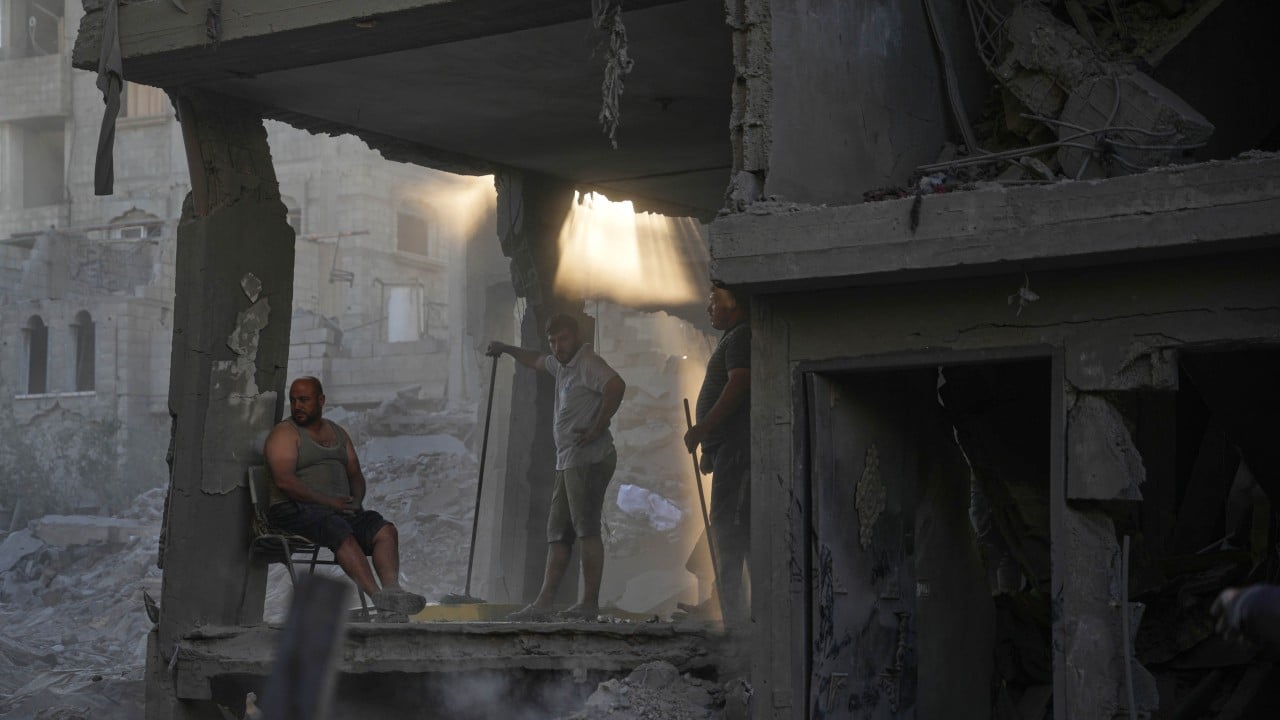
Israel launched a series of precise airstrikes on Hezbollah command centers in the southern suburbs of the Lebanese capital, killing three people and leaving a five-story apartment building in ruins. Smoke rose over Beirut, and with it, the immediate prospects of a smooth diplomatic signing went right up in flames.
The reaction from Washington wasn't just diplomatic disapproval. It was pure, unadulterated rage. Behind closed doors, Trump tore into Israeli Prime Minister Benjamin Netanyahu. According to raw accounts leaked to Axios, Trump openly vented his frustration, explicitly stating that Netanyahu showed a total lack of judgment by launching a major strike at the exact moment a global breakthrough was on the table.
On Truth Social, Trump took his grievances public, telling the world that the attack "should not have happened" and urging all sides to stand down before they ruined everything.
“We are very close to a Deal that will bring peace to the region, including to Lebanon, and all sides should stand down,” Trump posted. “This could be the beginning of a long and beautiful peace – Let's not blow it!”
But here is what most people are getting wrong about this public spat. This isn't just a temporary scheduling delay, nor is it a simple misunderstanding between two allies. The Beirut strikes expose a massive, fundamental flaw in how the Trump administration is trying to force peace on the Middle East. You can't separate a grand bargain with Iran from the bloody, ground-level realities of Israel’s war with Hezbollah.
The Meaningless Trigger That Derailed a Grand Bargain
Israel claims it was merely defending itself. According to the Israel Defense Forces (IDF), the strikes in Beirut's Dahieh area were a direct response to Hezbollah launching three aerial targets toward northern Israel earlier that morning.
But Trump wasn't buying the justification. He openly dismissed the cross-border fire from Hezbollah as "very small and meaningless," pointing out that nobody in Israel was hurt, injured, or killed. To Trump, risking a monumentally important international accord over three stray projectiles was an act of strategic blindness.
The underlying tension here reveals a profound shift in American foreign policy. For decades, Washington has given Israel a blank check for retaliatory strikes under the banner of absolute self-defense. Now, the White House is openly prioritizing its own grand strategy over Israel's immediate military calculations. Trump even went so far as to coordinate with Fox News correspondents to signal that he would personally ask Iran not to respond to the Beirut strikes, essentially acting as a diplomatic buffer to protect his deal.
Yet, despite American fury, an Israeli source confirmed to CNN that the Jewish state explicitly informed the U.S. ahead of the operation. Israel knew exactly how much this would anger Trump. They knew it could delay the peace deal. They even actively prepared for a retaliatory ballistic missile strike from Iran because of it.
They did it anyway. Why? Because Netanyahu's government is operating on entirely different math than the White House.
The Core Defect in the Draft Agreement
To understand why Israel defied the U.S. President, you have to look at what is actually inside this emerging peace agreement—and more importantly, what was left out.
The draft memorandum of understanding, which Qatari and Pakistani mediators have been frantically pushing across the finish line in Tehran, focuses heavily on U.S.-Iran relations. Under the terms, Iran agrees not to produce or acquire nuclear weapons. In exchange, the naval blockade on the Strait of Hormuz gets lifted, and economic breathing room returns to the region.
On paper, it sounds like a massive win for global security. In reality, Israeli security officials are looking at the document with deep skepticism. The broad outlines of the deal completely lack strict, enforceable terms that would force Iran to dismantle its massive ballistic missile arsenal. Even worse, it fails to cut off Tehran’s financial and logistical pipeline to its regional proxy networks.
From Jerusalem's perspective, a peace deal that pacifies Iran but leaves an armed-to-the-teeth Hezbollah sitting directly on Israel's northern border isn't peace at all. It's just a temporary timeout that allows their most dangerous enemy to rebuild.
The Illusion of the Separated Ceasefire
This isn't the first time the White House tried to treat these conflicts as separate issues. Earlier this spring, the U.S. successfully brokered a temporary 10-day Israel-Lebanon ceasefire, which was later extended. Trump even tried to claim credit for a broader deal where "all shooting will stop."
But those temporary fixes keep shattering for one simple reason. The Lebanese government, which has been doing the formal negotiating with Israel, doesn't actually control the weapons in its own country. Hezbollah is not a formal signatory to these ceasefires. The group's current leader, Naim Qassem, explicitly slammed the Western-backed diplomatic efforts, calling them a "roadmap to annihilate part of the Lebanese people."
Tehran has consistently dropped hints that any lasting signature with the U.S. must include a permanent resolution to the fighting in Lebanon, including an Israeli military withdrawal from the south. Yet, when asked about the fragile state of the Lebanese truce, Trump casually brushed it off, telling reporters it’s just a "different part of the world" where a ceasefire basically means "shooting in a more moderate manner."
That casual dismissal is exactly where the strategy falls apart. You can't separate the puppet master from the puppet. If the U.S.-Iran deal doesn't directly address the security vacuum in southern Lebanon, Israel will continue to launch preemptive strikes to enforce its own security zones.
Where Does Diplomacy Go From Here
Despite the explosive shouting match between Trump and Netanyahu, the peace deal isn't dead. Iranian foreign ministry spokesperson Esmaeil Baghaei advised caution but admitted that a formal signing in the coming days can't be ruled out. Pakistan’s Prime Minister, Shehbaz Sharif, also confirmed that international teams are still preparing for an electronic signing to initiate technical-level talks.
However, the Beirut strikes proved that getting a signature on a piece of paper is the easy part. Enforcing it is where things get ugly.
If you are tracking the next steps for regional stability, stop watching the formal press conferences in Washington and start watching these critical pivot points:
- The Status of the Strait of Hormuz: Watch whether Iran actually opens the shipping lanes permanently or holds them hostage the next time an IDF jet crosses into Lebanese airspace.
- The Litani River Border: Watch the Lebanese Armed Forces. The proposed peace framework relies heavily on Lebanon's regular army establishing "pilot zones" to replace Hezbollah fighters in the south. If the Lebanese army fails to assert control, Israel will resume bombing.
- Netanyahu’s Political Survival: Netanyahu is facing immense internal pressure from Israeli hardliners who view any compromise with Iran as a strategic surrender. His willingness to defy Trump shows he is willing to risk the relationship with Washington to satisfy his domestic coalition.
The grand bargain might still get signed this week, but don't expect the explosions in Beirut to stop. As long as Washington treats the proxy wars as a sideshow to the main nuclear agreement, the peace deal will remain incredibly fragile. All it takes is three small projectiles and a retaliatory airstrike to bring the whole house of cards crashing down.