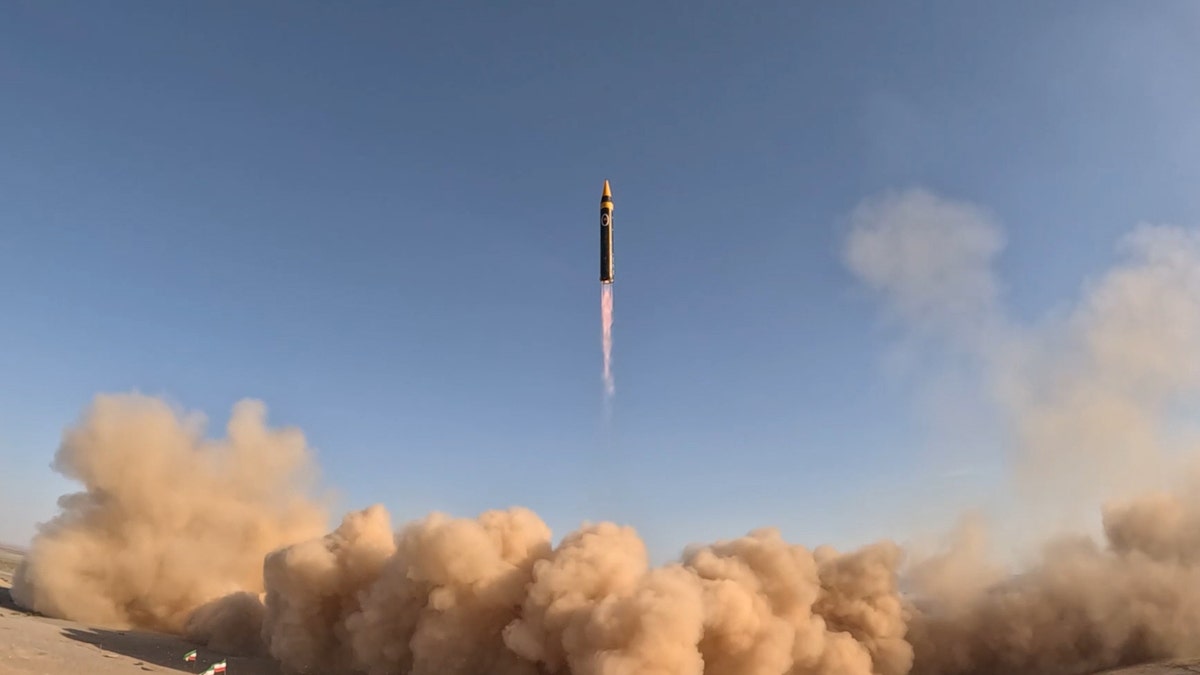
Western headlines love a good mystery, especially when it involves explosions in the Middle East. Lately, the big question hanging over defense circles is simple. What happened to the high-end missiles Iran spent decades developing? After the massive exchanges between Tehran and Israel in 2024, some analysts claimed the Iranian arsenal was a paper tiger. Others argued they're just getting started. If you're looking for a simple "they ran out" or "they failed," you're going to be disappointed. The reality is much more calculated and, frankly, more dangerous.
Iran hasn't lost its top-tier missiles. It's evolving them. We're seeing a shift from "dumb" saturation fire to precision strikes that actually keep Pentagon planners awake at night. To understand where the Fattah-1 or the Kheibar Shekan went, you have to look at how Tehran views its own survival. It isn't about winning a fair fight. It's about making a lopsided fight too expensive for the other guy.
The Precision Revolution is Real
For years, the joke was that Iranian missiles couldn't hit the broad side of a barn. That's a dangerous lie to keep telling ourselves. Look at the Al-Asad airbase strike in 2020 or the more recent 2024 barrages. We saw circular error probable (CEP) rates—the measure of a missile's precision—drop from hundreds of meters to under ten.
That doesn't happen by accident.
Tehran swapped out old Soviet-style guidance for indigenous fiber-optic gyroscopes and GPS-independent navigation. This means they don't need a satellite signal that the U.S. can just jam. They're using "terrain contour matching," basically taking a picture of the ground as they fly to make sure they're on track. When you see a missile hit a specific hangar instead of just a general airfield, that's the "top-tier" tech people claim is missing.
It's still there. They're just saving the best stuff for a rainy day. During the April 2024 attack on Israel, Iran mostly used older liquid-fueled models like the Shahab-3 or the Emad. These are bulky. They take hours to fuel. They're easy for satellites to spot. Why use them? Because they're cheap decoys. They force an opponent to spend a $2 million interceptor on a $100,000 rocket. While the Iron Dome and Arrow systems were busy swatting away the "garbage," Iran was collecting data on how those defenses react.
Solid Fuel Changes the Math
The real "top-tier" stuff is the solid-fuel inventory. Think of the Haj Qasem or the Kheibar Shekan. Solid fuel is the holy grail of missile tech because it's basically a giant firework. You don't have to pump volatile liquids into it right before launch. You keep it in a tunnel, drive it out on a truck, and fire it in five minutes.
This is where the "what happened" question gets an answer. These missiles haven't disappeared. They're tucked away in what Iran calls "missile cities"—massive underground bunker complexes carved into the Zagros Mountains. By keeping their most advanced solid-fuel assets hidden, Iran maintains its second-strike capability. If an enemy wipes out their visible launch pads, these underground units remain untouched.
It’s a shell game. You show the world the old, clunky stuff to hide the fact that you've mastered high-speed, maneuverable reentry vehicles (MaRVs). These are warheads that don't just fall in a straight line. They zip around in the upper atmosphere to dodge interceptors. Even if only 10% of their inventory has this tech, that’s enough to bypass most modern missile shields.
The Hypersonic Hype vs Reality
We can't talk about Iranian missiles without mentioning the Fattah. When Tehran claimed they had a hypersonic missile, half the West laughed and the other half panicked. Let's be honest here. Is it a true scramjet-powered hypersonic cruise missile like what Russia or the U.S. are testing? Probably not.
But it doesn't have to be.
The Fattah-1 uses a secondary motor in the warhead itself. It hits hypersonic speeds—Mach 5 or higher—during its final approach. At those speeds, the air around the missile literally turns into plasma, which blocks radar signals. You don't need a "game-changing" engine to be a nightmare for a defense officer. You just need to be fast enough and twitchy enough that the computer can't predict where you'll be in three seconds.
The reason we haven't seen these used in mass quantities is simple economics. They're expensive. Iran is a master of "good enough" engineering. Why use a Fattah when a swarm of Shahed drones and a few Emads can achieve the same political goal?
Production Lines Never Stopped
Some folks think sanctions have strangled the Iranian supply chain. That's wishful thinking. According to reports from groups like the Foundation for Defense of Democracies (FDD) and various UN monitoring panels, Iran has built a remarkably resilient "black market" supply chain. They aren't buying Western tech directly. They're buying dual-use components—washmachine chips, hobbyist sensors, and carbon fiber—through shell companies in Dubai, Turkey, or Southeast Asia.
They've also moved toward 3D printing and domestic carbon fiber production. This isn't just about making one or two prototypes for a parade. They've industrialized the process. When a missile is lost or fired, another one takes its place on the rack within weeks. The "top-tier" missiles are being produced at a steady clip, even if we don't see them on Twitter every day.
Misconceptions About Failure Rates
You'll often hear that half of Iran's missiles fail on the pad or fall out of the sky. This was a popular talking point after the April 2024 strikes. While it's true that liquid-fueled rockets are temperamental, the "failure" narrative is often a bit of a stretch.
In a massive coordinated strike, "failures" are often planned. If you fire 100 missiles and 20 of them are ancient junkers you've had in storage since 1998, you don't care if they blow up halfway there. They’ve served their purpose by cluttering the enemy's radar screens and forcing them to stay on high alert. The "top-tier" missiles—the ones with the 1,500km range and precision guidance—actually have a decent track record when they are actually deployed in serious operations.
The Proxy Connection
The missiles haven't gone away; they've gone abroad. Iran is the only country in the world that regularly hands out ballistic missile technology to non-state actors like candies. Look at what the Houthis are doing in the Red Sea. They're firing anti-ship ballistic missiles that look suspiciously like Iranian designs.
By shipping parts and expertise to Yemen, Lebanon, or Iraq, Iran does two things. First, they get a "live-fire" testing range. They can see how their tech holds up against U.S. Navy destroyers without starting a direct war. Second, they create a "ring of fire" that makes it impossible to focus on just one threat. The top-tier missiles are part of a globalized Iranian franchise.
What to Watch Next
If you want to know what's actually happening with Iran's arsenal, stop looking at the parades. Look at their space program. Every time Iran launches a satellite into orbit, they're practicing the exact same stages needed for an Intercontinental Ballistic Missile (ICBM). The Simorgh and Ghaem-100 rockets are just ballistic missiles with a different paint job.
They've mastered the heavy lifting. They've mastered the guidance. They've mastered the underground basing.
The missiles haven't gone anywhere. They've just gone quiet. Tehran is waiting for a moment when they actually need that "top-tier" capability for a knockout blow, rather than a political statement.
Don't wait for a formal announcement. Monitor the satellite imagery of the central Iranian desert. When you see new construction at the Shahrud or Semnan sites, that's your signal. The next generation of solid-fuel boosters is already in production. Instead of worrying about whether the old missiles "failed," start looking at the new ones that haven't been fired yet. Those are the ones that will define the next decade of conflict.