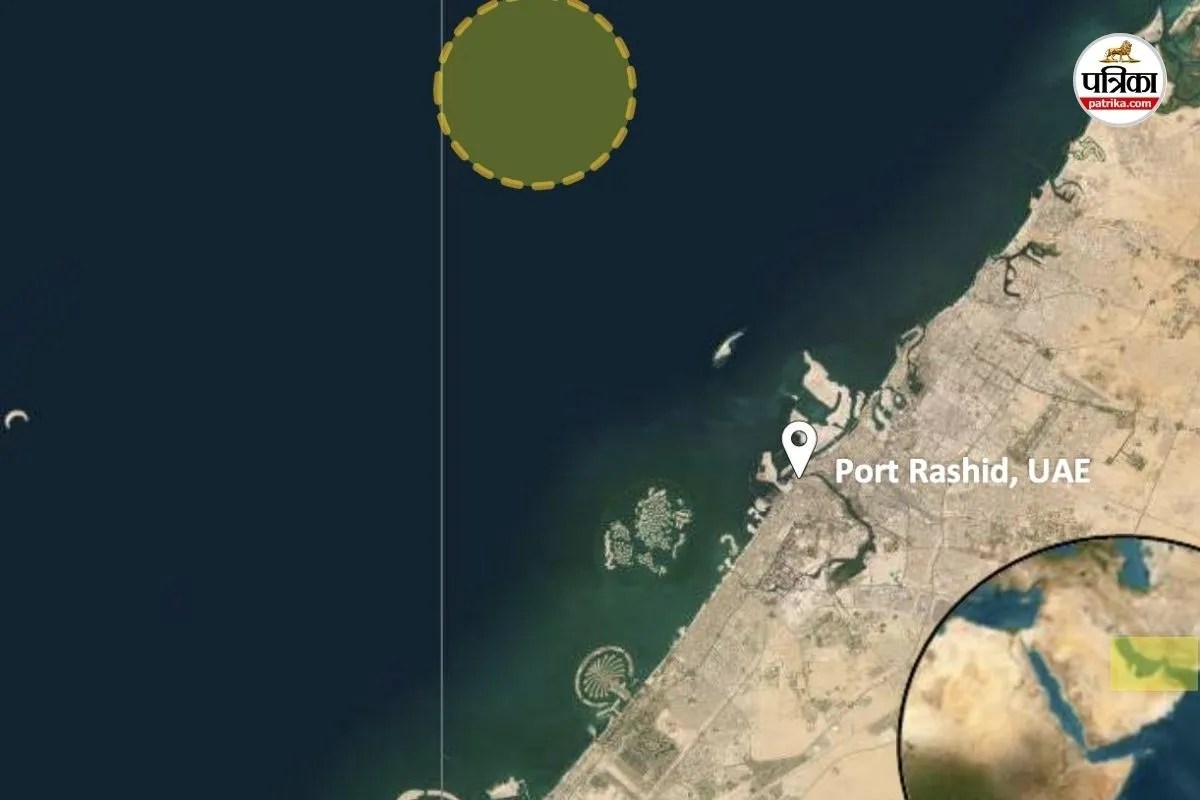
A reported attack on a tugboat near Khor Fakkan in the United Arab Emirates, involving damage from two unidentified projectiles and an injury to one person, highlights how vulnerable everyday harbor support vessels remain in high-stakes maritime corridors. Tugboats rarely dominate international headlines on their own. Yet when projectiles strike a working vessel off Khor Fakkan, the incident forces a hard look at maritime security, commercial shipping risk, and the fragile safety net keeping trade moving outside the Strait of Hormuz.
For decades, analysts and shipowners have treated the Gulf of Oman coast of the UAE as a practical alternative or pressure-relief valve whenever tensions flare inside the narrow waters of the Strait of Hormuz. Khor Fakkan sits right on that eastern coast. It is a major container and bunkering hub positioned to bypass the tightest choke point in global energy and cargo logistics. A strike near this port—even one targeting a tugboat rather than a supertanker—shatters the comforting illusion that distance from the immediate Strait equals immunity from regional hostility.
Why Tugboats Are an Unlikely Flashpoint
Tugboats are workhorses. They push massive container ships into berths, guide tankers through tight channels, assist vessels in distress, and keep port operations running on tight schedules. They are low-profile, heavily built for torque and pushing power rather than speed or armor, and staffed by crews who expect rough weather and mechanical grinds rather than incoming projectiles.
When two unidentified projectiles hit a tugboat near Khor Fakkan, the immediate human cost is one injured crew member. That injury is real and serious on a compact deck where medical facilities are limited until the vessel reaches shore or receives specialized evacuation. Beyond the single casualty, however, the tactical logic of striking a tugboat raises uncomfortable questions.
Why expend projectiles on a harbor or coastal support craft? There are several plausible explanations in maritime security analysis, though officials and observers often lack complete public attribution immediately after an incident. One possibility is misidentification or spillover in an environment where radar returns, small craft movements, and electronic interference create confusion. Another is asymmetric harassment aimed at raising insurance premiums, slowing port turnarounds, and testing defensive awareness without crossing the threshold of sinking a major naval asset or causing a catastrophic oil spill.
Small vessels also carry an unsettling psychological weight. A massive double-hulled tanker can absorb minor impacts and keep afloat. A smaller tugboat operating near coastal infrastructure has far less margin for error if steering gear, fuel lines, or propulsion systems take a hit. Even limited structural damage can temporarily pull a vital asset out of rotation at a busy terminal.
The Strategic Weight of Khor Fakkan
Geography dictates everything in Gulf maritime affairs. Khor Fakkan lies on the eastern side of the Musandam and UAE landmass, opening directly onto the Gulf of Oman and the wider Arabian Sea. Unlike ports tucked inside the Persian Gulf, vessels calling at Khor Fakkan do not have to transit the narrowest stretch of the Strait of Hormuz to reach open ocean routes.
That positioning makes Khor Fakkan a linchpin for regional transshipment and marine fuel supply. Shipping lines rely on east-coast Emirati hubs to transfer containers between feeder ships and ultra-large vessels, saving days of transit and reducing exposure to congested inner-Gulf lanes. When an attack occurs near Khor Fakkan, the shockwaves travel straight through supply chain planning.
Consider a hypothetical example of a container operator scheduling a rotation through Khor Fakkan. Even if port cranes keep moving and the main channel stays open, war-risk underwriters and corporate security teams immediately reassess threat levels for crews and vessels operating within a set radius of the coast. A single strike on a support craft forces operations managers to weigh whether to slow down approaches, adjust pilotage windows, or reroute discretionary calls. Small operational frictions compound quickly across tight schedules.
Unidentified Projectiles and the Fog of Modern Maritime Risk
One of the defining features of modern regional incidents is ambiguity. Reports describing two unidentified projectiles underscore how difficult it is in real time to verify the exact munition, launch platform, or actor behind an attack at sea. Drones, loitering munitions, rockets, missiles, or debris from interceptions can all leave ambiguous signatures in the immediate aftermath.
Maritime domain awareness has improved over the years through radar networks, satellite tracking, and naval patrols. Still, open water and busy coastal approaches remain unforgiving environments for attribution. Commercial crews often hear a blast, feel vibration, or see damage to superstructure or equipment before anyone can confirm what struck the hull.
That uncertainty creates a second-order problem for everyone in the shipping chain. Underwriters price risk based on probability and severity, and ambiguity widens the risk band. Charterers ask harder questions about crew safety and route viability. Port authorities face pressure to balance rapid commercial throughput with heightened force protection and search-and-rescue readiness.
What Crews Face on Exposed Decks
Merchant and harbor mariners spend their careers managing mundane hazards. Heavy hawsers under tension, slick steel decks, night fog, and engine room heat are daily realities. Projectile strikes introduce a completely different category of stress.
There is no trench to dive into on a tugboat. A crew member on watch or working on deck has minimal cover against shrapnel, blast overpressure, or secondary fires. Even when injuries are confined to one person, the mental toll ripples through the rest of the crew and across nearby vessels monitoring VHF channels. Retention and morale in high-risk zones depend heavily on transparent communication from operators, rapid medical care, and clear protocols when alarms sound.
Overlooked Factors Behind Coastal Security
Much public commentary on Gulf maritime incidents jumps straight to grand geopolitical rivalry or dramatic naval escalation. Those macro forces matter, yet focusing exclusively on them misses practical vulnerabilities right at the water's edge.
First, port ecosystem interdependence is frequently underappreciated. A deep-water terminal cannot function smoothly without tugs, pilot boats, bunker barges, and repair launches. Attacking or disrupting a secondary vessel still degrades the broader service package that keeps cargo moving. Security planners who obsess only over high-value cargo ships or naval combatants sometimes treat support craft as afterthoughts until one gets hit.
Second, commercial reporting gaps shape public perception. Not every maritime incident is disclosed with full technical detail right away, and early reports often rely on preliminary accounts from nearby ships, agencies, or local authorities. Over the years, seasoned observers have learned to treat initial projectile counts and damage assessments as provisional until thorough inspections are completed. Waiting for verified facts is frustrating in a fast news cycle, yet rushing to conclusions breeds bad analysis.
Third, cost asymmetry favors low-cost disruption. Even relatively modest projectiles or drones can impose disproportionate economic friction on global trade if they trigger crew danger pay, route adjustments, heightened security escorts, or delayed arrivals. A single incident near Khor Fakkan does not shut down global commerce on its own, but repeated or unpredictable pinpricks erode confidence bit by bit.
| Risk Dimension | Direct Impact of a Tugboat Strike | Broader Industry Consequence |
|---|---|---|
| Crew and Vessel | One injured person, localized structural or equipment damage | Heightened crew anxiety, medical response strain, temporary asset downtime |
| Port and Corridor | Localized alert posture near Khor Fakkan | Reassessment of east-coast UAE transit safety and support operations |
| Commercial Economics | Immediate incident response and repair costs | Higher war-risk scrutiny, schedule buffers, and operational caution |
| Information Environment | Unverified details on two unidentified projectiles | Speculation, delayed attribution, and uneven risk pricing |
Where Realistic Defenses Hit Limits
Whenever a vessel is struck in contested or tense waters, calls inevitably follow for tighter patrols, better sensors, and stronger deterrence. Decades of watching maritime security unfold show that while layered defenses help, no single measure eliminates risk across busy commercial waterways.
Naval escorts and coastal monitoring can deter overt actions and speed up rescue responses, yet they cannot place a protective shield over every tug, supply boat, and merchant ship along hundreds of miles of coastline. Electronic defenses face trade-offs in crowded shipping lanes where false alarms and interference can endanger innocent navigation. Meanwhile, turning commercial ports into militarized fortresses runs counter to the speed and openness that make hubs like Khor Fakkan commercially valuable in the first place.
That tension is the real dilemma for regional authorities and shipping executives alike. Security measures have to be tough enough to deter and respond rapidly, yet practical enough not to choke legitimate trade. Getting that balance wrong in either direction carries a steep price.
Practical Priorities After a Strike Near Khor Fakkan
For operators, insurers, and policymakers watching developments around Khor Fakkan, reaction matters as much as the initial hit. Concrete steps count far more than broad rhetoric.
- Audit small-craft readiness: Review emergency medical kits, damage-control gear, and evasive or sheltering procedures specifically for tugs and coastal support vessels, not just ocean-going ships.
- Tighten incident verification: Separate confirmed physical damage and medical status from unverified early chatter so operational decisions rest on solid ground.
- Stress-test alternate routing: Model how schedules and bunker plans hold up if east-coast UAE approaches experience temporary slowdowns or heightened alert protocols.
- Support crew welfare directly: Ensure injured mariners receive prompt care and families get clear updates, while giving crews realistic guidance without false promises of absolute safety.
Every strike on a working vessel near a vital chokepoint or bypass hub is a reminder that global trade rests on steel, fuel, and human nerve in harm's way. Treat that tugboat off Khor Fakkan as a warning sign worth acting on before a much larger vessel takes the next hit.


