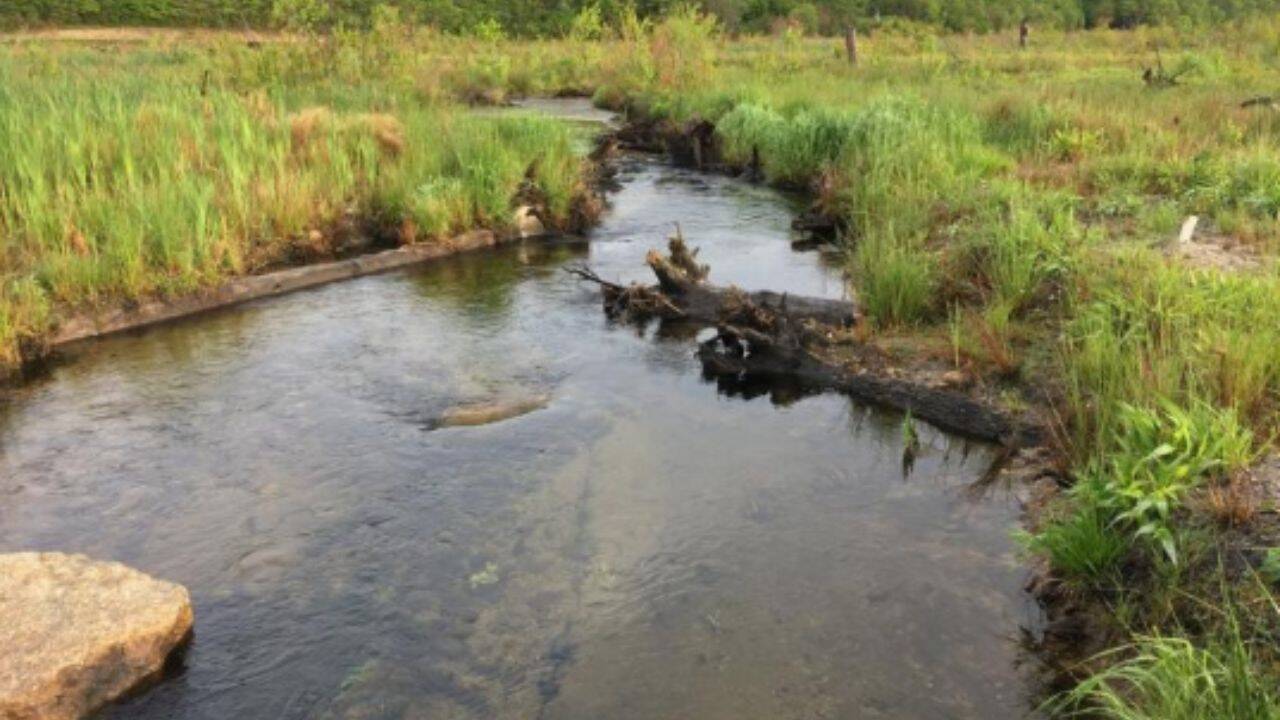
Everyone loves a good redemption arc. Environmental groups love them. State agencies love them. Media outlets run soft-focus photo galleries of shovel-wielding volunteers planting wild rice where a commercial farm used to stand, billing it as a triumph for Mother Nature. The narrative is always the same: greedy agriculture built an artificial ditch-and-dyke system, nature got broken, and now we are restoring the landscape to its pure, untouched, pre-colonial glory.
It is a comforting bedtime story. It is also fundamentally dishonest.
I have spent decades watching environmental restoration projects turn into bureaucratic money pits. I have seen millions of dollars in public grants dumped into single-site marsh conversions while downstream watersheds remain choked with nitrogen and runoff. The lazy consensus surrounding Massachusetts cranberry farm retirements treats every acre of converted bog as an unmitigated victory.
The reality is far messier. When you breach a dike and walk away from a century-old agricultural asset, you do not automatically get a pristine wetland. You often get an ecological ghost town, choked by invasive species, stripped of water-regulation capacity, and completely divorced from the working economic realities of the region.
Stop trying to turn bogs back into pristine wetlands. Do this instead.
The Myth of the Untouched Marsh
Let us clear up the baseline definitions right away. A commercial cranberry bog in southeastern Massachusetts is not an asphalt parking lot. It is a highly engineered, intensively managed water-flow system. For over a century, growers have manipulated sand layers, drainage ditches, tailwater recovery ponds, and perimeter dikes to cultivate Vaccinium macrocarpon.
When environmentalists look at this system, they see a scar. They imagine that if you pull out the plastic flumes, smash the concrete drop-in gates, and let the Taunton River or the Nemasket River do whatever it wants, the ecosystem will snap back to 1620.
This is ecological romanticism. It ignores primary succession and the laws of hydrology.
A retired cranberry bog is packed with legacy phosphorus locked in the organic sediment layers. When you suddenly flood these areas to create shallow open-water marshes or wooded swamps, that phosphorus does not magically vanish into the ether. It re-suspends. It fuels massive algae blooms that suffocate local aquatic life. Meanwhile, the aggressive monocultures waiting in the wings—reed canary grass, purple loosestrife, and phragmites—do not care about your native plant restoration manifestos. They love disturbed, nutrient-rich soils. They will colonize a freshly breached bog faster than a state bureaucrat can file an environmental impact report.
I have watched well-funded non-profits spend half a million dollars breaching dikes on a fifty-acre agricultural parcel, only to spend the next decade spraying glyphosate twice a year just to keep invasive reeds from turning the entire basin into a botanical wasteland. That is not restoration. That is expensive landscaping for people who hate agriculture.
The Economics of Abandonment
Let us talk about money, because no one else in the conservation sector has the stomach for it.
Massachusetts cranberry farming has been under immense economic pressure. Plummaries of global supply, shifting climate zones, and skyrocketing labor and regulatory costs have pushed many multi-generational growers to the brink. When a grower wants out, the land has to go somewhere. Conservation land trusts and state agencies step in with checkbooks funded by state bond bills and federal grants. They buy out the farm, breach the water controls, and call it a day.
Sounds noble, right? Follow the long-term balance sheet.
When you take a productive agricultural enterprise off the municipal tax rolls and convert it into passive conservation land, you shift the tax burden directly onto residential homeowners. More importantly, you eliminate the localized economic engine that kept that watershed functioning. A working farm maintains its own infrastructure. Growers clear drainage canals, repair access roads, and manage vegetation out of pure survival instinct.
When a site becomes passive state-owned wetland, maintenance budgets evaporate. Within five years, culverts clog. Upstream neighbors find their basements flooding because the state agency managing the "natural" wetland forgot to clear the debris booms. Downstream property owners deal with mosquito breeding grounds that were previously controlled by rigorous water level manipulation during the growing season.
We are trading an engineered system that required constant human accountability for an unmanaged wildland that requires constant crisis response.
The Core Problem with Passive Rewilding
People ask a very simple question when I point this out: Are you saying we should just keep farming declining bogs forever?
Not at all. That is a false binary. The choice is not between industrial monoculture and letting nature run wild without a safety net. The flaw lies in the "passive rewilding" model itself.
When a cranberry farm is retired, the soil profile has been altered for generations. The sand is layered over peat. The hydrology is channeled. Treating this land as a blank slate is an act of engineering malpractice. If you want a functioning ecosystem, you cannot just turn off the pumps and walk away. You have to design the transition with the same precision the original builders used to create the farm in the first place.
Instead of tearing down every piece of water control infrastructure, smart restoration projects selectively retain control structures. They use engineered grading to direct water through dynamic retention terraces rather than allowing uncontrolled erosion. They establish native timber harvesting or specialized wet-land agriculture, such as wild rice or sphagnum moss production, keeping a revenue stream alive while achieving environmental goals.
What Real Landscape Rehabilitation Looks Like
If we are going to fix the way Massachusetts handles retired agricultural lands, we need to abandon the dogma of the pristine past.
First, we must stop viewing agricultural infrastructure as an enemy. Drop-in flashboard risers, flumes, and tailwater ponds are tools. In an era of violent, volatile precipitation events driven by a changing climate, these ancient farm structures are actually some of the best flood-attenuation devices we have. A retired bog with working water-control gates can act as an active sponge during heavy storm surges, holding water back and releasing it slowly into the watershed to prevent downstream bridges and town centers from washing out. If you blow out the dikes and remove every concrete structure, you lose that retention capacity entirely. You turn a potential water-management asset into a firehose pointed at your neighbors.
Second, we need to embrace hybrid agricultural models. Agroforestry and paludiculture—farming on wet soils without draining them—offer a way out of the binary choice between corporate farming and passive brushland. You can cultivate high-value niche crops that thrive in saturated, high-organic soils. You can harvest biomass for local green energy or sustainable building materials.
When you keep humans in the loop, you keep capital in the loop. And when capital is in the loop, maintenance gets done. Unpaid volunteers with hand trowels cannot manage a two-hundred-acre watershed. Professional operators equipped with heavy machinery can.
Dismantling the Green Fairy Tale
The push to convert every idle cranberry bog into a tranquil wildlife sanctuary feels good because it requires zero cognitive friction. You buy the land, you break the dams, you take a photo for the annual report, and you pat yourself on the back for saving the planet.
Meanwhile, the local hydrology unravels, municipal tax bases shrink, invasive species choke out native biodiversity, and downstream communities inherit a brand-new set of flood risks.
We do not need more romantic fairy tales about returning landscapes to a mythical state of untouched perfection. We need rigorous, pragmatic landscape architecture that respects both ecological function and human reality. The next time a land trust announces the triumphant conversion of a historic bog into a wild wetland, do not look at the press release. Look at the water table, look at the municipal budget, and watch how fast the invasive weeds move in the moment the cameras stop rolling.
The romantic era of conservation is over. Adapt or watch the ecosystem drown in its own shallow water.