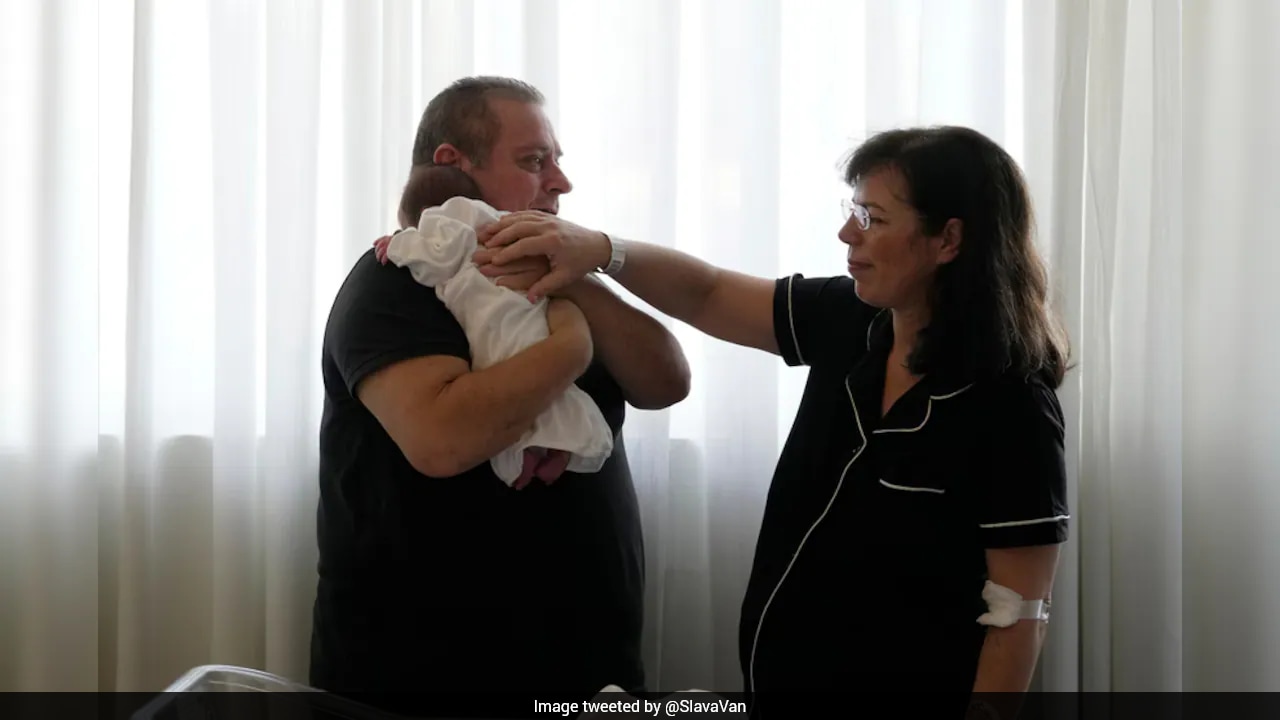
A 54-year-old woman in Greece successfully gave birth using an embryo frozen for twenty-two years, setting a striking medical milestone that forces a hard look at the intersection of reproductive longevity, legal boundaries, and biological reality. Anastasia Dakilou welcomed a healthy infant in a hospital in Alexandroupoli, utilizing genetic material preserved over two decades following the tragic loss of her son in a car crash. This case transcends a simple medical anomaly. It serves as a stark window into how assisted reproductive technology is rewriting the timeline of human biology, creating scenarios that legal frameworks and ethical guidelines are scrambling to catch up with.
The mechanics behind sustaining viable human tissue for over twenty-two years rely on vitrification, a flash-freezing technique that prevents ice crystal formation by plunging biological material into liquid nitrogen at sub-zero temperatures. At minus 196 degrees Celsius, cellular activity halts completely. Enzymatic reactions stop, DNA degradation pauses, and biological time stands still. When clinics thaw these specimens decades later, the survival rate of the thawed blastocysts depends heavily on the precision of the initial freezing protocols established in the late 1990s and early 2000s. The fact that an embryo preserved in 2002 could successfully implant and develop to term in 2024 speaks to the quiet engineering triumph of cryobiology, even if the clinical practice routinely operates in a legal gray area.
The Regulatory Vacuum Surrounding Frozen Legacies
Fertility clinics across the globe hold millions of frozen embryos in cryogenic banks, and a significant percentage of them are considered "abandoned" or "orphaned" because patients stop paying storage fees, lose touch with clinics, or pass away. Unlike organ donation or traditional wills, reproductive material occupies a strange ontological space in property and family law. Is an embryo property, a potential person, or a genetic trust?
When storage limits are tested over decades, the logistical and financial strain on bio-repositories becomes acute. Most jurisdictions lack clear statutory limits on how long an embryo can remain frozen before it must be implanted, discarded, or donated for research. Greece, where this recent birth occurred, has progressive laws regarding assisted reproduction, permitting women up to the age of 54 to access fertility treatments with medical approval. This regulatory permissiveness contrasts sharply with neighboring European nations that enforce strict age caps or limit storage durations to five or ten years.
The absence of international consensus creates a fragmented landscape where reproductive tourism flourishes. Patients who age out of fertility treatments in strict regulatory environments travel across borders to find clinics willing to push the envelope. This mobility exposes a deeper systemic vulnerability. The technology advances at an exponential rate, while legislative oversight moves at the speed of bureaucracy.
The Physiological Reality of Advanced Maternal Age
Beyond the legal and cryobiological headlines lies the stark physical reality of carrying a pregnancy past the age of fifty. The human uterus is a muscular organ capable of remarkable adaptability, but the surrounding cardiovascular and metabolic systems bear an immense burden during late-in-life gestation.
Medical professionals evaluate prospective mothers over fifty through an exhaustive screening protocol. Age-related vascular stiffness, hypertension, and gestational diabetes present severe risks that do not diminish simply because the embryo itself is young. While the genetic material preserved in 2002 bypassed the natural decline in oocyte quality associated with aging—effectively insulating the embryo from twenty-two years of cellular wear and tear—the maternal vessel carrying that pregnancy must endure the full physiological tax.
Endocrinologists and obstetricians point out a vital distinction that casual observers often miss. The biological clock of the egg can be frozen, but the biological clock of the maternal cardiovascular system cannot. Hormone replacement therapies and specialized uterine preparation regimens can coax an older endometrium into accepting an embryo, but managing fluid balance, renal load, and cardiac output during the third trimester demands rigorous clinical intervention.
The Broader Cultural and Ethical Ripple Effects
Stories of older parents spark fierce debate, dividing bioethicists and the public alike. Critics raise valid questions regarding generational longevity. A parent entering their seventies as their child enters adolescence faces distinct challenges concerning energy, health vulnerabilities, and mortality. The emotional and financial security of the child remains a central pillar of reproductive ethics.
Conversely, proponents of bodily autonomy and reproductive expansion argue that chronological age is an arbitrary metric in an era of extended human lifespans and advanced healthcare. People routinely start families later in life for career, economic, or personal reasons. When tragedy strikes, as it did for the Greek mother who lost her son in a road crash, the desire to rebuild a shattered family unit through preserved genetic material becomes a profound human imperative that defies cold statistical actuarial tables.
The twenty-two-year gap between cryopreservation and birth is not merely a technical feat. It is a historical bridge. The world in which that embryo was frozen—pre-smartphone, pre-social media, shaped by a different geopolitical climate—is vastly different from the world into which the child was born. That temporal displacement introduces psychological dimensions into family dynamics that we have barely begun to map out.
As cryogenic storage banks continue to accumulate vials and straws frozen decades ago, cases like this will cease to be isolated curiosities. They will become part of a routine clinical spectrum as the first generation of children born from long-term frozen embryos reaches adulthood and evaluates the implications of their own origins. The biological barrier of time has been breached. The social and legal frameworks designed to govern it are still finding their footing in the dark.