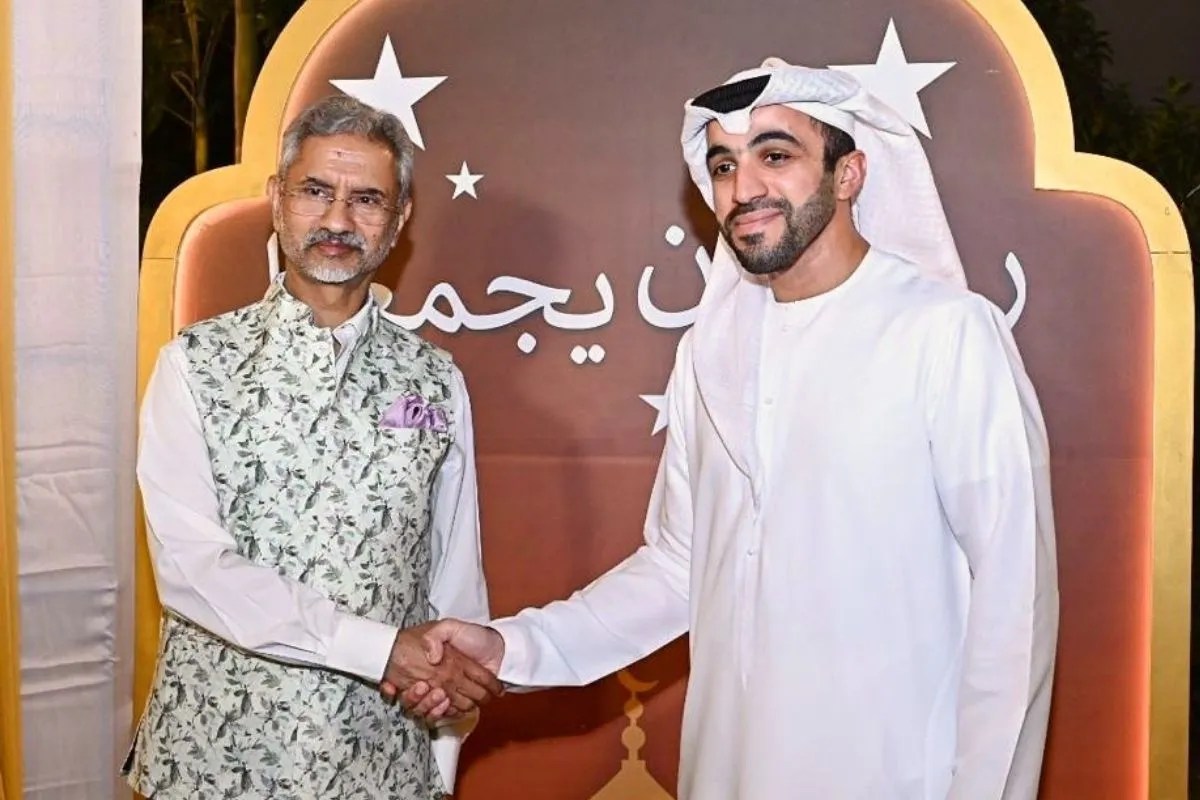
Diplomatic headlines love a good fairytale. If you believe the recent press releases coming out of the Gulf, the relationship between India and the UAE is a spiritual bond, a meeting of two giants destined to reshape the 21st century. The mainstream narrative screams about "strong positions" and "strategic partnerships."
It is mostly theater.
The UAE’s praise for India isn’t a tribute to shared values or a sudden realization of India's cultural greatness. It is a cold, calculated hedging maneuver. While the media obsesses over the optics of Prime Minister Modi’s visits and the warm rhetoric from Abu Dhabi, they miss the transactional engine underneath. This isn't a marriage; it's a high-stakes hedge fund agreement.
The Myth of the Strategic Pivot
The lazy consensus suggests that the UAE is choosing India as its primary partner in Asia. This ignores the reality of Gulf statecraft. The UAE doesn't choose sides; it collects dependencies.
For decades, the Emirates relied on the West for security and the East for energy sales. Now, with the U.S. appearing increasingly distracted and China’s growth trajectory hitting a demographic wall, the UAE is looking at India as its "Plan B."
But let’s be honest about what India provides: a massive, hungry mouth for energy and a source of cheap, essential labor.
- Energy Security: India imports over 80% of its crude oil. The UAE needs a guaranteed buyer as the world teeters on the edge of an energy transition.
- Labor Arbitrage: The UAE’s infrastructure wasn't built by "strategic partnerships." It was built by millions of Indian expats who send billions in remittances back home, effectively subsidizing the Indian economy while keeping Emirati construction costs low.
When the UAE praises India's "strong position," they are really praising India's willingness to remain a reliable customer and a labor exporter. To call this a "shift in global power" is to confuse a supply chain with a superpower alliance.
CEPA is a Pressure Valve, Not a Miracle
The Comprehensive Economic Partnership Agreement (CEPA) is often touted as a revolutionary document. In reality, it is a pressure valve for two economies facing distinct, looming crises.
India needs Foreign Direct Investment (FDI) to fix its crumbling manufacturing sector. The UAE needs to park its sovereign wealth somewhere that isn't a volatile Western tech stock or a stagnating European real estate market.
I’ve seen analysts ignore the friction points in this deal for years. The UAE’s investments in India are often stalled by the same bureaucratic nightmare that haunts every foreign investor: land acquisition laws, shifting tax regulations, and a legal system that moves at the speed of a glacier.
Abu Dhabi isn't investing in India because they "believe" in the Indian Dream. They are investing because they have too much cash and nowhere else to put it that offers even a modicum of growth. It is a move born of necessity, not admiration.
The China Elephant in the Room
You cannot discuss India and the UAE without mentioning the shadow of Beijing. The mainstream press treats the India-UAE bond as an alternative to Chinese influence. This is a fundamental misunderstanding of Gulf psychology.
The UAE is currently a member of BRICS+. They are simultaneously deepening ties with China through the Belt and Road Initiative while flirting with the India-Middle East-Europe Economic Corridor (IMEC).
The UAE isn't "allying" with India against China. They are playing both sides to see who offers the better deal on port infrastructure and digital surveillance tech. If India fails to deliver on the IMEC—a project currently hampered by the sheer instability of the Middle East—the UAE will pivot back to Chinese digital silk roads without a second thought.
The "strong position" the UAE mentions is actually a challenge: Prove you can be as efficient as China, or we will keep your praise limited to speeches.
The Remittance Trap
Every time a politician speaks about the "diaspora," they are sugarcoating a massive economic vulnerability.
India’s reliance on remittances from the Gulf is a ticking time bomb. The UAE is aggressively pursuing "Emiratization"—a policy designed to replace foreign workers with locals in the private sector. While this has been slow-moving, the intent is clear.
If the UAE successfully automates its service sector or shifts its labor needs toward higher-skilled Western or East Asian tech workers, the flow of billions of dollars back to Kerala and Uttar Pradesh will dry up.
India treats the diaspora as a point of pride. In reality, it is a liability. It gives the UAE immense leverage over Indian domestic policy. If the UAE decides to tighten visa gold standards or change labor laws, India has no choice but to comply. Who has the "strong position" then?
Understanding the Trade-Offs
To view this relationship clearly, we have to look at the math, not the handshakes.
| Feature | The Media Narrative | The Cold Reality |
|---|---|---|
| Trade Volume | Reaching $100 billion is a sign of mutual growth. | It represents a massive trade deficit for India due to oil imports. |
| Security | A new era of maritime cooperation in the Indian Ocean. | The UAE still relies on the U.S. 5th Fleet for actual protection. |
| Investment | UAE is "building" India's infrastructure. | UAE is cherry-picking profitable ports and airports to control trade routes. |
The I2U2 and the Illusion of a New Middle East
The I2U2 (India, Israel, UAE, USA) is frequently cited as the "West Asian Quad." This is a beautiful theoretical construct that ignores the brutal reality of regional politics.
The idea that India can balance its relationship with Iran while being part of a group that includes Israel and the UAE is a diplomatic tightrope that eventually snaps. The UAE’s praise for Modi is a way to keep India quiet about the UAE’s own regional maneuvers.
India is being used as a "legitimacy shield." By involving a "neutral" giant like India, the UAE can frame its regional ambitions as part of a global economic shift rather than a local power grab.
Stop Falling for the Photo-Op
If you want to understand where this is going, stop reading the joint statements. Look at the sovereign wealth fund allocations.
The UAE is diversifying. They are buying into Indian retail and renewable energy because those are the only sectors where India’s sheer population size guarantees a return. It isn't a vote of confidence in Indian governance; it's a bet on Indian consumption.
The "strong position" India holds is that of a consumer. Nothing more.
If India wants to be a true power in Asia, it needs to stop celebrating when a Gulf monarchy gives it a pat on the back. It needs to build an economy that doesn't rely on sending its citizens away to build other people's cities.
Until India stops being a source of cheap labor and start being a source of indispensable technology, these "praises" from the UAE are just the polite words of a landlord to a tenant who always pays on time.
The next time you see a headline about the "unprecedented bond" between these two nations, ask yourself: Who is selling the oil, and who is doing the manual labor?
That is the only metric that matters.