The International Court of Justice is about to drop a historic judgment on whether Myanmar committed genocide against the Rohingya. Western diplomats will applaud. Human rights NGOs will issue celebratory press releases. Cable news anchors will call it a triumph for international law.
They are all celebrating a hollow victory.
If you read standard coverage of The Gambia v. Myanmar, you get fed the same comforting fairy tale: a small West African nation bravely dragged a brutal military junta before the Peace Palace in The Hague, the judges weigh the atrocities of the 2017 clearance operations, and justice finally prevails. That narrative makes for great fundraising copy. It also completely misunderstands how international law actually operates on the ground.
I have spent years watching international tribunals burn hundreds of millions of dollars producing immaculate legal opinions that never stop a single bullet or repatriate a single refugee. When commentators treat an ICJ judgment as the finish line, they miss the brutal reality of state sovereignty, enforcement paralysis, and the perverse incentives created by the Genocide Convention itself.
The Illusion of the Peace Palace
The lazy consensus assumes that moral condemnation backed by a judicial gavel equals accountability. It does not.
Let us look at the actual mechanics of the International Court of Justice. Unlike the International Criminal Court, which prosecutes individuals and can theoretically issue arrest warrants that restrict a general's travel, the ICJ settles disputes between states. Even if the fifteen judges rule overwhelmingly that Myanmar violated the 1948 Convention on the Prevention and Punishment of the Crime of Genocide, what happens the next morning in Rakhine State?
Nothing.
The ICJ has no police force. It has no peacekeeping battalions. Under Article 94 of the UN Charter, enforcement of an ICJ judgment falls exclusively to the UN Security Council. And who sits on the Security Council with a permanent veto? China and Russia. Both Beijing and Moscow have shielded Myanmar's military junta, the Tatmadaw, from meaningful Security Council action since the 2021 coup and long before it. Beijing relies on Myanmar for critical infrastructure corridors to the Indian Ocean; Moscow sells the junta fighter jets and artillery. Neither is going to authorize Chapter VII enforcement measures because a panel of jurists in the Netherlands issued a declaration of state responsibility.
We have seen this exact movie before. In January 2020, the ICJ issued unanimous provisional measures ordering Myanmar to prevent genocidal acts and preserve evidence. The junta nodded politely, ignored the substance, and sixteen months later overthrew its own civilian government, plunging the entire country into a multi-front civil war. A final merits judgment carries more prestige, not more firepower.
The Genocide Trap and the Hierarchy of Suffering
Here is the uncomfortable truth that legal advocates rarely admit in public: our obsession with the "G-word" actively distorts how the world responds to mass atrocities.
Under Raphael Lemkin’s original framework and Article II of the 1948 Genocide Convention, proving genocide requires establishing dolus specialis—the specific intent to destroy, in whole or in part, a national, ethnical, racial, or religious group, as such. Notice those last two words. They are the highest evidentiary bar in international law.
Proving mass murder, systematic rape, and the burning of hundreds of villages is relatively straightforward; satellite imagery, forensic pathology, and survivor testimony from Cox’s Bazar establish those crimes beyond any reasonable doubt. Proving that the perpetrators committed those acts specifically to destroy the group biologically or physically—rather than to violently expel them from contested territory or crush an insurgency—is a legal nightmare.
In Bosnia and Herzegovina v. Serbia and Montenegro (2007) and Croatia v. Serbia (2015), the ICJ set the bar for inferring genocidal intent so astronomically high that almost any alternative military or political motive can defeat a genocide claim. When the court demands that genocidal intent be the only reasonable inference to be drawn from a pattern of conduct, defense lawyers simply argue counter-insurgency or forced displacement.
And look at the perverse downstream effect of this legal hair-splitting:
- Political paralysis while lawyers argue: Governments hide behind ongoing ICJ proceedings to delay concrete bilateral sanctions or arms embargoes, claiming they must wait for the court's determination.
- The devaluation of crimes against humanity: If the court rules that Myanmar committed horrific ethnic cleansing and crimes against humanity, but falls just short of proving dolus specialis for genocide, the junta's propaganda machine will spin the verdict as an exoneration.
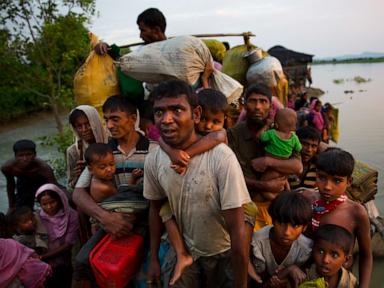
- Zero material relief for survivors: Over one million Rohingya remain trapped in sprawling, deteriorating camps in Bangladesh, barred from working, barred from formal education, and increasingly preyed upon by armed gangs. A declaratory judgment in The Hague does not put food rations back to full capacity or grant them citizenship.
By elevating genocide above all other atrocity crimes as the sole trigger worthy of global outrage, the international community has built a trap where mass expulsion and systematic slaughter get downgraded in the public imagination if they fail a nineteenth-century style mens rea test.
What People Get Wrong About the Case
When people search for updates on the Myanmar genocide case, they usually ask the wrong questions because the press frames the trial like a domestic murder prosecution. Let us dismantle the three biggest misconceptions driving the coverage.
Does a guilty verdict mean Min Aung Hlaing goes to prison?
No. Not even close. The ICJ does not try human beings; it tries states. Senior General Min Aung Hlaing, the architect of the 2017 clearance operations and current head of the junta, will never sit in the dock at the ICJ. Individual criminal liability belongs to separate venues—specifically the International Criminal Court (which is pursuing a narrower investigation into deportation across the Bangladesh border) and universal jurisdiction cases like the one filed in Argentina. Conflating the ICJ with criminal prosecution sets the public up for inevitable disillusionment when no handcuffs appear.
Why did The Gambia bring the case instead of Bangladesh?
Observers often romanticize The Gambia’s role as pure moral altruism led by former Justice Minister Abubacarr Tambadou. While genuine solidarity played a role, the real reason is jurisdictional engineering. Bangladesh, which bears the actual humanitarian burden of hosting over a million refugees, ratified the Genocide Convention with a reservation to Article IX—the exact clause that gives the ICJ automatic jurisdiction over disputes between signatory states. Myanmar did not enter an Article IX reservation. Because the ICJ previously established that obligations under the Genocide Convention are erga omnes partes (owed to all signatory states collectively), legal strategists needed a state party without an Article IX reservation to act as a proxy plaintiff. The Gambia was the willing vehicle. It was brilliant legal forum-shopping, not a spontaneous diplomatic miracle.
Will the ruling force Myanmar to restore Rohingya citizenship?
It cannot. Even if the court orders reparations and guarantees of non-repetition, citizenship laws remain one of the fiercest bastions of domestic sovereignty. Myanmar’s 1982 Citizenship Law deliberately stripped the Rohingya of recognized ethnic status, rendering them stateless. Furthermore, the junta does not even control large swaths of Rakhine State anymore. The Arakan Army, an ethnic Rakhine insurgent group fighting the military, has seized vast territory along the Bangladesh border—and their own relationship with the Rohingya population is fraught with tension, forced conscription, and fresh displacement. An ICJ order directed at Naypyidaw cannot compel an insurgent army on the ground to respect minority rights.
The Contrarian Reality: Who Benefits From the Theater?
Follow the incentives. Every major actor in this drama gets something out of the ICJ proceedings except the people living under tarps in Cox's Bazar.
Western powers get to signal deep commitment to the "rules-based international order" without risking a single soldier, disrupting regional trade flows, or confronting China over its backing of the junta. Issuing statements supporting The Gambia costs nothing. Cutting off the financial lifelines of Myanmar’s state-owned oil and gas enterprises—which actually fund the military’s aviation fuel—requires real political capital, which is why Washington and Brussels dragged their feet for years.
International legal institutions get to validate their own relevance. After decades of criticism that global courts only target weak African leaders while ignoring major powers, having an African nation prosecute an Asian state on behalf of a Muslim minority allows The Hague to showcase institutional legitimacy.
Meanwhile, the Rohingya are treated as passive exhibits in a courtroom thousands of miles away. While lawyers spend years debating the precise phrasing of legal memorials and counter-memorials, humanitarian funding for the camps in Bangladesh has cratered, forcing the World Food Programme to slash monthly food vouchers to barely subsistence levels.
Admit the Downside: Why the Ruling Still Matters (Just Not How You Think)
Before anyone accuses me of advocating total nihilism, let me be clear about the upside of an adverse ICJ ruling—because dismissing international law entirely is just as lazy as worshiping it.
If the court finds Myanmar responsible for genocide, it creates an indelible historical and evidentiary record that no future regime in Naypyidaw can easily erase. Denial is the final stage of every genocide; a binding factual determination by the world's highest court permanently forecloses historical revisionism in diplomatic circles.
More practically, an ICJ judgment unlocks secondary legal leverage:
- Third-state complicity exposure: Under Article I of the Genocide Convention, all signatory states have a legal duty to prevent genocide. Once the ICJ formally establishes that genocide occurred and remains an ongoing risk, states selling jet fuel, weapons, or dual-use surveillance technology to the Myanmar military face heightened legal exposure for aiding and abetting a recognized breach of peremptory international norms.
- Corporate divestment pressure: Multinational banks, insurers, and energy companies operating in Southeast Asia rely on compliance algorithms that flag formal ICJ atrocity determinations. A merits ruling turns toxic reputational risk into hard compliance liability, accelerating capital flight from junta-linked conglomerates like Myanma Economic Holdings Limited.
- Asylum and non-refoulement shields: Immigration courts globally rely on ICJ factual findings when adjudicating asylum claims. A formal genocide ruling makes it virtually impossible for host nations to argue that Rohingya refugees can be safely deported back to Myanmar anytime in the foreseeable future.
Those are real, tangible effects. Notice, however, what they have in common: they are indirect levers that only work if external governments, banks, and prosecutors actively choose to pull them. The judgment itself is just a piece of paper.
Stop Waiting for The Hague and Do What Actually Works
If policymakers, advocates, and donors actually care about altering the reality for the Rohingya rather than collecting moral trophies, they need to abandon the courtroom-first mindset immediately.
First, choke the junta’s hard currency, not its diplomatic prestige. The Tatmadaw does not care about being shamed in Dutch courtrooms; it cares about paying its officers and fueling its Mi-35 helicopter gunships. Instead of waiting for UN Security Council resolutions that will never pass, a coalition of willing financial hubs—the US, UK, EU, Singapore, and Japan—must impose coordinated, secondary sanctions on the Myanma Foreign Trade Bank and all remaining energy revenue channels.
Second, deal with the actual power brokers on the ground. Diplomacy that only speaks to Naypyidaw or the exiled National Unity Government is obsolete. The Arakan Army now controls the vast majority of Rakhine State's borderlands. Any viable framework for civilian protection, humanitarian access, or eventual return must engage the ethnic armed organizations holding physical territory, conditioning international recognition and cross-border aid on verifiable protection guarantees for Rohingya civilians.
Third, end the warehousing model in Bangladesh. Treating over a million people as temporary guests for nearly a decade is a policy failure masquerading as humanitarianism. International donors must tie financial aid to Dhaka directly to policy reforms that allow Rohingya refugees legal work permits, accredited formal schooling, and freedom of movement. Keeping an entire generation idle and stateless in fenced camps guarantees radicalization and exploitation.
The judges in The Hague will read their carefully calibrated paragraphs. The cameras will flash. The commentators will declare that history has spoken. And in the mud of Cox’s Bazar, nothing will change until the people with actual power stop outsourcing their responsibility to a court that has no army.