On November 19, 2026, the International Court of Justice delivered a landmark verdict that sent shockwaves through international legal circles. The UN's top judicial body formally declared that Myanmar committed genocide against the Rohingya Muslim population.
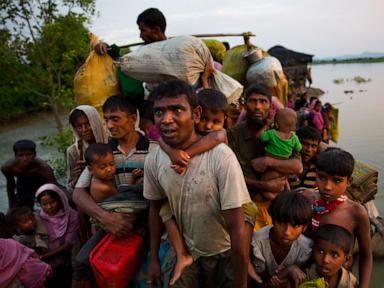
For years, human rights observers watched as international institutions dragged their feet while the military in Myanmar carried out brutal "clearance operations". Over 700,000 Rohingya fled across the border into Bangladesh starting in 2017, bringing stories of systemic village burnings, mass murder, and widespread violence. When The Gambia filed its historic suit back in 2019, critics dismissed it as a symbolic gesture with zero teeth.
They were wrong.
By a 9-to-6 decision on the primary merits, the court established that Myanmar acted with specific intent to destroy a substantial part of the Rohingya group in northern Rakhine State. That distinction matters immensely. Proving genocidal intent under the 1948 Genocide Convention is notoriously difficult. Up until now, the court had found states guilty of failing to prevent genocide—such as Serbia during the Srebrenica massacre—but it had never outright convicted a nation-state of actively perpetrating state-sponsored genocide itself.
That seal has officially been broken.
What the Court Ordered Myanmar to Do
The judgment doesn't just slap a label on historical atrocities. It lays down explicit legal obligations that the military regime in Naypyidaw is mandated to fulfill.
First, the court ordered Myanmar to immediately cease all ongoing violations by passing legislative reforms that safeguard the Rohingya. Second, it mandated that the regime launch thorough investigations into officials suspected of direct involvement in the 2017 attacks, followed by criminal prosecutions.
Beyond criminal accountability, the judges tackled the massive humanitarian crisis created by the displacement. By a 10-to-5 vote, the ICJ ordered Myanmar to facilitate the safe, voluntary, and dignified return of all displaced Rohingya currently living in Bangladesh or elsewhere. That order includes restoring seized or destroyed property, helping locate missing relatives, compensating victims for unrepairable physical or mental harm, and guaranteeing full protections against future discrimination.
Myanmar was given a strict two-year deadline to submit a comprehensive report detailing how it intends to satisfy these restitution and compensation demands.
Summary of Core ICJ Ruling Points (The Gambia v. Myanmar)
--------------------------------------------------------
1. State Guilt: Myanmar directly committed genocide (9-6 vote)
2. Accountability: Order to investigate, prosecute, and punish perpetrators (13-2 vote)
3. Reparations: Mandatory property restoration and victim compensation (10-5 vote)
4. Right of Return: Enforceable right for refugees to return safely (10-5 vote)
5. Evidence Tampering: Court found Myanmar built military bases over destroyed villages (11-4 vote)
The Legal Trap Holding Back Enforcement
Here is the awkward truth that diplomatic officials won't say out loud: the International Court of Justice has no police force.
When a state ignores an ICJ verdict, the matter gets kicked to the UN Security Council under Article 94(2) of the UN Charter. But anyone tracking global politics knows how that story plays out. China quickly raised concerns about "jurisdictional overreach" following the decision, signaling its readiness to block harsh enforcement measures or military interventions using its veto power.
Myanmar is also currently consumed by a brutal civil war. The military junta that seized power in the 2021 coup is fighting for its survival against anti-coup resistance forces and ethnic armed organizations across multiple fronts. Expecting a crumbling authoritarian junta to willingly pass anti-discrimination laws or pay millions in victim compensation is unrealistic.
In fact, the court specifically noted that Myanmar destroyed evidence by building government military outposts directly on top of flattened Rohingya villages between 2020 and 2021. The regime hasn't shown a shred of good faith so far, and they aren't going to start now.
Why This Ruling Changes Everything Anyway
If the junta won't comply, why does this verdict matter so much? Because it completely alters the geopolitical calculus for everyone else.
For starters, it removes any lingering political cover for foreign governments doing business with Naypyidaw. The United Kingdom immediately moved to expand targeted financial sanctions against senior military officers in the wake of the judgment. International corporations still operating in Myanmar now face immense legal exposure under universal jurisdiction laws in Europe and South America.
More importantly, it sets a crucial legal precedent for state responsibility. For decades, state defense teams argued that high body counts during counter-insurgency operations didn't prove genocide unless an explicit written order was produced. In this case, the ICJ accepted that genocidal intent can be inferred from the sheer scale, pattern, and systematic nature of atrocities carried out against a specific population.
That legal standard will directly ripple across other pending cases before the court, including South Africa's ongoing case against Israel concerning Gaza. Human rights lawyers around the globe now have a clear, modern roadmap for holding state actors accountable for collective violence.
What Needs to Happen Next
The legal victory in The Hague is monumental, but legal victories don't feed people living in overcrowded refugee tents in Cox's Bazar. Translating this court order into real-world relief requires immediate, concrete steps from the international community:
- Leverage Sanctions and Energy Isolation: Western nations need to coordinate secondary sanctions targeting state-owned oil and gas enterprises that fund the junta's military hardware purchases.
- Support International Criminal Prosecutions: The ICJ handles disputes between states, but individual military generals belong in dock at the International Criminal Court (ICC). States must fund and share intelligence with the Independent Investigative Mechanism for Myanmar to build ironclad criminal dossiers against specific commanders.
- Condition Aid and Trade on Citizenship Reform: Neighboring nations and regional blocs like ASEAN cannot push for premature refugee repatriation without concrete guarantees of citizenship rights. Sending Rohingya families back to a state that legally considers them illegal foreigners is a recipe for another round of violence.
- Include Rohingya Voices in Reconstruction: Diplomatic talks regarding Myanmar's democratic future must give Rohingya representatives an actual seat at the table. Sustainable peace in Rakhine State will remain impossible as long as local communities are treated as passive victims rather than active political stakeholders.
The ICJ proved that international law can name atrocities for what they really are. Now it's up to member states to turn that judicial statement into actual enforcement.



