Tens of thousands of Palestinian laborers cross into Israel through gaps in the separation barrier every week, fleeing a collapsed West Bank economy to find work in Israeli construction, agriculture, and service sectors. While political rhetoric focuses heavily on tight border enforcement and security blockades, the economic reality on the ground forces an unacknowledged interdependence. For many young men, the choice to cross illegally is not a political statement. It is a calculated gamble against starvation, where the prize is a day wage and the penalty can be a bullet from a border patrol.
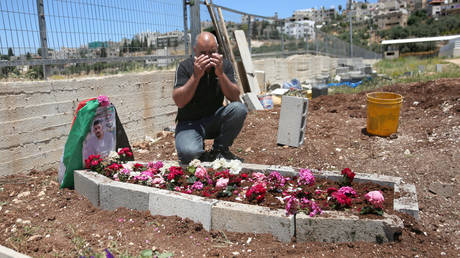
The human cost of this system becomes visible only when the gamble fails. When a young worker is shot near a West Bank checkpoint or fence line, the immediate response follows a rigid script. The family mourns a son who was merely trying to provide, local activist groups condemn the use of lethal force against unarmed laborers, and military spokespersons cite security protocols regarding illegal border breaches. Beneath these recurring tragedies lies a massive, informal labor economy that both sides publicly disavow but privately rely upon to survive.
The Economic Asymmetry of the Separation Barrier
The West Bank economy cannot sustain its population. Decades of movement restrictions, limited access to resources, and minimal industrial investment have left the Palestinian Authority with chronic unemployment rates, particularly among youths under thirty. A high school or university graduate in Hebron or Jenin faces a bleak job market where local wages rarely cover basic rent and food costs.
Directly across the concrete wall lies a completely different financial reality. The wage differential between the two markets is staggering. A laborer can earn three to four times more per day doing manual work in Tel Aviv or West Jerusalem than they could in Ramallah, assuming they could find a job there at all.
Estimated Daily Labor Wages (USD Equivalent)
+---------------------------------------+
| West Bank Local Labor: $15 - $25      |
+---------------------------------------+
| Israeli Informal Labor: $70 - $100    |
+---------------------------------------+
This massive pay gap creates an irresistible economic pull. For a family struggling to pay for medical care, electricity, or basic groceries, the decision to send a son through a cut fence is a matter of pure survival arithmetic.
The Broken Permit System
Securing an official work permit from Israeli authorities is an arduous, opaque process. Permits are bound by strict age minimums, marital status requirements, and extensive security background checks handled by COGAT, the Israeli defense ministry body overseeing civil policy in the territories. Single men under thirty are routinely denied permits under general security classifications.
Even for those who qualify, the permit market is rife with exploitation. A thriving black market exists where middlemen charge laborers thousands of shekels a month just to secure and maintain a valid permit document. This upfront cost eats into a substantial portion of the worker's earnings before they even step foot on a job site, driving many to bypass the legal framework entirely.
The Quiet Reliance of Israeli Industry
While political leaders publicly emphasize walls and total separation, major sectors of the Israeli economy are structurally dependent on Palestinian labor. The construction industry is the clearest example. For decades, Palestinian workers have built the high-rises of Tel Aviv, the infrastructure of central Israel, and the residential developments across the country.
Alternative labor pipelines have consistently failed to meet demand. Attempts to replace West Bank workers with foreign labor from East Asia or Eastern Europe involve complex visa negotiations, high travel costs, and bureaucratic friction. Palestinian laborers speak the language, understand the local work culture, and return to their own homes, meaning Israeli employers do not have to provide long-term housing or healthcare benefits.
The informal arrangement works through a system of managed plausible deniability. Subcontractors hire workers without asking too many questions about their entry status. If a raid occurs, the contractor faces a manageable fine, while the worker faces detention, blacklisting, or physical harm. This asymmetry ensures that the financial risk is born entirely by the person climbing the fence.
The Anatomy of a Border Crossing
The journey begins in the pre-dawn hours. Laborers gather at known weak points along the hundreds of kilometers of fencing and concrete barriers that loop through the West Bank landscape. These gaps are not secrets. They are well-known to local drivers, scouts, and the military units stationed nearby.
- The Scouts: Young men stationed on nearby hilltops who monitor patrol movements and signal when a sector is clear.
- The Transporters: Drivers who wait on the Israeli side of the fence to quickly move workers into commercial hubs before they can be spotted by police.
- The Workers: Individuals carrying nothing but a lunchbox and old clothes, trying to look as inconspicuous as possible.
The crossing itself is a flashpoint of extreme tension. Israeli border patrols operate under strict rules of engagement that allow the use of live fire under specific conditions, particularly in areas designated as high-security zones. When a patrol surprises a group of crossers, chaos ensues. In the rush to scramble back through the wire, workers are frequently injured or shot.
The defense establishment argues that these strict measures are necessary to prevent militants from using labor routes to smuggle weapons or execute attacks inside Israeli cities. From their perspective, a gap in the fence cannot be treated as a simple labor gate; it is a vulnerability in national security. Yet, the sheer volume of daily crossings proves that the wall is porous by necessity, functioning less like a solid dam and more like a valve that regulates the flow of desperate people.
The Long Term Cost of Middle Market Breakdown
The current setup is unsustainable, but no one has a viable plan to alter it. The Palestinian Authority lacks the fiscal tools and independence to build a self-sustaining economy that could retain its young workforce. At the same time, Israeli businesses cannot afford a sudden, total cutoff of their primary manual labor force without triggering an immediate crisis in real estate and infrastructure development.
The status quo remains a volatile compromise. A young man dies at the fence, a family holds a funeral, a brief wave of media attention flares up, and the next morning thousands more step into the darkness to make the exact same run. The economic engine demanding cheap labor ensures the pipeline stays open, regardless of how many lives it claims along the way.