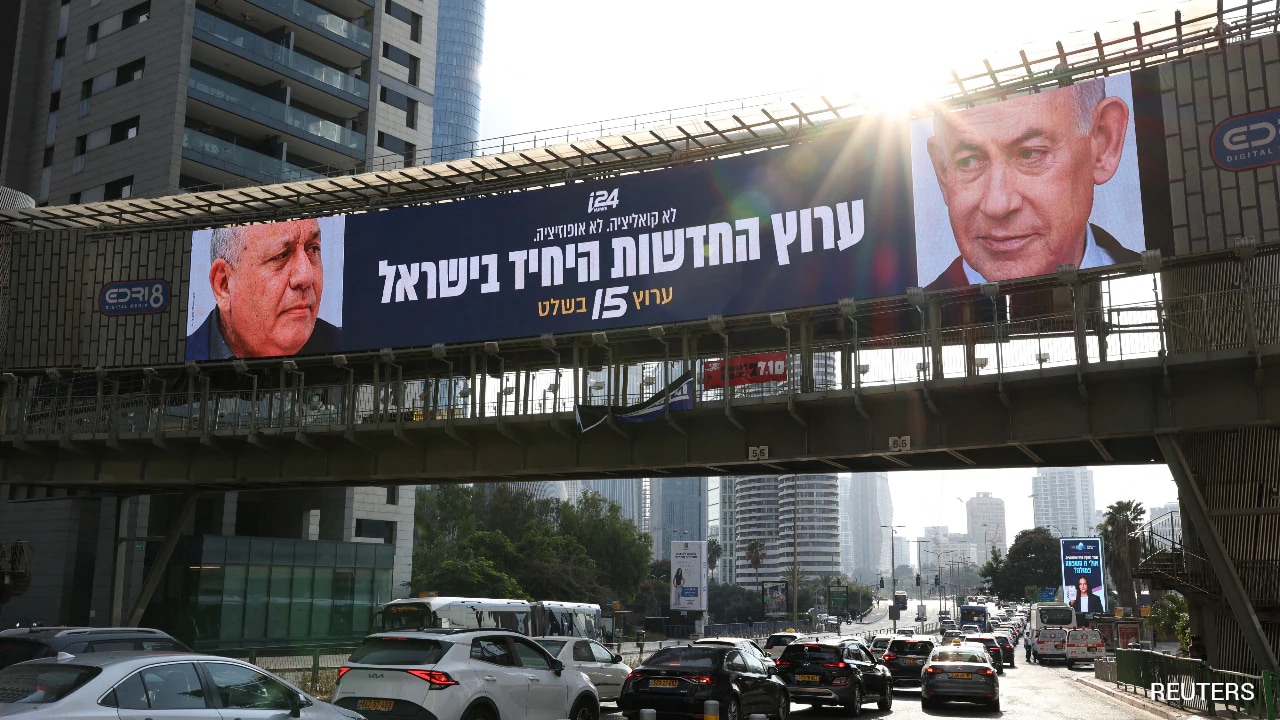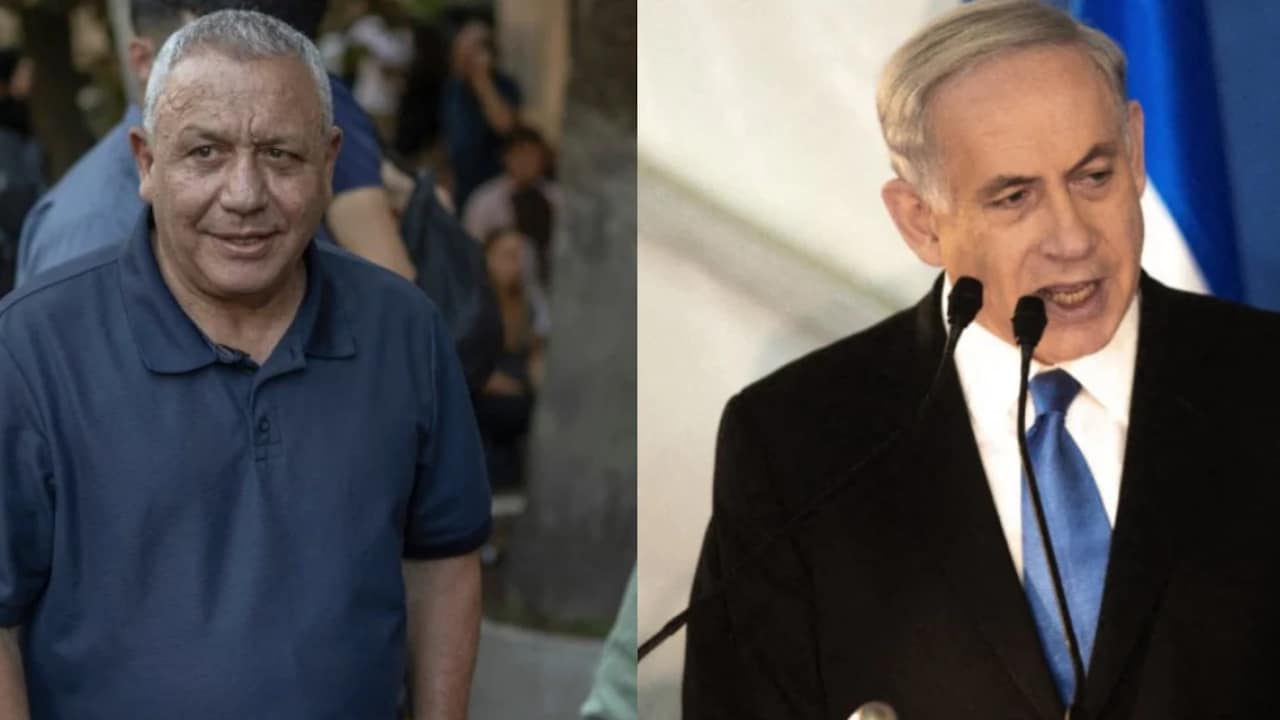
Political coverage of Israel routinely reduces complex electoral dynamics into a binary choice: domestic consensus on one side, hardline national security on the other. When opposition figures campaign on bridging internal divisions and Prime Minister Benjamin Netanyahu counters by framing his rivals as insufficiently tough on Iran, commentators often treat the clash as a straightforward ideological divide.
That framing obscures how coalition politics, deterrence theory, and public opinion actually operate in Israel. Meanwhile, you can read related events here: Why Thousands of Israeli Expats Are Flying Home Just to Vote Out Netanyahu.
The False Binary Between Unity and Deterrence
The conventional narrative suggests that a platform centered on national unity inherently requires softening a posture toward external threats, particularly Iran and its regional proxies. Conversely, it implies that an uncompromising security doctrine demands sharp domestic political polarization to maintain ideological purity.
Both assumptions break down under scrutiny. To understand the bigger picture, we recommend the recent report by Associated Press.
In Israeli political history, broad national unity governments have frequently executed some of the country's most decisive military and strategic operations. From the 1967 Six-Day War—fought under a hastily assembled unity cabinet that brought Menachem Begin into the government for the first time—to the 1984–1988 unity rotation between Shimon Peres and Yitzhak Shamir, which oversaw the withdrawal from most of Lebanon and stabilized hyperinflation, internal coalition breadth has often served as a prerequisite for high-stakes action rather than an obstacle to it.
Strategic planners and former defense officials frequently argue that national cohesion is itself a core component of deterrence. When adversaries in Tehran or Beirut observe deep domestic fractures—whether over judicial reform, conscription exemptions, or the management of multi-front conflicts—they calculate that Israel's internal resilience is strained. A rival candidate promising to mend those rifts is not necessarily advocating a softer line on Tehran; in many cases, they are arguing that a unified home front is required to sustain long-term strategic pressure.
Why the "Soft on Iran" Label Persists
If broad coalitions are historically compatible with assertive security policies, why does the accusation of being "soft on Iran" remain such a durable campaign weapon?
The answer lies in how political branding functions in a proportional representation system. Netanyahu has spent decades cultivating a specific brand identity: the indispensable statesman uniquely capable of managing existential threats and resisting international pressure, particularly from Washington. To maintain that positioning, any viable challenger must be cast not merely as a political alternative, but as a security risk.
This tactic relies on two distinct political mechanisms:
- Shifting the Debate from Execution to Intent: By framing the issue around who is "tougher," the debate moves away from specific tactical outcomes—such as the status of Iran's nuclear enrichment program, the effectiveness of covert operations, or the management of northern border security—and toward perceived resolve. Voters are asked to judge character and rhetoric rather than audit policy results.
- Exploiting Coalition Arithmetic: In Israel's parliamentary system, no single party wins an outright majority. Any challenger seeking to form a government without Likud must assemble a diverse coalition spanning center-right, centrist, and potentially center-left or Arab parties. Critics routinely point to the ideological diversity of such a hypothetical bloc to argue that its internal compromises would paralyze decision-making on Iran.
Supporters of Netanyahu contend that only a cohesive right-wing government can resist American diplomatic pressure to accept containment or renewed nuclear negotiations, pointing to his 2015 address to the U.S. Congress opposing the Joint Comprehensive Plan of Action (JCPOA) as proof of willingness to confront even Israel's closest ally.
The Strategic Reality Behind the Rhetoric
Behind the campaign slogans, the actual policy gap between Israel's mainstream political rivals on Iran is narrower than public rhetoric suggests.
Across the mainstream political spectrum—from Likud to the major centrist and center-right opposition parties—there is broad consensus on three foundational points:
- Prevention Over Containment: Iran must not be permitted to acquire a nuclear weapons capability, and military options must remain credible if diplomacy and sanctions fail.
- Countering Regional Entrenchment: Israel must actively disrupt Iranian weapons transfers and proxy infrastructure in Syria, Lebanon, and elsewhere.
- Maintaining Operational Freedom: Israel cannot outsource its ultimate security decisions to external powers, even while coordinating closely with the United States.
Where genuine disagreements emerge is not over whether to confront Iran, but how to manage the diplomatic and military architecture surrounding that confrontation.
Critics of Netanyahu's approach—including several former heads of the Mossad, Shin Bet, and IDF—have argued that publicly clashing with Democratic administrations in Washington undermines the very alliance Israel relies on for intelligence sharing, advanced munitions, and diplomatic cover at the United Nations. From their perspective, quiet, coordinated pressure alongside the U.S. and European partners yields greater strategic leverage than public confrontation.
Defenders of Netanyahu's strategy counter that quiet diplomacy historically allowed Iran to advance its nuclear threshold status while Western powers prioritized regional de-escalation. In their view, public, uncompromising pressure is the only way to prevent allies from settling for a flawed diplomatic compromise.
What "Unity" Actually Means in Israeli Politics
Just as the "soft on Iran" critique oversimplifies security policy, the promise to "unite Israel" often masks profound structural challenges.
When opposition leaders campaign on unity, they are tapping into widespread voter fatigue over years of political deadlock, repeated election cycles, and sharp societal polarization. However, "unity" means very different things to different constituencies:
- For secular and traditional centrists, unity often implies restoring institutional norms, passing an equitable military draft law that includes ultra-Orthodox (Haredi) citizens, and lowering the temperature of public discourse.
- For many right-wing voters, a unity government that excludes religious or nationalist parties feels less like reconciliation and more like the disenfranchisement of their political camp.
- For Arab citizens of Israel, who make up roughly one-fifth of the population, calls for "Jewish unity" or "Zionist unity" often raise questions about whether they are included in the national consensus at all.
A candidate who promises to unite the country faces an immediate governing paradox: the very policies required to satisfy one segment of a unity coalition—such as changes to judicial appointments or Haredi conscription—are precisely the issues that trigger fierce opposition from another.
The Voter's Dilemma
When headlines pit "unity" against "strength on Iran," they reflect the campaign strategies of the candidates rather than the underlying mechanics of Israeli governance.
A leader focused solely on domestic consensus without a credible, actionable strategy to deter regional adversaries will quickly lose public trust in a volatile security environment. At the same time, a leader focused exclusively on external threats while presiding over deepening internal fractures risks eroding the social cohesion and institutional trust that Israel's citizen-army and economy depend on.
The real test for any Israeli prime minister is not choosing between uniting the country and confronting Iran, but recognizing that neither objective is sustainable without the other.