Donald Trump just pronounced his own Middle East peace initiative dead.
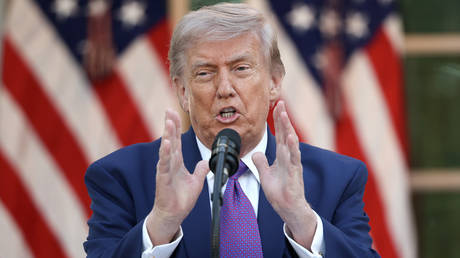
"To me, I think it's over," Trump told reporters in Ankara on Wednesday, labeling the Iranian leadership "scum". Hours later, early Thursday morning, American B-2 bombers and strike fighters hammered Iranian air defense networks, surface-to-air missile batteries, and drone launch facilities.
Tehran did not blink. Within minutes, the Islamic Revolutionary Guard Corps (IRGC) retaliated with a massive volley of ballistic missiles and explosive drones targeting Gulf Arab states hosting US military assets. Sirens wailed across Bahrain, home to the US Navy’s 5th Fleet. Air defenses scrambled in Kuwait and Qatar.
The Islamabad Memorandum of Understanding—the celebrated interim deal signed just three weeks ago on June 17—is functionally incinerated.
If you are trying to understand why a war that began on February 28 just roared back to life, you have to look past the immediate finger-pointing. The truth is simpler, uglier, and far more dangerous. The interim ceasefire collapsed because both Washington and Tehran tried to weaponize the diplomacy rather than honor it.
The Fatal Flaw in Trump's Art of the Iran Deal
When the interim deal was signed in France, Trump famously told the global shipping industry to "start your engines. Let the oil flow!". The core bargain was straightforward on paper: a 60-day pause in hostilities, the lifting of the US naval blockade, and a temporary waiver allowing Iran to sell oil in US dollars. In exchange, Iran promised to facilitate free shipping through the Strait of Hormuz and demine the waterway.
It was a phantom agreement. The diplomats failed to outline a mutually acceptable protocol for how the Strait of Hormuz would actually be policed during the 60-day window.
Iran immediately viewed the reopening of the strait as an opportunity to cement its strategic leverage. IRGC gunboats began hailing commercial tankers over the radio, forcing them out of international shipping lanes and into a narrow transit corridor hugging the Iranian coastline. Tehran's chief negotiator, Mohammad Bagher Ghalibaf, bluntly declared that the strait would "never return to its pre-war conditions" and would permanently be administered by Iran.
For Trump, this was a political disaster. With the November 2026 midterm elections looming, he desperately needed global energy prices to stabilize. He expected a total submission from Tehran, not a regime using a ceasefire to collect "service fees" and dictate global shipping routes.
The White House reacted by snapping back the economic vise. On Tuesday, the US Treasury abruptly revoked the general license that allowed Iran to market its crude oil, giving global buyers until July 17 to completely wind down transactions. By cutting off Iran's financial oxygen supply before the 60-day negotiating window even reached its midpoint, Washington essentially pulled the pin on the diplomatic grenade.
A Weapon of Mass Disruption
You cannot understand Iranian strategy without recognizing that Tehran views control of the Strait of Hormuz as its ultimate insurance policy. Before the war started in February, roughly a fifth of the world’s liquefied natural gas and oil transited through this chokepoint. By shutting it down, a battered Iranian regime effectively achieved military stalemate with the most sophisticated armed forces on earth.
Iran was never going to give up that leverage for a temporary 60-day waiver. Ellie Geranmayeh of the European Council on Foreign Relations nailed the dynamic: Iran refuses to cede its "weapon of mass disruption" before securing long-term, ironclad economic guarantees from the West.
Instead, the IRGC used the past three weeks to test American resolve. They fired at vessels deviating from their mandated routes, launched drones at UAE-linked tankers, and targeted shipping belonging to Saudi Arabia and Qatar. Every strike was a calculated reminder from Tehran: If we don't get to sell our oil safely, nobody in this Gulf gets to sell theirs.
The American response was heavy-handed but predictable. US Central Command (CENTCOM) launched localized operations to destroy IRGC small boats and surveillance facilities. This created an impossible tit-for-tat dynamic. A minor skirmish over a tanker would lead to a US drone strike, which led to an Iranian missile launch, culminating in the massive aerial bombardment we saw early Thursday morning.
The Gulf Partners Trapped in the Crossfire
The true victims of this diplomatic failure are the Arab Gulf states. The Islamabad Memorandum was negotiated almost entirely over their heads by Washington and Tehran, via mediators in Switzerland and Qatar.
The original text of the MoU was an absolute disaster for regional security. It explicitly protected Iran's regional proxies—including Hezbollah in Lebanon and the Houthis in Yemen—from retaliatory strikes by Israel or the Gulf states. Worse, the Trump administration signaled that it expected the wealthy Gulf kingdoms to foot the bill for a staggering $300 billion reconstruction program for Iran once a final peace deal was reached.
Now, those same Gulf nations are absorbing the kinetic blows of a war they didn't want and an interim peace they didn't write.
When the US struck Qeshm Island and coastal radar installations earlier this week, Iran didn't strike the American mainland. They fired ballistic missiles into Kuwait, severely damaging a passenger terminal at the country's main international airport and killing a civilian. Thursday’s massive escalation saw missiles targeting infrastructure across Bahrain and Qatar as well.
The message from the regime in Tehran is clear. They are leveraging the vulnerability of America's regional allies to force Washington to the table. But that strategy is backfiring spectacularly with Donald Trump, whose patience for complex, multi-lateral diplomacy has completely evaporated.
Where the Energy and Financial Markets Go Next
If you are managing corporate supply chains, dealing in global commodities, or looking at portfolio allocations, the collapse of this interim deal changes the calculus for the rest of 2026. The brief window of optimism that emerged in mid-June is gone.
- Energy Crises Realized: Brent crude had briefly cooled off toward $113 a barrel when the Islamabad MoU was signed. Expect oil to surge well past its wartime highs now that the US has revoked Iran's oil marketing waivers and the Strait of Hormuz is again a live combat zone. A prolonged shutdown of a route carrying 10 million barrels a day cannot be mitigated by alternative pipelines.
- The Alternative Route Premium: Shipping data shows tankers are already turning around mid-transit rather than risking the strait. Maritime insurance premiums for any vessel entering the Gulf of Oman or the Red Sea are going to skyrocket to prohibitive levels.
- Sanctions Crossfire: China has already instructed its private refiners to openly ignore American sanctions on Iranian crude. With the US revoking the Iranian oil license, the global financial sector is stumbling into a massive secondary sanctions minefield. Western banks will be forced to penalize Chinese entities, drastically accelerating the economic decoupling between Washington and Beijing.
The diplomatic track scheduled for July 12 is functionally dead. High-level delegations are heading home. The region is no longer looking at a fragile ceasefire; it is looking at an uncontained, multi-state war of attrition. Secure your supply chains, hedge your energy exposure, and prepare for a very volatile autumn.