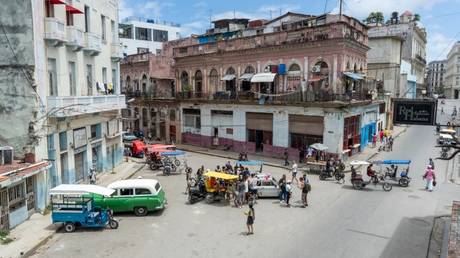
Washington is knocking on Havana's door again. This time, the message isn't just about human rights or migration. It's about money. Specifically, how Cuba makes it and who gets to keep it. A US delegation recently touched down in Havana with a clear, albeit difficult, agenda: convincing the Cuban government to ditch its failing centralized model for a market-driven economy. It’s a bold move. It’s also one that faces a mountain of historical baggage and internal resistance.
If you’ve followed Cuban politics for more than five minutes, you know the script. The US demands change; Cuba calls it "imperialist meddling." But the context in 2026 feels different. Cuba's economy isn't just struggling; it's in a tailspin. Inflation is rampant. Power outages are the norm, not the exception. Food shortages have pushed the population to a breaking point. The US delegation, comprised of State Department and Treasury officials, isn't just there to lecture. They’re trying to see if there’s a path for the Cuban private sector to grow without the Cuban state suffocating it.
Why the US Cares About Cuba's Private Sector
The Biden-Harris administration—and the officials continuing this work—shifted the focus from broad state-to-state deals to supporting the "mipymes." These are micro, small, and medium-sized enterprises. They were legalized in Cuba back in 2021, a massive admission that the state could no longer provide everything. Since then, thousands of these businesses have popped up. They sell everything from bread to car parts.
The US sees these entrepreneurs as the best hope for a peaceful transition. By pushing for a market economy, the US aims to create a middle class that doesn't rely on the Communist Party for its paycheck. It's a long game. The delegation focused on things like access to banking. Right now, a Cuban business owner can't easily open a US bank account or use international credit cards. The US wants to change that, but only if they can ensure the money doesn't end up in the pockets of the Cuban military-run conglomerates like GAESA.
GAESA is the elephant in the room. This massive entity, controlled by the Cuban Revolutionary Armed Forces, dominates tourism, retail, and foreign exchange. It’s a shadow government. The US delegation made it clear: support for the private sector doesn't mean a free pass for the generals. The challenge is that GAESA is so deeply embedded that it's hard to buy a bottle of water in Havana without giving them a cut.
The Reality of Doing Business in Havana
Talking about "market transitions" sounds great in a State Department briefing. On the ground, it’s messy. I’ve spoken with folks who try to run these small businesses. They face a double-edged sword. On one hand, the Cuban government gives them just enough room to breathe so they can fix the shortages the state created. On the other hand, the government views them with deep suspicion. If a business gets too successful, the taxman or the inspectors show up with a clipboard and a long list of reasons to shut them down.
The US delegation's push centers on legal certainty. For a market economy to work, you need rules that don't change every time a hardliner in the Politburo gets nervous. The Americans are pressing for:
- Direct access to international financing for private owners.
- Clearer property rights that protect against state seizure.
- An end to the state’s monopoly on importing and exporting.
Currently, if a private baker wants to buy flour from abroad, they often have to go through a state-owned middleman. That middleman takes a fee and adds weeks of delay. It’s a bottleneck designed to maintain control. The US wants to bypass this. They want the baker to buy from a supplier in Miami or Mexico City directly.
The Internal Cuban Conflict
Don't think for a second the Cuban government is a monolith. There’s a quiet war happening inside the Plaza de la Revolución. You have the "reformists"—relatively speaking—who know the status quo is a death sentence for the regime. They see Vietnam or China as models. They want to keep political control while letting the economy run wild.
Then you have the "immobilists." These are the old-guard bureaucrats who believe any market reform is a Trojan horse for capitalism and, eventually, regime change. To them, the US delegation isn't offering a helping hand; they're offering a golden noose. This group uses the US embargo as a shield. Any failure of the Cuban economy is blamed on "the blockade," rather than the fact that their agricultural system can't even produce enough sugar—the very thing Cuba was once famous for.
Statistics tell a grim story. Cuba’s GDP has seen stagnant or negative growth in recent years. The fiscal deficit is hovering around 18 percent. When you're that broke, you don't have many cards to play. The US knows this. The delegation used this leverage to argue that a market transition isn't just a Western preference—it's a survival necessity.
The Banking Hurdle and the SSOT List
One of the biggest sticking points discussed in these meetings is Cuba’s presence on the State Sponsors of Terrorism (SSOT) list. The Cuban side argues that they can't have a market economy if no international bank will touch them. Being on that list makes global financial institutions terrified of "de-risking." They’d rather cut off all Cuban transactions than risk a massive fine from the US Treasury.
The US delegation's stance is firm. The list is tied to specific political and security criteria. However, they've signaled that they’re looking for ways to create "financial lanes" specifically for the private sector. It’s a surgical approach. They want to perform a bypass on the Cuban economy, sending blood to the private muscles while starving the state-controlled heart. It’s incredibly difficult to execute.
What This Means for the Average Cuban
For the person waiting four hours in line for chicken in Havana, these high-level talks feel distant. But they matter. If the US successfully presses for these changes, it could mean more goods on shelves and lower prices. Market competition does what state mandates can't: it drives efficiency.
We saw a glimpse of this during the "thaw" under the Obama administration. Paladares (private restaurants) flourished. Airbnb took off. There was a sense of hope. When the policy shifted back toward maximum pressure, that hope dried up. Now, we’re seeing a more cautious, pragmatic attempt to revive that spirit, but with more safeguards to prevent the state from skimming off the top.
The skeptical view is that the Cuban government is just "playing shop." They’ll allow some reforms to get the US to ease sanctions, then tighten the screws again once the pressure is off. It’s a cycle we’ve seen before. But with the current level of social unrest—remember the July 11 protests—the regime might not have the luxury of backtracking this time.
Moving Beyond the Embargo Debate
It's time to stop looking at the Cuba-US relationship as a simple binary of "embargo vs. no embargo." That's an outdated way of thinking. The real story is the granular struggle over economic structure. The US delegation isn't asking Cuba to become a 51st state. They're asking them to stop being a command economy that can't feed its people.
For businesses looking at the region, the takeaway is clear: watch the regulations around the mipymes. If Havana allows these businesses to start taking foreign investment directly, the floodgates will open. There’s a massive diaspora in Miami ready to pour money into their cousins' businesses, but only if they know that money won't be stolen by the state.
If you’re interested in the geopolitical shifts in the Caribbean, keep your eyes on the Cuban central bank's next moves. They’re under immense pressure to unify the exchange rate and allow private players more autonomy. The US has laid out the path. Now we wait to see if Havana is desperate enough to take it. Look for updates on US Treasury licenses; that's where the real change will be codified. If the licenses for private banking support expand, the "market transition" isn't just a talking point—it's happening.