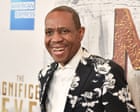
American R&B singer Freddie Jackson, whose velvet tenor and unapologetic romantic ballads defined the mid-1980s soul landscape, died at the age of 70. His family announced his passing, leaving behind a catalog of chart-topping hits that shaped a generation of quiet storm radio and slow-dance history. Yet looking back at Jackson's extraordinary run requires tearing away the superficial packaging of 1980s pop culture to examine how a Harlem kid with an elite vocal instrument permanently altered the architecture of modern rhythm and blues.
The standard obituary treats Jackson as a nostalgic footnote, a purveyor of baby-making music who dropped off the mainstream radar after the decade closed. That narrative is lazy and factually incorrect. Jackson didn't just sing love songs; he engineered a specific sonic vulnerability at a time when urban contemporary radio was heavily mechanized and shifting toward synthesized funk. While contemporaries leaned into cold drum machines and rigid synthesizer arpeggios, Jackson anchored his tracks in genuine emotional gravity.
Take his signature anthem, "You Are My Lady." Written by Barry Eastmond and Jamey Jaz, the track could have easily devolved into syrupy excess in lesser hands. Jackson infused it with a gospel-trained urgency, turning a standard romantic profession into an emotional tightrope walk. His phrasing was liquid gold. He could float effortlessly into a high falsetto without losing the rich chest resonance that gave his mid-range its authority.
The numbers tell an undeniable story of dominance. During his peak years with Capitol Records, Jackson racked up an astonishing string of hits, landing multiple consecutive number-one singles on the Billboard R&B charts, including "Rock Me Tonight (For Old Times Sake)", "Tasty Love," and "Nice and Slow." He crossed over into pop consciousness not by watering down his sound to chase white radio formats, but by forcing mainstream pop to bow to the sophisticated standards of black adult contemporary music.
Behind the smooth image and sharp suits worn on album covers lay a meticulous craftsman. Jackson understood microphone technique intimately. He knew how to pull back to whisper a lyric or lean in to belt a climax without overloading the pre-amp. That technical mastery came from his roots singing in church choirs in Harlem, an apprenticeship that taught him how to project raw spiritual power through secular lyrics.
In later years, Jackson faced public health battles, disclosing his diagnosis of kidney disease and working alongside organizations like the National Kidney Foundation to raise awareness. Even as physical ailments slowed his touring schedule, he refused to let his instrument rust, recording and performing when his body allowed. His final studio album, My First Love, arrived in 2023, serving as a quiet reminder that his commitment to traditional vocal performance remained unbroken by shifting industry trends.
Modern R&B artists frequently claim the 1980s quiet storm era as an influence, sampling Jackson’s classic grooves or adopting his penchant for confessional lyricism. But few possess the sheer vocal architecture required to replicate what he did naturally. Freddie Jackson did not merely sing about romance; he built a template for emotional honesty in popular music that outlasted the formats, the record labels, and the era that spawned him.


