Rain always sounded heavier on a 1980s television set.
Picture a living room in 1984. The carpet is thick, the wood paneling is dark, and the cathode-ray tube hums with static electricity. On the glass screen, a man in a fedora stands beneath a streetlamp in Manhattan. Smoke curls from his cigarette. He doesn't look like a matinee idol. His upper lip carries the faint, pale seam of a childhood scar. His eyes are heavy-lidded, carrying the weight of someone who has seen too many bad deals go down in back alleys. Then, he speaks.
The voice doesn't just come out of the television speaker. It vibrates in your chest.
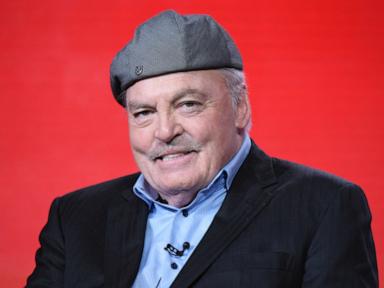
Stacy Keach has died at the age of 85.
For millions of people scrolling past the headlines today, that sentence is a brief flicker of recognition—a nod to Mike Hammer, or maybe a vague memory of the terrifying prison warden in Prison Break, or the stern, conflicted patriarch in American History X. Obituary writers love neat boxes. They love to tally up the awards, list the Broadway credits alongside the B-movies, and wrap a sixty-year career in a tidy bow.
They miss the point entirely.
To understand why the loss of Stacy Keach leaves such a strange, hollow ache in the culture, you have to look past the filmography. You have to look at the friction between the man and the masks he wore. Keach was never a movie star in the shiny, untouchable sense of the word. He was something much rarer, and infinitely harder to sustain: a working actor who turned his own physical and personal fractures into armor.
The Architecture of a Scar
Before there was the gravelly baritone, before the Shakespearean acclaim or the prime-time detective work, there was a boy in Savannah, Georgia, born in 1941 with a cleft lip and a partial cleft palate.
In the mid-twentieth century, children born with facial differences weren't celebrated for their uniqueness. They were stared at. They were whispered about. Keach endured multiple surgeries before he even reached adolescence, enduring the pain of reconstruction and the quiet, lingering isolation of feeling visibly marked. Most people spend their whole lives trying to hide their flaws, smoothing over the rough edges so the world won't notice where they broke.
Keach did the opposite. He grew a thick mustache—not just to cover the scar, though it did that too, but to turn his face into an unmistakable silhouette. He leaned into the grit.
Think about what it takes to step onto a theater stage under hot lights when you've spent your childhood being self-conscious about the way your mouth forms words. You don't just learn to speak; you learn to project. You treat your voice like a musical instrument carved from oak. By the time Keach reached the Yale School of Drama and later the London Academy of Music and Dramatic Art, he possessed an instrument that could fill a thousand-seat auditorium without a microphone.
I remember sitting in the back row of a regional theater years ago, watching an aging stage actor command a room with nothing more than a whisper and a shift in posture. It struck me then that great acting isn't pretending. It's an act of extreme physical vulnerability disguised as control. Keach mastered that paradox early. When he played Buffalo Bill in Arthur Kopit’s Indians on Broadway in 1969, earning a Tony nomination, audiences didn't see a pretty boy playing cowboy. They saw a man wrestling with American mythology, using every ounce of his physical presence to expose the rot beneath the legend.
The Heavy Crown of Potential
In the early 1970s, Hollywood didn't quite know what to do with him, which is usually the highest compliment you can pay an actor.
In 1972, John Huston cast Keach in Fat City as Billy Tully, a washed-up boxer clinging to dignity in the dusty bars and cheap hotels of Stockton, California. If you want to see what real human desperation looks like on celluloid, watch Keach in that film. There is no vanity in the performance. His skin looks gray. His movements carry the sluggishness of too much cheap liquor and too many punches to the ribs. When he tries to summon his old grace in the ring, you feel every creak in his joints.
Around the same time, he played King Lear at the New York Shakespeare Festival, took on Hamlet, and anchored The New Centurions alongside George C. Scott. Critics whispered that he was the heir to the great American stage titans. He had the classical training of Laurence Olivier and the street-level danger of Robert Mitchum.
Then came the 1980s, and with them, the detective.
When Keach put on the trench coat to play Mickey Spillane’s private eye in Mickey Spillane's Mike Hammer, the cultural elite turned up their noses. Going from Shakespeare to a pulp detective series on CBS felt, to the purists, like a step down. A sellout.
They were wrong.
Television in the eighties was a wasteland of pastel suits, shiny sports cars, and consequence-free violence. Mike Hammer was stubbornly, gloriously out of time. Shot in moody shadows, drenched in saxophone jazz, it presented a hero who bled when he got hit and cared deeply about people the city had thrown away. Keach didn't play Hammer with a wink. He played him with absolute conviction, bringing the weight of classical tragedy to a weekly network cop show. He made pulp feel like literature because he refused to look down on the material.
The Fall in Heathrow
Success, especially the kind that arrives in your forties after years of grinding, carries its own quiet poison.
In 1984, at the height of Mike Hammer's popularity, Keach walked through customs at London’s Heathrow Airport. Authorities found cocaine hidden in a tube of toothpaste. The arrest made headlines across the globe. The tough-guy detective, the Shakespearean prince, was suddenly a tabloid cautionary tale.
He pleaded guilty. He served six months in Reading Prison—the very same Victorian jail that had held Oscar Wilde nearly a century earlier.
Let’s pause here and appreciate the sheer, suffocating terror of that moment. Imagine spending twenty-five years building a reputation brick by brick, overcoming childhood trauma, surviving the brutal rejection of the theater world, finally reaching the mountain peak—and watching it all evaporate in a fluorescent-lit customs room. In 1984, there was no curated PR apology tour. There was no sympathy for addiction. You went to prison, your show went on hiatus, and you sat in a cold cell wondering if anyone would ever hire you again.
Most careers die right there. The shame alone is enough to bury a person.
Keach didn't disappear. He took the humiliation, sat with it in the dark of Reading Prison, and used it as fuel. When he emerged, sober and chastened, he didn't run from the mistake. He spoke openly about his addiction, about the emptiness that drove him to numb himself even when he had everything he thought he wanted.
And then, he went back to work.
The Second Act Nobody Expected
What happened over the next four decades is a masterclass in artistic survival. Stripped of the illusions of stardom, Keach became something even more formidable: an indispensable character actor.
Watch him in 1998’s American History X. As Cameron Alexander, the smooth-talking, intellectual architect of a white supremacist movement, Keach doesn't rant or foam at the mouth. He wears a cardigan. He speaks with terrifying, fatherly warmth. He shows how evil recruits the lost not with hatred, but with a counterfeit sense of belonging. It is a chilling performance precisely because Keach understood how seductive a false sanctuary can be.
Years later, younger generations discovered him all over again. To millions of viewers who had never heard of Fat City or Mike Hammer, he was Warden Henry Pope in Prison Break—a man of rigid integrity slowly undone by his own quiet empathy for a prisoner. To comedy fans, he was Ken Titus on Titus, turning a monstrous, abusive father figure into a grotesque, hilarious force of nature. To gamers and animation fans, he was the voice of authority, menace, and wisdom across dozens of projects.
He never retired. Why would he? Work wasn't a vanity project for Stacy Keach; it was oxygen. Even after suffering a mild stroke in 2015, he recovered, returned to the stage, and kept showing up on sets, bringing that unmistakable timbre to every script that crossed his desk.
Why His Absence Hurts
We live in an era of disposable entertainment. Faces are smoothed by filters; voices are compressed by algorithms; performances are chopped into three-second clips designed to keep thumbs from scrolling. Modern fame is weightless. It floats above the ground, detached from consequence, pain, or history.
Stacy Keach was heavy.
He had gravity. When he entered a frame, the room tilted slightly toward him. You could hear his life in his voice—the surgeries in Georgia, the damp rehearsal rooms in London, the roar of Broadway crowds, the clang of iron doors at Reading Prison, the long, quiet mornings of sobriety. He didn't erase his history to look younger or more palatable. He wore every year, every mistake, and every triumph right on his face.
Consider what we lose when actors like him leave us. We don't just lose a familiar face from old reruns. We lose a living link to a tradition that believed acting was a blue-collar craft—something you did with your body, your breath, and your scars, night after night, until the curtain came down.
Late at night, somewhere out there, a television is still glowing in a dark room. A man in a fedora stands under a streetlamp while the rain comes down, lighting a cigarette against the wind, ready to walk into a room where nobody wants him, armed with nothing more than a battered conscience and a voice that refuses to break.