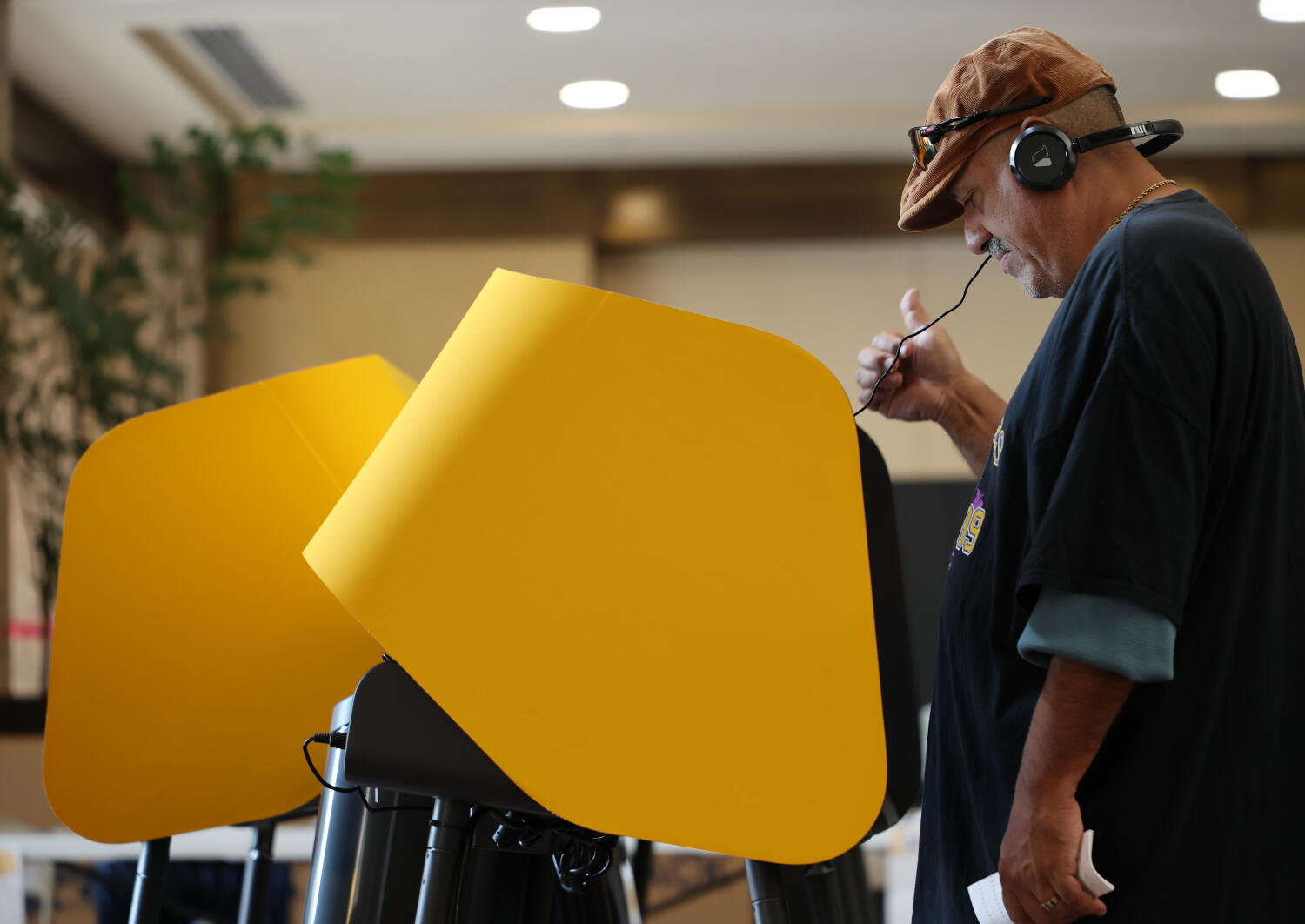
Walk into a California vote center at 7:55 PM on Election Day without checking your registration status first, and you might assume your ballot won't count. You'd be wrong. California actually has some of the most forgiving, flexible in-person voting rules in the entire country, yet every single general election cycle, thousands of residents stay home because they think they missed a deadline, lost their mail-in ballot, or forgot their driver's license.
Stop stressing over outdated voting myths. Whether you waited until the literal final hour of Election Day or just prefer feeding a paper ballot into a scanner yourself rather than trusting the postal service, showing up in person in California is remarkably straightforward once you know how the system actually operates.
The Big Shift From Neighborhood Precincts to Vote Centers
If you haven't voted in person since before the pandemic, your old polling place is probably gone. Don't panic. Under the California Voter's Choice Act, the vast majority of Californians no longer get assigned to a single tiny church basement or elementary school cafeteria down the street. Instead, counties operate regional vote centers.
Here is why that matters to you. You can walk into any vote center in your entire county to cast your ballot. Stuck at work across town until 6:00 PM? Vote near your office. Grabbing groceries two neighborhoods over? Drop in there. Because every vote center connects electronically to the county's live voter roll, the poll workers pull up your exact local ballot—down to your specific city council district and school board race—on demand.
Even if you live in one of the smaller rural counties that hasn't fully transitioned to the Voter's Choice Act model yet, you still have options. Traditional precinct counties still assign you to a specific neighborhood polling place, which you can look up in ten seconds on the California Secretary of State's Find Your Polling Place tool. And if you somehow end up at the wrong precinct in one of those counties, they still won't turn you away. You'll just cast a provisional ballot.
What You Actually Need to Bring With You
Let's clear up the single biggest misconception in American elections. Most California voters do not need to show a photo ID to vote in person.
Seriously. Keep your wallet in your pocket. Unless you are a first-time federal voter who registered by mail without providing a driver's license number or the last four digits of your Social Security number, poll workers will not ask for your ID. You walk up to the check-in table, state your name and residential address, sign the electronic pad, and take your ballot. That's it.
What about that unused vote-by-mail ballot sitting on your kitchen counter? California automatically mails a ballot to every active registered voter, so you almost certainly have one. Bringing it with you—along with the return envelope—speeds things up at check-in because poll workers can immediately void the mail ballot in their system and hand you a fresh in-person ballot.
Forgot it at home? Spilled coffee on it? Shredded it by accident? It doesn't matter. Just tell the poll worker you didn't bring your mail-in ballot. They will verify in the electronic system that you haven't already returned it, suspend the mail ballot so it can never be counted twice, and hand you a standard ballot right then and there.
When You Might Actually Need Documentation
There is one major exception to the no-ID rule, and it catches people off guard every November. If you missed the 15-day voter registration deadline and need to use Same-Day Voter Registration (officially called Conditional Voter Registration), you will need to provide your California driver's license number, California ID number, or the last four digits of your Social Security number on the registration form.
If you don't have any of those numbers, bring a backup document that shows your name and current address. A recent utility bill, a bank statement, a lease agreement, or a student ID paired with a fee statement works fine. Even if you show up empty-handed, federal law requires poll workers to let you cast a provisional ballot while county officials verify your identity behind the scenes.
Hours, Deadlines, and the 8 PM Line Rule
Timing is everything on Election Day, and California enforces a strict schedule with one huge caveat in your favor.
All polls and vote centers across the state open at 7:00 AM and close at 8:00 PM sharp. Unlike some states where different counties close at different hours, every single county from Del Norte down to Imperial shuts the doors at 8:00 PM.
Here is the golden rule you need to memorize. If you are physically standing in line at 8:00 PM, you are legally entitled to vote.
Do not let anyone tell you to go home because the clock hit eight. At 8:00 PM sharp, an election worker walks to the very back of the line and stands behind the last person. Everyone in front of that worker gets to cast a ballot, even if the line takes another ninety minutes to clear. Anyone who arrives at 8:01 PM gets turned away. Get your feet on the pavement before the top of the hour.
Skip the Tuesday Chaos Entirely
Honest advice from someone who has watched election lines snake around city blocks for decades: avoid Tuesday evening if you possibly can. Between 5:00 PM and 7:30 PM on Election Day, every commuter in the state hits the doors at once.
In Voter's Choice Act counties—which include massive population hubs like Los Angeles, Orange, San Diego, Riverside, Sacramento, Santa Clara, Alameda, and Fresno—many vote centers open 10 days before Election Day, with the rest opening 3 days before Election Day. Walking into a vote center on a Saturday or Sunday afternoon before the election usually takes less than five minutes from front door to "I Voted" sticker.
Fixing Mistakes on Your Ballot Without Panic
Paper ballots are great until your pen slips and you accidentally fill in the bubble next to the wrong candidate, or you change your mind halfway down a two-page list of state propositions. Do not try to scribble it out. Do not draw an arrow pointing to the other bubble. Do not write a tiny note in the margin explaining what you meant. Optical scanners read marks, not essays, and messy corrections often get flagged as an "overvote," which invalidates your choice for that specific race.
Instead, walk straight back to the check-in table and ask for a replacement ballot.
California law allows you to spoil up to two ballots and receive replacements—giving you three total tries to get it right. The poll worker will take your ruined ballot, write "SPOILED" across it, place it into a secure spoiled-ballot envelope, and hand you a brand-new, clean ballot. It takes thirty seconds, nobody judges you, and you protect your vote from getting kicked out by a machine.
How to Prep Your Choices in Ten Minutes Flat
Walking into a voting booth blind in California is a miserable experience. Between state constitutional amendments, bond measures, local parcel taxes, and obscure judicial retention races, a California general election ballot routinely stretches across multiple double-sided pages. Standing inside a booth trying to decode legalese while twenty people wait behind you is how mistakes happen.
Before you leave your house, pull up your actual sample ballot. You can either flip through the paper County Voter Information Guide that arrived in your mail weeks ago, or use the state's My Voter Status portal to view your specific ballot online.
Write your decisions down on a piece of paper or type them into the Notes app on your phone. Yes, you are completely allowed to bring notes—and your phone—into the voting booth with you. California explicitly permits voters to reference personal notes, voter guides, and endorsements while marking their ballots. Just don't take photos of other voters or make phone calls inside the voting area.
What Happens After You Cast Your Ballot
Once you slide your completed ballot into the precinct scanner or drop it into the official ballot box, your job isn't quite finished if you want total peace of mind.
Sign up for Where's My Ballot?, California's official tracking system operated by the Secretary of State at WheresMyBallot.sos.ca.gov. While most people think this tool only tracks mail-in ballots, it also updates when your in-person ballot is officially processed and accepted by your county elections office. If you had to cast a conditional or provisional ballot because you registered on Election Day, the tracker confirms once your signature and eligibility are verified and your votes are tallied.
Know Your Rights If Something Goes Wrong at the Polls
Poll workers in California are overwhelmingly well-meaning neighbors working sixteen-hour shifts for modest stipends, and occasionally they make honest mistakes about complex election rules. If a worker tells you your name isn't on the list, insists you need a driver's license when you don't, or claims you can't vote because you didn't surrender your mail-in ballot, stay calm and hold your ground.
Ask to speak with the Vote Center Lead or Precinct Inspector on duty. Every voting location has a supervisor with direct phone access to county election headquarters. If the issue still isn't resolved on the spot, demand a provisional ballot. Under state and federal law, it is illegal for an election worker to turn you away without offering a provisional ballot.
If you encounter voter intimidation, broken voting machines, or missing bilingual ballot materials, call the California Secretary of State's toll-free Voter Hotline immediately at (800) 345-VOTE (8683) while you are still standing at the location so state officials can intervene directly with your county registrar.
Check your registration status at voterstatus.sos.ca.gov right now, pick the nearest vote center on your route home, write your proposition picks on a scrap of paper, and get in line before 8:00 PM.