The cultural commentariat loves a captive poet. The script is ancient, comfortable, and aggressively lazy: take a high-profile trial, reduce a complex political theatre to a morality play of absolute light and absolute darkness, and turn a living artist into a martyr-shaped ornament.
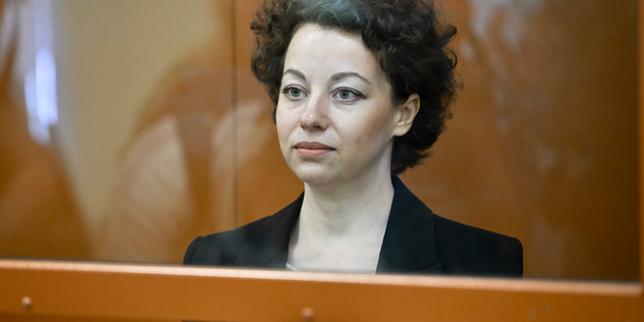
When Russian theater director and poet Evgenia Berkovich was arrested and subsequently sentenced over her play Finist the Bright Falcon, Western media outlets rushed to fit her into the neat, pre-packaged box of the solitary dissident crushed by the monolithic state machine.
This narrative is not just intellectually dishonest. It is dangerous for anyone who actually cares about art under authoritarianism.
I have spent years watching how state apparatuses interact with independent culture in closed societies. I have seen grants pulled, venues closed overnight, and creators exiled or imprisoned. The knee-jerk Western reflex is to treat these prosecutions as proof that words are bullets, that poetry terrifies the Kremlin, and that every verse written behind bars is a direct strike against tyranny.
This is comforting romanticism. It is also completely wrong.
The Myth of the Subversive Verse
Let us dispense with the primary illusion: that the Russian state fears Evgenia Berkovich because her poems are ideologically explosive or revolutionary manifestos. They do not.
Authoritarian states do not crack down on art because they are afraid of the message. They crack down because they demand a monopoly on meaning. Berkovich’s play tackled the thorny, deeply uncomfortable reality of Russian women radicalized online to join ISIS. It dealt with recruitment, manipulation, and psychological entrapment.
The state's objection was never that Berkovich supported terrorism. Her work did the exact opposite; it explored a dark social pathology. The objection was that an independent voice dared to process national trauma outside the approved ideological pipeline.
When commentators frame her imprisonment purely as a testament to the raw, disruptive power of poetry, they misdiagnose the disease. They treat censorship as an artistic critique rather than a bureaucratic enforcement of state narrative control. By calling her work a poignantly devastating weapon against Vladimir Putin, headline writers inflate a tragic instance of selective judicial intimidation into a grand romantic duel between a lone bard and a dictator.
That framing serves Western editors looking for clean narratives. It does nothing to protect artists on the ground.
The Complicity of Foreign Hero Worship
There is a profound irony in how external observers consume the plight of imprisoned creators. The moment an artist is jailed, they are stripped of their artistic complexity and transformed into a symbol.
Suddenly, their previous body of work, their aesthetic choices, their compromises, and their contradictions are erased. They become a flat, two-dimensional poster child for human rights campaigns.
This hero-worship model creates a perverse incentive structure. It tells the cultural establishment that creators are only valuable when they are martyrs. If you are free, negotiating the gray zones of a repressive society, staging compromises, or working within institutional cracks, you are ignored. But get a prison sentence, and you achieve international acclaim.
Imagine a scenario where the international community spent half as much energy analyzing the bureaucratic mechanisms of Russian cultural censorship as it does writing breathless, tear-jerking profiles of arrested directors. We might actually understand how the machinery operates. Instead, we get a cycle of outrage that flares up during sentencing hearings and evaporates by the next news cycle, leaving the actual cultural ecosystem to rot.
The Danger of Aestheticizing Repression
When we turn political repression into high art, we aestheticize suffering. We talk about the lyrical beauty of Berkovich’s lines from the courtroom cage, treating her words as exquisite collateral damage in a glorious ideological war.
Stop. Read her work not as a miraculous artifact from the gulag, but as the voice of an artist whose life has been systematically dismantled by a cowardly legal system.
The danger of the Western framing is that it validates the state's premise: that art is a dangerous political threat that must be crushed. Authoritarian regimes love nothing more than being feared. When we insist that a play about online radicalization is a direct threat to the presidential administration, we are giving the censors precisely the heavyweight status they desperately want to claim.
We are telling the world that the Kremlin is powerful enough to be shaken by a rhyming couplet. That is a lie. The Kremlin is not shaking. It is engaging in bureaucratic hygiene, sweeping away independent cultural spaces to ensure absolute ideological uniformity.
What Real Solidarity Looks Like
If you want to support creators facing state pressure, abandon the savior complex and drop the poetic hyperbole.
First, stop reducing artists to their cages. Berkovich was an accomplished director, playwright, and educator long before she became a headline. Her value lies in her intellect, her craft, and her ability to dissect human behavior, not in her utility as a prop for your social media outrage.
Second, understand the mechanics of modern authoritarian lawfare. Russia’s use of legislation regarding justification of terrorism or discrediting the military is not high-minded ideological warfare; it is administrative violence. It relies on vague statutes designed to create universal self-censorship. Treating it like a dramatic duel obscures the mundane, sordid reality of how modern surveillance states crush dissent through paperwork and procedural exhaustion.
Third, look beyond the headline cases. For every jailed director whose name trends on social media, there are dozens of regional actors, independent publishers, and underground musicians quietly starved of funding, evicted from venues, or forced into silent compliance without a single Western journalist noticing.
The literary romanticization of the imprisoned poet is a luxury for people who never have to face a prosecutor.
Evgenia Berkovich does not need your pity, and she certainly does not need your poetry about the poetry. She needs an unyielding, cold-eyed analysis of the system that caged her—an analysis that refuses to give her persecutors the dignity of being literary critics.