The wooden hull of the F/B Gem-Ver smells of diesel, dried mackerel, and old brine. For generations, Filipino fishermen aboard vessels like this have steered by the stars and the predictable rhythm of the monsoons, heading out into the choppy gray waters of the South China Sea. To them, the sea is not a geopolitical chessboard. It is a workplace. It is how you buy medicine for a feverish child in Palawan, or how you pay for school uniforms in Pangasinan.
But over the last few years, the water has changed.
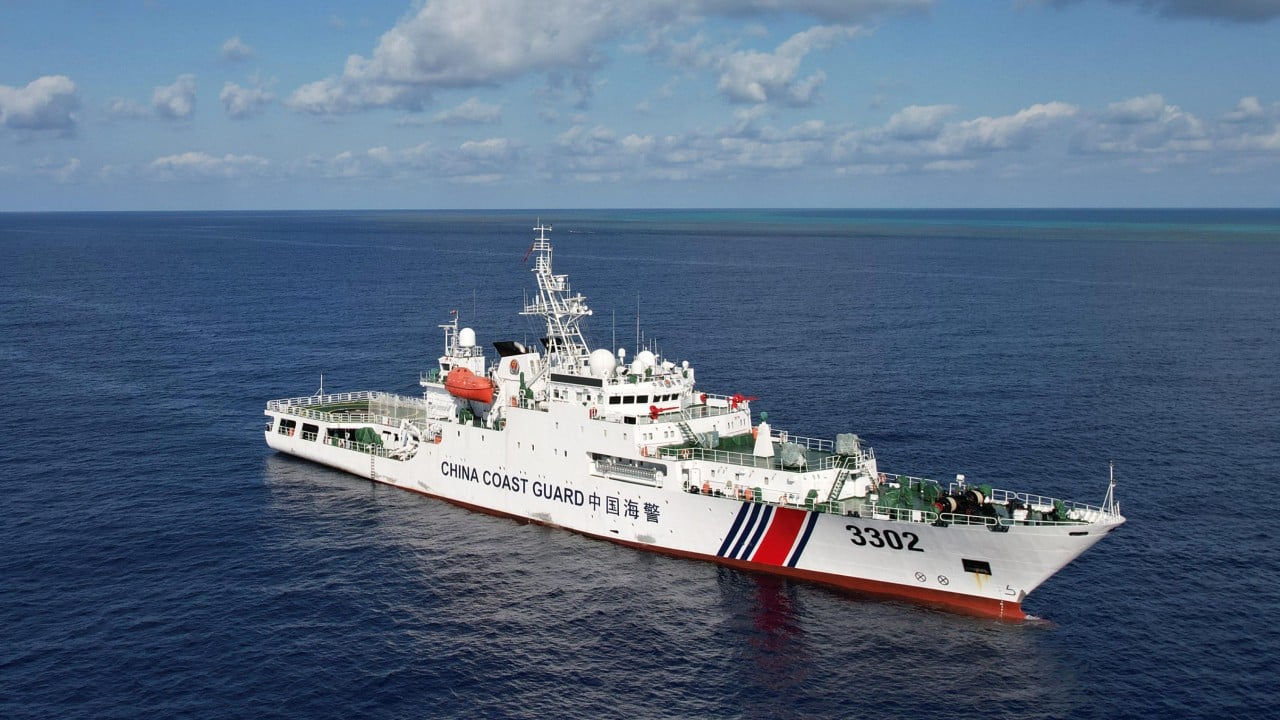
It is not a change you can see in the temperature or the tide. It is a heavy, invisible pressure. It arrives in the form of a steel-hulled Chinese coast guard vessel looming over a fragile wooden outrigger, its water cannons primed. It shows up as a sudden, ominous shadow on a radar screen. For the people who actually live on the margins of this contested sea, the abstract phrase "blue-water ambition" isn't a theory debated in academic journals. It is a localized, terrifying reality that dictates whether you make it back to the pier by nightfall.
A few thousand miles to the north, a Japanese coast guard officer stands on the deck of a cutter patrolling the frozen, jagged waters around the Senkaku Islands. His language is different. His uniform is different. Yet, his anxiety is identical. He watches the same gray hulls on the horizon, tracking the same relentless, incremental push outward from the Asian mainland.
For decades, these two maritime nations—one a wealthy technological powerhouse with a deeply rooted pacifist constitution, the other a developing archipelago striving to protect its sovereign rights—navigated their anxieties in isolation.
Not anymore.
The two ends of the Western Pacific are drawing together, pulling tight a defensive tripwire that Beijing is daring them to cross. The recent Reciprocal Access Agreement (RAA) between Tokyo and Manila is far more than a bureaucratic milestone. It is a profound psychological shift. It marks the moment the Pacific’s island democracies decided that standing alone is no longer an option.
The Island Chain and the Blue Water Dream
To understand why a security pact between Tokyo and Manila sends shockwaves through the region, you have to look at the map through the eyes of a strategist in Beijing.
China’s coastline is vast, but its access to the open ocean is choked. A string of islands curves around the mainland like a tight collar. This is the First Island Chain, stretching from the Japanese archipelago down through Taiwan and into the Philippines. For a nation determined to project power across the globe—to transform its navy from a coastal defense force into a true "blue-water" juggernaut capable of dominating deep oceans—this chain is a physical barrier.
It is a cage.
[Mainland China]
       │
   (Chokepoints) ─── [First Island Chain: Japan ➔ Taiwan ➔ Philippines]
       │
 [Deep Pacific Ocean]
For years, Beijing’s strategy has been to find the weakest link in that chain. By building artificial islands, militarizing reefs, and deploying a massive "maritime militia" of armed fishing boats, it sought to create a fait accompli. The goal was simple: make the cost of resistance so high, and the threat of violence so constant, that its neighbors would simply back down.
Consider the sheer scale of this asymmetry. When a Philippine resupply boat attempts to reach the Second Thomas Shoal—a submerged reef where a handful of Filipino marines live aboard a rusted, deliberately grounded World War II-era ship—they are met by Chinese vessels that dwarf them tenfold. The encounters are brutal. Steel hulls collide. High-pressure water cannons shatter windows and deafen sailors.
It is a slow-motion siege.
The strategy relied entirely on the assumption that the nations of the First Island Chain were too fragmented, too historically traumatized, or too economically dependent on Chinese trade to ever unite. Japan’s brutal occupation of the Philippines during World War II left deep, generational scars. For decades, the idea of Japanese boots on Philippine soil was a political impossibility.
But fear is a powerful modernizer. The shared trauma of bullying on the high seas has done what decades of conventional diplomacy could not. It has washed away the historical hesitation.
When the Armor Agrees to Fit
The Reciprocal Access Agreement is a complex legal framework, but its emotional core is straightforward: it makes it easy for their militaries to operate in each other's backyards.
Think of it as a shared defensive toolkit. Before this, sending Japanese Self-Defense Forces to train in the Philippines, or vice versa, required navigating a bureaucratic nightmare of sovereign immunities, visa disputes, and legal limbo. The new agreement streamlines all of it. It allows for smoother troop deployments, shared military exercises, and the transfer of sophisticated coastal surveillance technology.
For Japan, this is a radical departure from its post-war isolation. Tokyo is realizing that its defense does not begin at the beaches of Okinawa; it begins in the waters off Luzon. If the Philippines falls under Beijing’s complete maritime dominance, Taiwan becomes indefensible. If Taiwan falls, Japan’s southern flank is entirely exposed.
The dominoes are real. They are made of water, reef, and sky.
This integration is exactly what Beijing views as a maritime red line. For China, the alliance is not a defensive reaction; it is a hostile encirclement orchestrated by Washington. They see the ghost of containment rising from the sea. The Chinese leadership has long warned that foreign interference in these disputes will only escalate the risk of conflict. They view the Western Pacific as their natural sphere of influence, a space where smaller neighbors must defer to the regional giant.
Yet, when you speak to the people who navigate these waters, the perspective is entirely different. They see a giant that has forgotten how to share.
The Invisible Ripples in the Marketplace
It is easy to get lost in the vocabulary of geopolitics—terms like deterrence, anti-access/area denial, and strategic autonomy. But the consequences of this high-stakes standoff ripple outward into places that have never seen a warship.
They land in your grocery cart.
The South China Sea is not just a theater for military posturing; it is the economic juggernaut of the modern world. More than three trillion dollars in trade passes through these waters every year. It carries the liquefied natural gas that powers factories in Seoul and Tokyo. It carries the microchips manufactured in Taiwan that run our smartphones, our hospitals, and our electrical grids. It carries the grain that feeds millions.
If a miscalculation occurs—if a water cannon blast kills a sailor, or a collision sparks a kinetic military response—the insurance rates for commercial shipping in these lanes would skyrocket overnight. Ships would be forced to detour around Indonesia, adding thousands of miles and billions of dollars to global supply chains. The cost of everything, from a gallon of gas to a container of fruit, would spike.
The ocean is an interconnected system. A disturbance in the Luzon Strait echoes instantly in the financial capitals of New York, London, and Frankfurt.
The Human Horizon
What happens when the red line is crossed?
No one knows. That is the terrifying truth at the heart of the Western Pacific today. We are watching an unstoppable force—China’s historic march toward becoming a global naval superpower—meet an immovable object: the collective refusal of its neighbors to be pushed off the map.
The RAA between Japan and the Philippines will not stop the Chinese coast guard from patrolling the reefs. It will not silence the water cannons. What it does is alter the math of aggression. It ensures that when a small wooden fishing boat sets out from a port in the Philippines, the crew knows they are no longer just an isolated dot on a vast, indifferent sea. They are part of a thickening web of alliances that stretches across the entire horizon.
On the beaches of Palawan, as the sun dips below the waves, turning the South China Sea a deep, bruised purple, the fishermen still mend their nets. They look out at the water with a mixture of affection and profound unease. They know the peace they have relied on for generations is fraying. They know that the sea, which has always been a source of life, has become something else entirely.
It has become a stage where the future of the world is being written, one wave at a time.


