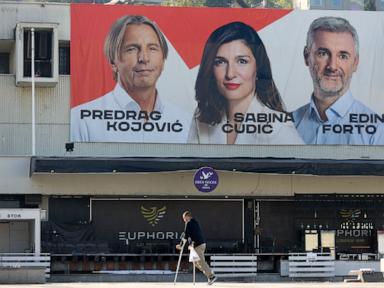
Every election cycle in the Balkans brings the exact same lazy dispatch from foreign correspondents. They dust off the 1990s playbook, point to a local strongman, invoke the specter of Moscow, and declare that ancient ethnic hatreds are once again driving the region toward the brink. It is a neat, comforting narrative for editors in Western capitals. It places the blame entirely on stubborn locals and frees international architects from ever inspecting their own blueprints.
The standard media consensus treats Bosnia and Herzegovina as a permanent patient on life support, afflicted by a mysterious, indigenous pathogen called ethnic tension. According to this view, brave Euro-Atlantic technocrats are constantly trying to administer the medicine of liberal democracy, only to have it slapped away by pro-Russian spoilers and backward nationalists.
This framing is wrong. It mistakes symptoms for the cause.
The political deadlock in Sarajevo and Banja Luka is not a failure of local democracy. It is the natural, inevitable product of an institutional cage built thirty years ago at an air base in Dayton, Ohio. The 1995 peace agreement did not design a functioning state; it froze a ceasefire into a permanent constitution. It engineered a bizarre administrative maze of ethnic quotas, vetoes, and overlapping jurisdictions that guarantees systemic paralysis. When you build a house out of tripwires, do not act shocked when someone trips over them.
Consider the role of the international community's high representative, an office granted near-dictatorial powers to sack elected officials, rewrite laws, and decree decrees over a supposedly sovereign European nation. For decades, foreign diplomats have treated Bosnia like an administrative protectorate. Local politicians quickly figured out the perverse incentive structure this creates. Why compromise, build coalitions, or do the hard work of domestic reform when you can either appeal to an international overseer to crush your rivals or use that same foreign interference as fuel for your own nationalist base?
The Western press loves to obsess over figures like Milorad Dodik, framing his defiance entirely through the lens of a global geopolitical chess match between Washington, Brussels, and Moscow. Dodik is portrayed as an outpost of Russian influence, a Kremlin proxy sowing chaos just to spite the West.
This is intellectually lazy. Dodik is not a puppet master executing orders from the Kremlin; he is an opportunistic domestic actor exploiting a broken system that rewards obstructionism. His survival depends entirely on the existence of the very confrontation he feeds. Every time an unelected foreign diplomat tries to sideline him or slap him with bans, it hands him a masterclass in grievance politics. He gets to posture as the lone defender of his people against foreign imperialism, while Western capitals throw up their hands wondering why their heavy-handed interventions keep backfiring.
The international approach to the Balkans suffers from a severe lack of accountability. Diplomats parachute into Sarajevo, tinker with constitutional mechanics, ignore four separate rulings from the European Court of Human Rights regarding discriminatory electoral laws, and then leave local populations to deal with the fallout. They demand adherence to European standards while maintaining a colonial-style viceroyship that makes genuine democratic maturation impossible.
Blaming everything on Russian meddling is an easy escape hatch for Western policymakers who refuse to admit that their own state-building model has hit a dead end. Moscow does not create the fractures in Bosnia; it merely exploits the gaping holes that the international community institutionalized three decades ago.
If Western capitals actually wanted a stable, functional Bosnia, they would stop treating it as a geopolitical playground or an eternal ward of the state. Real stability requires dismantling the Dayton straitjacket, ending the paternalistic regime of the high representative, and forcing local leaders to sink or swim in a normal political marketplace without foreign crutches or foreign villains to hide behind.
Until foreign capitals drop the savior complex and face up to the institutional monster they created in 1995, every subsequent election will yield the exact same hollow drama. Stop blaming the ghosts of the nineties for a fire that current foreign policy keeps stoking.



